Key Points:
- ECB Governing Council member Martin Kocher warned that a June interest-rate hike is highly likely unless the US and Iran secure a peace deal.
- Ongoing geopolitical conflict in the Middle East has driven up energy costs, pushing eurozone inflation to 2.5%, above the 2% target.
- Although some dovish central bank officials prefer holding rates, Kocher stated that inaction risks unhinging long-term inflation expectations.
- The potential policy shift comes as the 21-nation eurozone economy demonstrates reasonable resilience despite contractions in private sector activity.
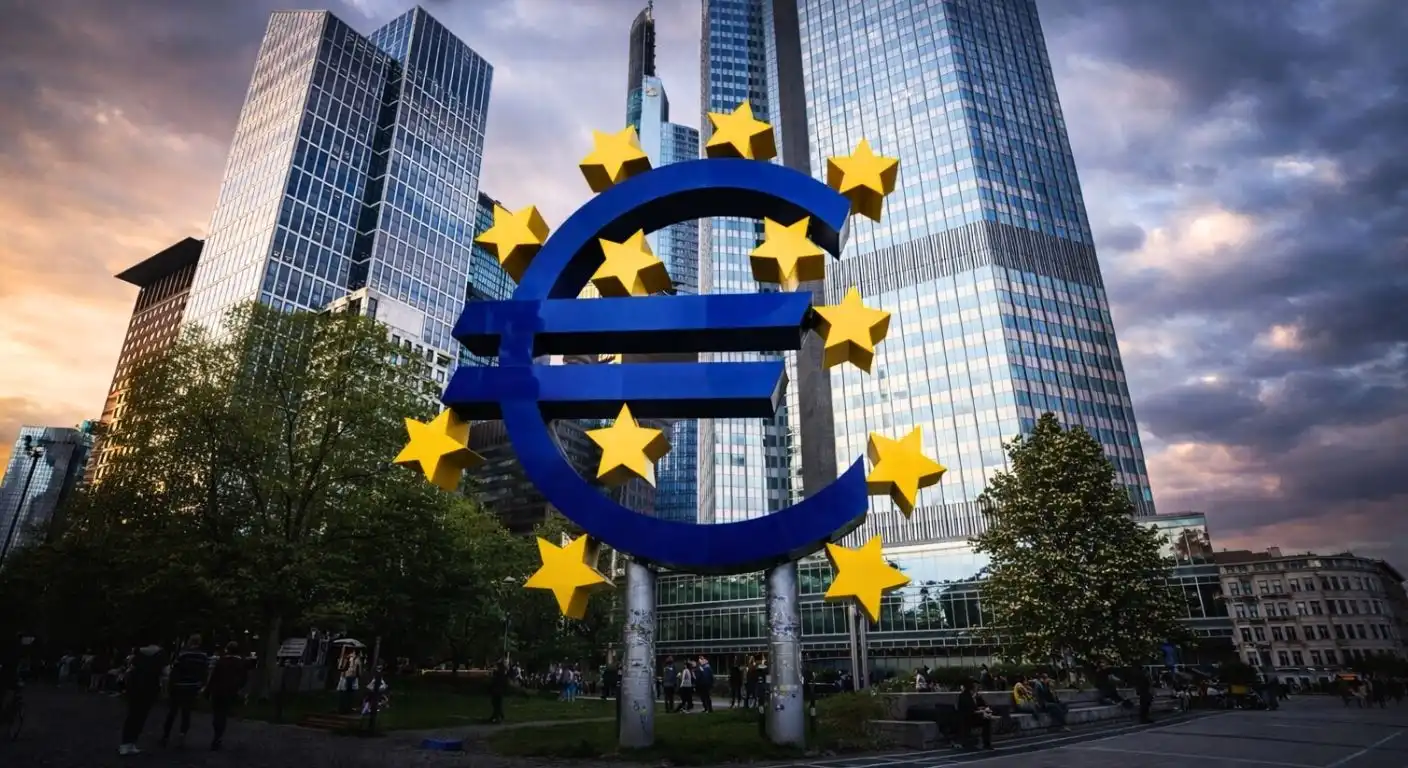
The European Central Bank (ECB) is facing mounting pressure to raise interest rates next month to combat rising inflation triggered by the ongoing war in Iran. Governing Council member Martin Kocher warned that unless the United States and Iran can establish a sustainable peace deal to reopen vital trade routes, the central bank will have to focus its upcoming discussions on raising rates. Speaking on the sidelines of a May 22-23 meeting of European finance chiefs in Nicosia, Cyprus, Kocher emphasized that high energy prices are quickly trickling down into broader consumer costs.
The potential rate hike would mark a significant hawkish pivot for the ECB, which has kept its benchmark deposit rate steady at 2% since last summer. The central bank’s next policy meeting is scheduled for June 11, 2026, leaving policymakers with less than three weeks to assess incoming economic data. While some of the more dovish officials previously argued for a steady hand, many are now conceding that a preemptive rate increase may be necessary to prevent longer-term inflation expectations from becoming unhinged.
The war in the Middle East has severely disrupted global supply chains, specifically targeting shipping through the Strait of Hormuz. Because nearly 20% of the world’s daily oil and gas traffic passes through this narrow waterway, the prolonged blockade has driven Brent crude prices past the $103-per-barrel mark. This global energy shock has directly impacted consumer prices across the 21-nation eurozone, pushing the annual inflation rate to 2.5% in March, well above the central bank’s 2% target.
This sudden acceleration in inflation has spooked European consumers who are still recovering from the double-digit price shocks of 2022. Kocher, who also heads Austria’s central bank, noted that public confidence remains fragile because households remember how quickly energy bills and grocery costs spiraled out of control during the previous crisis. To prevent businesses from rapidly marking up prices in anticipation of further inflation, central bankers believe they must act decisively to signal their commitment to price stability.
Despite these intense price pressures, the eurozone economy is proving reasonably resilient. First-quarter gross domestic product (GDP) growth remained stable, and Kocher did not rule out full-year growth of around 0.5%, provided the Middle East conflict does not become prolonged. However, the energy shock is beginning to weigh on private sector output. Business surveys from April showed that Eurozone private-sector activity unexpectedly shrank for the first time in 16 months, driven by a steep contraction in the services sector as high costs dampened consumer demand.
To resolve the underlying crisis, several Arab nations have joined Pakistan in trying to push for a diplomatic resolution to the Iran war. Additionally, US President Donald Trump recently announced that a peace deal with Iran is “largely negotiated” and could reopen the Strait of Hormuz shortly. However, global energy markets and central bankers remain highly skeptical of these claims, as the White House has not yet shared any concrete details or timelines. Until shipping lanes actively reopen, the threat of an extended supply-side shock remains high.
Faced with an external supply-side shock, European governments find themselves with limited fiscal options. While some targeted measures, such as a temporary value-added tax (VAT) reduction on food, have helped ease price pressures for lower-income households, other policies, such as new parcel levies, have added to them. Kocher cautioned regional governments against repeating the broad, expensive energy subsidy programs used during the 2022 crisis, advising that any future fiscal interventions must be targeted, temporary, and tailored to avoid fueling further inflation.
As the June 11 decision approaches, bond markets across the Eurozone are already preparing for a potential policy shift. Investors have rapidly priced in a higher probability of rate hikes, causing government bond yields to slide and putting pressure on peripheral eurozone debt spreads. If the ECB delivers a rate increase next month, the move will likely strengthen the euro further, which has already gained nearly 14% against the US dollar over the past year. Ultimately, the ECB must find a delicate balance between curbing war-driven inflation and protecting a fragile economic recovery.