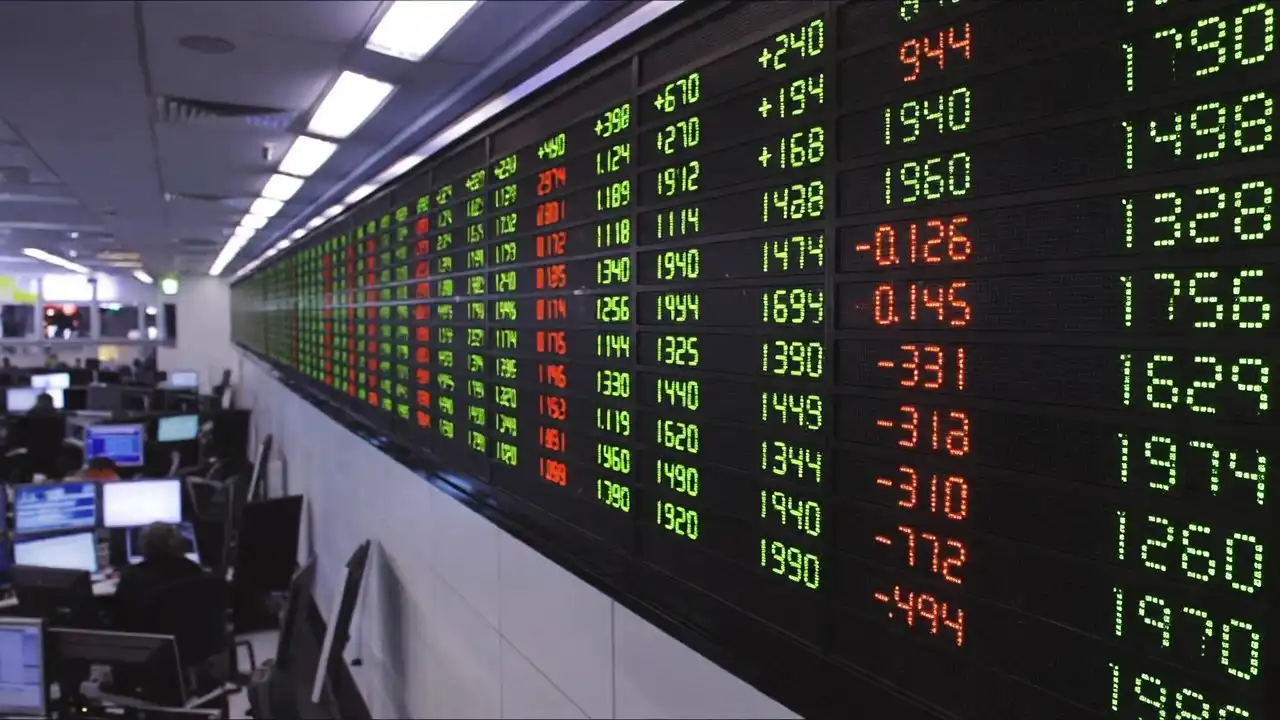
European fixed-income assets experienced a notable shift in momentum on Monday as global financial markets reacted to a series of high-stakes diplomatic developments. Government bond yields across the Eurozone retreated from their recent peaks, driven by a collective sigh of relief as United States and Iranian negotiators reconvened in Switzerland to revive fragile peace talks. This diplomatic resumption helped lower the intense geopolitical risk premium that had gripped the market late last week, providing a brief window of stability for sovereign debt. However, while the geopolitical landscape offered temporary respite, the broader trajectory of European bonds remains heavily constrained by the looming shadow of central bank monetary policy.
The yield on Germany’s benchmark 10-year government bond, which serves as the primary yardstick for the 20-member currency union, fell to 2.975% during Monday’s trading session. This reversal clawed back a portion of the previous session’s sharp sell-off, which had seen the benchmark yield climb by approximately 7 basis points on Friday. The sudden turnaround illustrates the highly reactive nature of modern capital markets, where bond traders are forced to continuously recalibrate their portfolios based on the latest headlines from Zurich, Tehran, and Washington. As the initial panic over energy disruptions subsides, fixed-income investors are pivoting their attention back to the European Central Bank, where policymakers must soon decide how to manage persistent inflationary pressures.
Geopolitical Volatility and the Swiss Diplomatic Front
The recent volatility in European government debt highlights a direct transmission mechanism between Middle Eastern geopolitics, global energy supplies, and European sovereign yields. When geopolitical tensions escalate, the immediate threat of oil supply bottlenecks drives up crude prices. Because Europe remains heavily reliant on imported fossil fuels, higher energy costs quickly translate into broader consumer price inflation. This dynamic forces bond yields higher as investors anticipate that central banks will have to raise interest rates to defend their inflation targets. Conversely, any sign of successful diplomacy lowers energy expectations, prompting a rally in bond prices and a corresponding fall in yields.
The bond markets are coming off a particularly turbulent week that perfectly illustrates this geopolitical sensitivity. Early last week, Eurozone sovereign debt rallied significantly after the United States and Iran appeared to reach a tentative, historic peace agreement. However, this optimism evaporated on Friday when U.S. representatives abruptly withdrew from scheduled bilateral discussions in Switzerland. The sudden breakdown in communications triggered a classic flight-to-safety, sending oil prices higher and pushing government bond yields up across the board as traders scrambled to price in a prolonged conflict.
The Fragile State of U.S.-Iran Negotiations in Switzerland
The weekend brought a fresh round of high-stakes diplomacy as negotiators from both sides returned to Switzerland on Sunday in an attempt to salvage the peace framework. Despite the resumption of talks, the geopolitical atmosphere remains highly charged. U.S. President Donald Trump has continued to maintain an aggressive rhetorical stance, threatening to authorize fresh military strikes against Iranian targets if hostilities involving regional proxy groups like Hezbollah in Lebanon do not cease immediately.
This tough public posture has kept fixed-income investors on high alert. While Iranian negotiators have released statements suggesting that tangible progress is being made behind closed doors, the complete lack of concrete policy details has prevented a full-scale market rally. Bond managers are reluctant to take massive, long-term positions when a single headline or social media post could instantly derail the negotiations and spark another run on safe-haven assets.
The Strait of Hormuz Dilemma and Energy Supply Murkiness
Compounding the geopolitical anxiety are highly conflicting reports regarding the operational status of the Strait of Hormuz. Over the weekend, officials in Tehran claimed that the strategic maritime chokepoint—through which roughly 20% of the world’s petroleum and liquefied natural gas shipments flow—had been closed to international tanker traffic once again. This claim threatened to trigger another massive spike in global energy prices and reignite severe inflationary fears across the Eurozone.
However, real-time maritime tracking data and satellite imagery painted a completely different picture, showing that commercial vessel traffic was continuing to navigate the waterway without major interruptions. This discrepancy between official rhetoric and physical reality has left market participants struggling to navigate a murky supply outlook. For European bond traders, the main takeaway is that while the physical flow of oil remains intact for now, the threat of sudden maritime blockades remains a potent tail risk that will prevent yields from falling too far below their current ranges.
European Central Bank Under the Inflation Microscope
While Swiss diplomacy dominates the daily news cycle, the medium-term outlook for European debt remains firmly in the hands of the European Central Bank. Investors are looking ahead to scheduled public appearances by ECB President Christine Lagarde and Chief Economist Philip Lane later on Monday. Market participants are desperately seeking a pulse check on how the central bank’s leadership intends to balance stubborn, war-induced inflation against tentative signs of economic stabilization in the Middle East.
The ECB’s task is further complicated by the fact that it has already taken aggressive action to combat the inflation wave. Just last week, the central bank implemented a 25-basis-point interest rate increase, bringing its main refinancing rate to 2.25%. This rate hike was largely seen as a proactive, political move to curb price pressures resulting from the regional conflict. Now, with energy prices showing early signs of cooling, traders want to know if the central bank will pause its tightening cycle or keep the door open for further increases in the second half of the year.
Monetary Policy Tensions in the Wake of War-Induced Inflation
The primary challenge facing European central bankers is the threat of stagflation—a highly destructive economic scenario characterized by stagnant economic growth and persistently high inflation. Earlier in 2026, the escalation of Middle East hostilities drove global oil prices up, forcing the ECB to lift its inflation outlook. In response, sovereign bond markets experienced a sharp correction, with short- and medium-term yields rising much faster than long-term yields. In the bond market, this phenomenon is known as “yield curve flattening,” and it is historically viewed as a reliable indicator that investors expect high borrowing costs to slow down future economic activity.
Although the tentative progress in Switzerland has pushed Brent crude back down toward its lowest levels since early March, money markets remain skeptical that the inflation threat is fully defeated. The ECB has made it clear that while energy prices are a major concern, the central bank’s primary focus is core inflation, which measures price increases in services and domestic goods. If these core price pressures remain stubborn, the ECB may be forced to continue raising rates even if oil prices continue to drop.
Hawkish Rhetoric and Interest Rate Trajectories
In the days leading up to Monday’s market action, several influential ECB policymakers have adopted a tough, hawkish tone. Pierre Wunsch, a prominent member of the ECB’s governing council, warned that the central bank may need to deliver another interest rate hike as soon as next month. Wunsch argued that if Eurozone inflation begins to spread beyond energy and into the broader service sector, policymakers must act decisively, regardless of the progress made in the Swiss peace negotiations.
This hawkish sentiment was echoed by Chief Economist Philip Lane, who recently noted that the Eurozone economy has shown surprising resilience in the face of previous rate increases. Lane suggested that the regional economy is strong enough to withstand slightly higher interest rates without losing significant momentum. This optimistic assessment of economic health has reinforced market expectations that the ECB is nowhere near ready to lower interest rates. According to financial data from LSEG, futures markets continue to fully price in at least one more rate hike by September or October of this year, a reality that will keep a firm floor under short-term bond yields.
Divergent Yield Trends Across the European Continent
As investors navigate the dual pressures of geopolitics and central bank policy, different segments of the European sovereign debt market are experiencing highly divergent trading patterns. This fragmentation reflects both local political developments and varying levels of sensitivity to global monetary policy.
German Sovereign Debt Leads the Flight-to-Safety Reversal
In Germany, the government bond market has acted as the primary vehicle for investors seeking to adjust their exposure to macroeconomic risk. On Monday, the rate-sensitive German two-year note, which moves closely in tandem with short-term ECB interest rate expectations, fell to 2.63%. This drop in short-term yields indicates that some traders are scaling back their bets on immediate, aggressive rate hikes, taking comfort in the diplomatic progress in Switzerland.
At the same time, the broader decline in the German 10-year Bund yield to 2.975% shows that long-term inflation fears are easing slightly. However, analysts warn that the German bond market faces structural headwinds of its own in 2026. Due to large fiscal deficits, the German government is expected to sharply increase its net debt issuance this year. With the ECB simultaneously reducing its bond purchases as part of its quantitative tightening program, private investors will have to absorb a record volume of new German government debt. This surge in supply could prevent German yields from falling significantly, even if inflation continues to cool.
British Gilts Surge on Domestic Political Shakeups
While yields on continental European debt fell on Monday, the United Kingdom government bond market experienced a sharp sell-off, sending yields significantly higher. The yield on the benchmark 10-year British gilt rose to 4.85%, while the yield on the rate-sensitive two-year note climbed to 4.25%. This dramatic divergence from the rest of Europe was driven by a wave of domestic political uncertainty that took investors by surprise.
The sell-off in British gilts followed widespread media reports indicating that Prime Minister Keir Starmer was preparing to step down from his leadership position. The reports surfaced following a significant internal party election victory by Starmer’s prominent rival, Andy Burnham. For financial markets, the prospect of an unexpected leadership transition at the top of the British government introduces a fresh layer of political and fiscal risk. Investors are concerned that a new administration could depart from current spending targets and increase government borrowing, a fear that has prompted traders to demand a higher risk premium to hold UK debt.
The Structural Outlook for European Debt Markets
The current trading environment illustrates the delicate balancing act that fixed-income investors must perform in the middle of 2026. The resumption of diplomatic negotiations in Switzerland has successfully defused a major geopolitical threat, bringing crude oil prices down and offering a much-needed reprieve to European government bonds. However, this geopolitical relief is only one piece of a much larger economic puzzle.
As the week progresses, the direction of Eurozone yields will be determined by whether the diplomatic progress in Switzerland can be translated into a lasting peace agreement. At the same time, the market remains highly dependent on hard economic data. If upcoming inflation reports and retail sales figures show that the Eurozone economy is beginning to slow under the weight of previous rate increases, the ECB may find itself under growing pressure to pause its tightening cycle. Until a clear path forward emerges on both the geopolitical and monetary fronts, European bond markets are likely to remain locked in a highly volatile, headline-driven trading range.