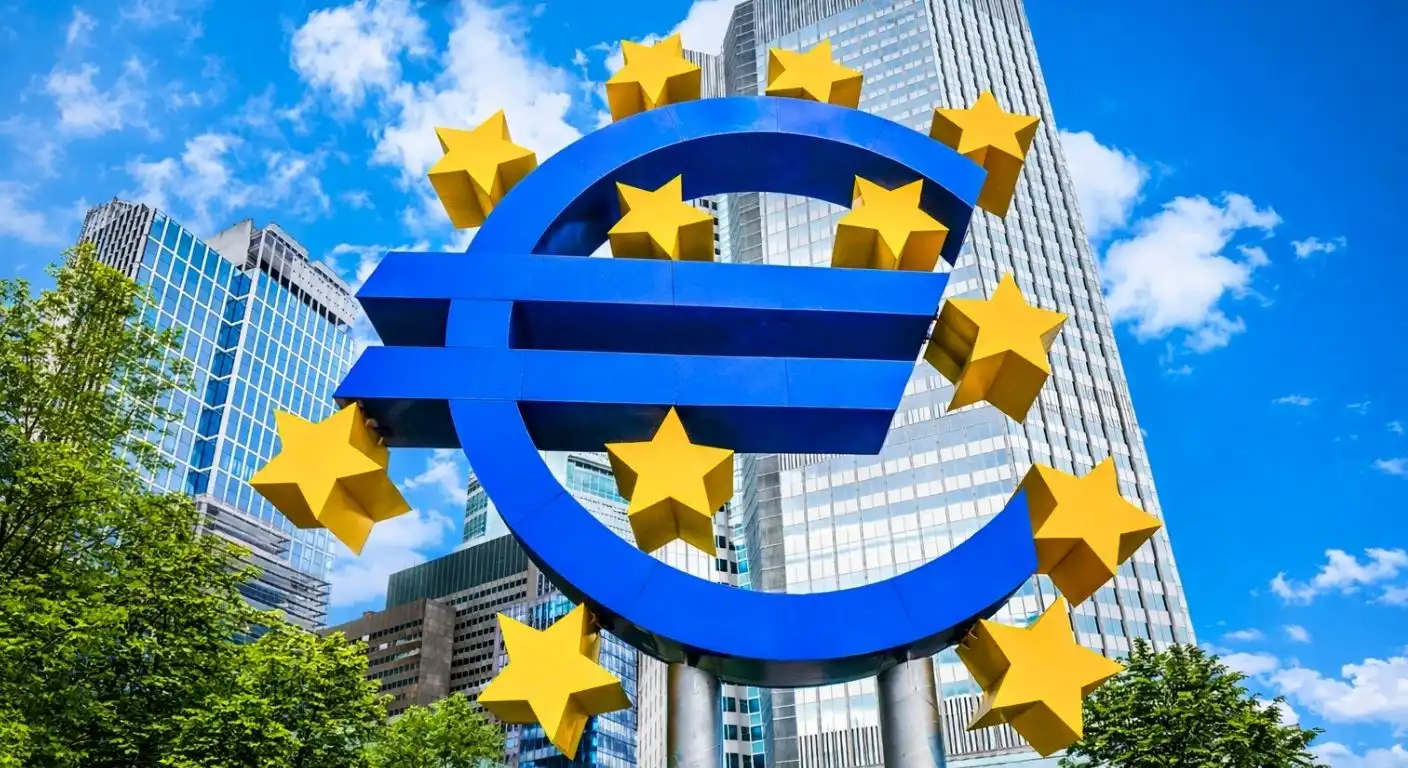
During the annual central banking forum in Sintra, Portugal, European Central Bank (ECB) Governing Council member Olli Rehn delivered a sobering assessment of the Eurozone’s current economic health. Rehn, who also serves as the Governor of the Bank of Finland, warned that the ongoing conflict in the Middle East and the resulting volatility in global oil markets have created a distinct energy shock. This disruption is stoking inflation across the 20-nation bloc while simultaneously dragging down economic expansion, producing visible stagflationary effects that complicate the central bank’s policy path.
The timing of Rehn’s warning is highly significant. Earlier in June, the European Central Bank raised its benchmark deposit facility rate by 25 basis points, moving it from 2.0% to 2.25% in its first interest rate hike in nearly three years. This decision was a direct response to rising consumer prices, which accelerated to an annual rate of 3.2% in May, driven largely by energy and transport costs. By highlighting the dual threat of rising prices and slowing growth, Rehn sought to build support for a highly flexible, data-dependent approach to future monetary policy, warning his colleagues against committing to a fixed, predetermined interest rate path in an environment of extreme geopolitical uncertainty.
Decoding the Stagflationary Reality in the Eurozone
Stagflation represents one of the most difficult challenges for modern central banks because it pits two opposing economic forces against each other. Under normal circumstances, a central bank can combat high inflation by raising interest rates to cool down an overheating economy. Conversely, if economic growth is sluggish, the bank can lower interest rates to encourage borrowing and investment. However, when an economy faces stagflation—defined by stagnant economic growth, high unemployment, and persistently rising prices—raising rates to fight inflation risks pushing the economy into a deep recession, while lowering rates to spur growth risks driving inflation completely out of control.
The latest economic data suggests that the Eurozone has entered a mild stagflationary phase. During the first quarter of the year, gross domestic product (GDP) in the Eurozone grew by just above zero, showing almost no real economic expansion. At the same time, consumer price inflation accelerated beyond the ECB’s 2.0% target. While preliminary estimates for June indicate that headline inflation may have ticked down slightly to 3.0% from May’s 3.2% reading, the underlying price pressures remain deeply embedded in the services sector and industrial supply chains. This combination of stagnant growth and elevated prices leaves the central bank with very little margin for error as it attempts to guide the economy back to stability.
Geopolitical Tensions and the Anatomy of the 2026 Energy Shock
The primary driver of the current economic disruption is the volatile geopolitical situation in the Middle East. The escalating conflict involving Iran has directly threatened critical maritime trade routes, most notably the Strait of Hormuz. Because a significant portion of the world’s daily oil and liquefied natural gas (LNG) shipments must pass through this narrow waterway, any threat of disruption or military action immediately sends a shockwave through global energy markets.
This modern energy shock differs significantly from the crisis that occurred in 2022. While the 2022 shock was primarily a localized European natural gas crisis triggered by the loss of Russian pipeline imports, the current disruption is a broader, global commodity shock. When shipping risks through the Middle East rise, insurance premiums for cargo vessels skyrocket, and tankers are forced to take longer, more expensive routes around the Cape of Good Hope. These rising logistics costs do not stay confined to the oil sector for long; they quickly filter into other key areas of the global economy, pushing up the cost of fertilizer, agricultural production, manufacturing, and ultimately food prices at the grocery store.
The Persistence of Supply-Driven Price Pressures
During the Sintra discussions, several prominent central bankers noted that while global oil prices have recently retreated from their peak levels, the underlying inflationary pressure remains active within the economic system. Brent crude futures recently fell below $73 a barrel, down from the $90 range recorded earlier in the year, providing some welcome short-term relief to consumers at the pump. This decline was driven in part by prospects of a potential ceasefire in the Middle East.
However, ECB Chief Economist Philip Lane and Bundesbank President Joachim Nagel warned that it would be a mistake to assume the energy crisis is over. Lane pointed out that even with the recent drop in crude prices, oil remains significantly higher than its pre-war baseline, creating a persistent, cost-increasing impulse that continues to work its way through the manufacturing and services sectors. Nagel echoed these concerns, stating that supply constraints, shipping delays, and the urgent need for European governments to replenish their depleted strategic petroleum reserves will keep energy costs relatively high for some time, ensuring that inflation rates stay above the bank’s 2.0% target well into next year.
The Crucial Question of Second-Round Effects
A key factor determining whether the ECB will need to implement further rate hikes over the summer is the presence of second-round effects, particularly a wage-price spiral. A wage-price spiral occurs when workers, facing higher utility and grocery bills, demand substantial pay increases to preserve their purchasing power. To cover these higher labor costs, companies then raise the prices of their goods and services, which in turn prompts workers to demand even higher wages, creating a self-reinforcing loop of rising inflation.
On this front, Rehn offered a relatively reassuring assessment. He noted that despite the recent energy-driven price spike, medium-to-long-term inflation expectations in the Eurozone remain firmly anchored at the central bank’s 2.0% target. Furthermore, wage growth across the 20-nation bloc has remained moderate and broadly in line with productivity gains, suggesting that companies are currently absorbing higher unit labor costs through margin compression rather than passing them directly to consumers. If these wage trends hold, the ECB may be able to tolerate a temporary, energy-driven inflation overshoot without needing to implement a series of aggressive interest rate hikes that could damage the fragile economic recovery.
Navigating the Policy Dilemma: The Case for Flexibility
The diverging views on display at the Sintra Forum highlight the deep divisions within the ECB Governing Council regarding the correct path for interest rates. Some hawkish policymakers have argued that the central bank must commit to a predetermined path of steady rate increases over the summer to ensure that inflation returns cleanly to target. They argue that waiting too long to act risks letting high inflation become permanently embedded in consumer behavior, forcing even more painful rate hikes down the road.
Rehn, however, has consistently argued against locking the central bank into a rigid, pre-announced rate path. He maintains that committing to a specific course of action is a mistake when geopolitical events are moving so quickly. If a permanent ceasefire in the Middle East is secured, global energy prices could fall rapidly, bringing inflation down without the need for further monetary tightening. Conversely, if the conflict escalates and shipping through the Strait of Hormuz is completely blocked, inflation could spike again, requiring a swift, aggressive policy response. By maintaining maximum flexibility, the ECB can react to real-time economic data rather than trying to steer the economy based on outdated forecasts.
The June Rate Hike and the Legacy of Past Hesitation
The ECB’s decision to raise interest rates on June 11 to 2.25% marked a major shift in how European policymakers handle supply-side shocks. During the 2022 inflation surge, the ECB was widely criticized for waiting too long to raise rates, allowing consumer price inflation to peak at over 10% before taking decisive action. This historical hesitation influenced the Governing Council’s decision to act proactively this time around.
President Christine Lagarde defended the June rate increase, describing it as a calculated decision based on the concrete economic data in front of them. Unlike in 2022, when the central bank waited for months to evaluate the secondary effects of the energy shock, the ECB acted quickly to send a clear signal to financial markets that it remains committed to its 2.0% price stability mandate. This proactive stance aims to prevent a de-anchoring of inflation expectations, but it carries significant risks for the Eurozone’s weaker economies, which are already struggling under the weight of high public debt and sluggish growth.
The Divergent Paths of European Fiscal and Monetary Coordination
The challenge facing the ECB is further complicated by a lack of coordination between European monetary policy and national fiscal policies. While the central bank is raising interest rates to cool demand and lower inflation, many European governments are implementing expansive fiscal support measures, such as energy subsidies and tax cuts, to shield households and businesses from rising utility bills.
While these fiscal measures are politically popular and help protect vulnerable households, they can run counter to the central bank’s objectives. By keeping consumer purchasing power artificially high, government subsidies can prolong elevated inflation, forcing the central bank to keep interest rates higher for longer than would otherwise be necessary. Furthermore, because many European nations are carrying historically high debt-to-GDP ratios, aggressive monetary tightening raises their borrowing costs, worsening their national debt dynamics and restricting their fiscal flexibility. This policy contradiction remains one of the most difficult structural problems facing the Eurozone today.
Macroeconomic Projections and the Horizon for Recovery
The economic consequences of the Middle East conflict are clearly visible in the latest macroeconomic forecasts. S&P Global Ratings recently revised its economic outlook for Europe, lowering its 2026 GDP growth target by 0.3 percentage points while raising its inflation forecast by an average of 0.7 percentage points across European countries. This revision reflects S&P’s new baseline scenario, which assumes that energy prices will remain elevated and volatile for the remainder of the year.
The risk of a technical recession—defined as two consecutive quarters of negative GDP growth—remains high for several major European economies, including Germany and France. Business confidence indicators have weakened, and demand in the dominant services sector has slowed as consumers reduce discretionary spending to cover higher heating and food bills. While a severe, prolonged recession is not yet the base-case scenario for most economists, the combination of high interest rates, elevated energy costs, and weak consumer demand suggests that the Eurozone faces a prolonged period of subdued, near-zero growth through the end of the year.
Conclusion
Olli Rehn’s warnings at the Sintra Forum highlight the complex policy dilemma facing the European Central Bank as it navigates the stagflationary effects of the Middle East energy shock. By stoking inflation while weighing on economic growth, the conflict has disrupted the ECB’s baseline economic assumptions, forcing policymakers to balance the risk of a prolonged recession against the threat of unanchored inflation expectations. While the recent decline in global oil prices below $73 offers some short-term relief, the structural damage of the shock remains embedded in the European economy.
As the central bank evaluates its next steps, Rehn’s call for a flexible, data-dependent policy represents a sensible approach to an environment of extreme geopolitical uncertainty. Committing to a rigid path of interest rate hikes would be a mistake when a ceasefire could quickly alter the economic landscape. By keeping its options open and monitoring wage trends and second-round effects closely, the ECB can adjust its policy to support the fragile recovery while working to bring inflation back to its 2.0% target, proving that a steady hand and policy flexibility remain the most valuable tools for managing global economic volatility.