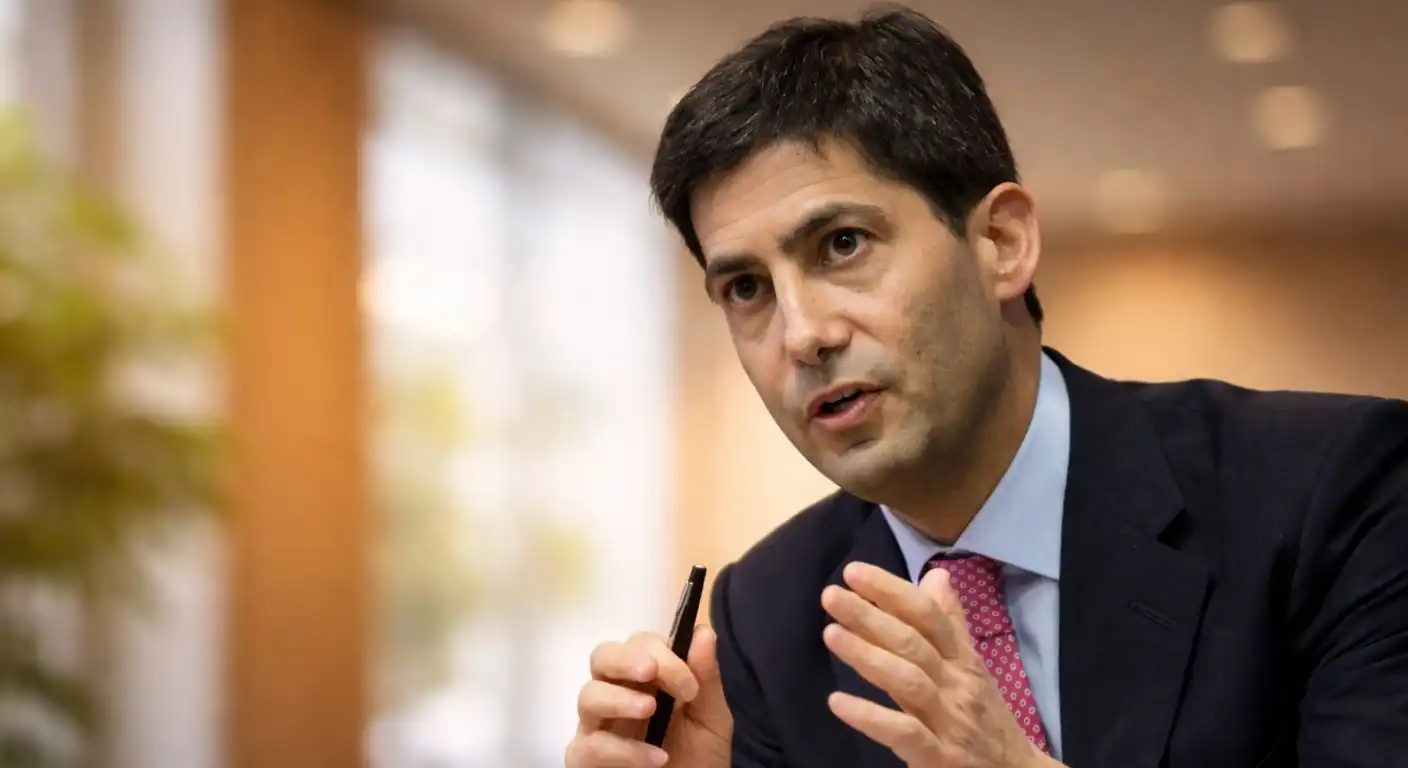
The relationship between Wall Street, Capitol Hill, and the nation’s monetary authorities is undergoing its most dramatic restructuring in a generation. Newly appointed Federal Reserve Chairman Kevin Warsh completed his high-stakes, two-day semi-annual congressional testimony. Appearing first before the Senate Banking Committee on Tuesday and subsequently before the House Financial Services Committee on Wednesday, July 15, 2026, Warsh delivered a highly disciplined, unscripted message that sent immediate shockwaves through the global financial markets.
The hearings represented a major, defining moment for Warsh’s young tenure at the helm of the world’s most powerful central bank. Since succeeding Jerome Powell, the new chairman has systematically dismantled the communication strategies that defined American monetary policy for the past two decades. Rather than offering the market a highly coordinated, comfortable roadmap of future interest rate cuts, Warsh used his time on Capitol Hill to defend his complete elimination of explicit forward guidance. This bold regulatory pivot has forced traders and commercial banks to completely re-evaluate how they analyze interest rate risk.
Throughout his extensive testimony, Warsh maintained a highly focused, data-dependent posture, refusing to yield to intense pressure from lawmakers demanding near-term rate relief. While the chairman acknowledged that recent inflation data has been highly encouraging, he warned that the battle against price instability remains incomplete. By asserting the central bank’s absolute independence from both political pressure and stock market expectations, Warsh made it clear that his administration will prioritize long-term price stability over short-term corporate enthusiasm.
Day Two on Capitol Hill: Defending the Death of Forward Guidance
The second day of the congressional hearings, held before the House Financial Services Committee, focused heavily on the Federal Reserve’s communications policy. Committee members from both sides of the political aisle pressed the chairman on his decision to abandon the traditional tools that the central bank historically used to guide the market.
For over a decade, investors relied on the quarterly “dot plot” to understand where every individual Federal Open Market Committee member expected interest rates to land. Warsh’s decision to personally boycott his own forecasting tool and refuse to submit his own dot has triggered significant anxiety among Wall Street’s largest trading desks.
In a series of tense exchanges with lawmakers, Warsh aggressively defended his actions. He argued that predicting interest rate moves months in advance is an exercise in futility that ultimately hurts the central bank’s credibility.
The 130-Word Mandate: Retrenching to Price Stability
The most visible symbol of this communications overhaul is the dramatic reduction in the length of the official Federal Open Market Committee statement. Under previous leadership, the policy statement released at the conclusion of each meeting was a dense, highly managed document containing over 340 words. It featured delicate phrasing, carefully balanced risk assessments, and specific caveats designed to soothe equity traders.
During his first meeting in the chairman’s seat, Warsh gutted the document, reducing its length by over 62 percent to a mere 130 words. The new statement stripped away every hint of future easing, focusing instead on a single, uncompromising mandate: “The Committee will deliver price stability.”
During his testimony, Warsh explained that this retrenchment was necessary to restore the central bank’s focus. By keeping the statement short and direct, the committee ensures that it never traps itself in a predefined narrative, allowing policymakers to react quickly and decisively as the economic data changes.
The Problem with Central Bank Hand-Holding
The chairman’s critique of legacy communications extends to the core concept of forward guidance itself. During his testimony, Warsh argued that the hand-holding of the previous decade had created a dangerous moral hazard in the financial markets.
When a central bank promises to keep interest rates low for an extended period, it encourages investors to take on excessive risk, bid up asset prices to speculative heights, and build highly leveraged portfolios.
This artificial market confidence can quickly turn toxic when inflation unexpectedly spikes, forcing the central bank into rapid, uncoordinated interest rate hikes that destabilize the entire banking system. Warsh pointed directly to the regional banking panic of 2023 as a primary example of this vulnerability.
By forcing market participants to do their own economic forecasting and accept the reality of unscripted price discovery, the new chairman is attempting to build a more resilient, self-reliant financial sector that can absorb macroeconomic shocks without requiring constant taxpayer-funded interventions.
The Battle Over Basel III and Banking Capital Requirements
Beyond the debates over monetary policy and forward guidance, the congressional hearings featured intense, bipartisan questioning regarding the proposed Basel III Endgame banking regulations. These proposed capital rules, which would force the nation’s largest commercial banks to hold significantly larger cash reserves to protect against potential losses, have been a source of fierce lobbying and political division in Washington.
Warsh, who spent years working in investment banking and serving as a Federal Reserve governor during the 2008 financial crisis, took a highly cautious, balanced approach to the capital rules. While he acknowledged the absolute necessity of maintaining a secure banking system, he expressed deep concern that overregulating the commercial banking sector could have severe, unintended consequences for the broader American economy.
Protecting Main Street Credit from Regulatory Overtightening
In his testimony before the House committee, Warsh warned that forcing commercial lenders to hold tens of billions of dollars in extra, unproductive reserve capital would directly restrict the flow of credit to the real economy. When a bank must increase its capital buffers, it naturally responds by scaling back its loan portfolios and raising borrowing costs for consumers.
This regulatory overtightening would hit small businesses and middle-class homebuyers particularly hard, making it increasingly difficult for them to secure affordable mortgages, expansion loans, and lines of credit.
Warsh promised lawmakers that the Federal Reserve is currently executing a holistic, transparent review of the Basel III proposal.
He pledged to work closely with other regulatory agencies to ensure that any final capital rules are balanced, evidence-based, and designed to protect the financial system without strangling the economic growth of Main Street.
The Threat of Driving Capital into the Shadow Banking Sector
A major risk highlighted by Warsh during the hearings is the rapid growth of the unregulated shadow banking sector. Over the past decade, as federal regulators imposed increasingly strict rules on traditional commercial banks, a significant portion of high-value lending migrated to non-bank financial intermediaries, including private equity firms, private credit funds, and independent fintech platforms.
These shadow banking entities operate completely outside the federal regulatory perimeter. They do not face the same capital adequacy requirements, liquidity stress tests, or consumer protection mandates that govern traditional banks.
Warsh warned that if the government overtightens the rules for regulated commercial banks, it will simply accelerate this migration of capital to the shadow banking sector.
This would actually increase systemic risk, as a larger share of the nation’s credit creation would occur in highly leveraged, opaque financial pools that are completely hidden from federal oversight, creating a dangerous blind spot for financial regulators.
Geopolitical Energy Shocks and the Inflation Outlook
The chairman’s economic assessment of the United States was highly realistic, balancing positive domestic indicators with rising geopolitical risks. The primary focus of his inflation commentary was the persistent threat of imported price shocks, driven by ongoing military conflicts and shipping disruptions in the Middle East.
Warsh acknowledged that the June Consumer Price Index report, which showed inflation cooling to 2.9%, was a highly encouraging milestone. However, he warned that the central bank cannot afford to declare victory prematurely.
The physical destruction of energy infrastructure and the blockade of major international shipping lanes have kept global crude oil and domestic gasoline prices elevated, introducing a volatile, unpredictable element into the inflation equation.
Looking Past the Middle East Energy Spikes
Despite the temporary energy price spikes, Warsh expressed confidence that core inflation remains well-anchored. Core inflation, which strips out the volatile food and energy sectors to reveal the underlying pricing trends, has continued to ease gradually over the first half of the year.
The chairman explained that as long as the domestic economy operates with a degree of excess capacity and the labor market remains soft, businesses cannot easily pass on their increased utility and transportation bills to consumers.
This economic slack prevents the return of a dangerous, self-reinforcing inflation spiral.
However, Warsh emphasized that the committee will continue to monitor the geopolitical situation closely, refusing to commit to a specific rate-cut schedule until they have absolute, verified proof that core inflation is on a sustainable path toward the 2% target.
The Staggering Cost of Peacetime Deficit Spending
The most politically sensitive portion of Warsh’s testimony was his sharp, uncompromising criticism of the nation’s massive fiscal deficit. The United States government is currently running peacetime deficits that have no historical precedent, borrowing trillions of dollars annually even as the domestic economy operates near full employment.
Warsh warned lawmakers that this level of government spending is structurally inflationary and puts immense upward pressure on real Treasury yields.
To fund these massive deficits, the Treasury Department must issue an unprecedented volume of new bonds every single month, directly competing with private investments for available capital and driving borrowing costs higher for everyone.
The chairman warned that monetary policy cannot solve a fiscal crisis. If the federal government refuses to implement long-term budget discipline and control its spending, the resulting national debt burden will eventually trigger a severe, systemic repricing of sovereign bonds, creating a financial storm that no central bank can easily digest.
The Productivity Shield: Modeling the AI Deflation Thesis
To balance his warnings on inflation and deficits, Warsh highlighted an encouraging new technological force that is actively supporting global economic productivity: the rapid deployment of generative artificial intelligence and automated software agents.
The chairman revealed that the Federal Reserve has established specialized, internal task forces to actively model how the AI build-out is impacting the real economy.
These research groups, which include prominent technology leaders and Stanford economists, are studying whether the widespread adoption of AI tools will act as a major, long-term deflationary force.
If software automation can drastically reduce the cost of corporate operations and boost productivity per worker, it will naturally push prices down, allowing the central bank to maintain lower interest rates in the future without risking an inflation flare-up.
However, Warsh cautioned that the central bank cannot base its monetary policy on speculative future productivity gains. While the initial task force data is highly encouraging, the commercial diffusion of these advanced technologies across traditional, slow-moving industries is still in its infancy.
The Federal Reserve must continue to base its interest rate decisions on hard, realized economic data rather than optimistic technological forecasts, ensuring that the central bank remains a disciplined, objective referee for the national economy.
The two-day congressional testimony of Kevin Warsh has permanently established a new, unscripted era for American monetary policy. By aggressively defending the elimination of forward guidance, taking a balanced approach to banking capital regulations, and calling on Congress to address the unsustainable national deficit, the new chairman has proved that he is willing to make highly unpopular decisions to protect the long-term price stability of the United States.
As the financial markets adapt to this data-dependent reality, the corporate and investing worlds must accept that the era of central bank hand-holding is over. The path forward will undoubtedly feature increased near-term volatility and sharp price discovery, but it will also foster a far more resilient, self-reliant financial system that is uniquely prepared to navigate the challenges of the digital age.