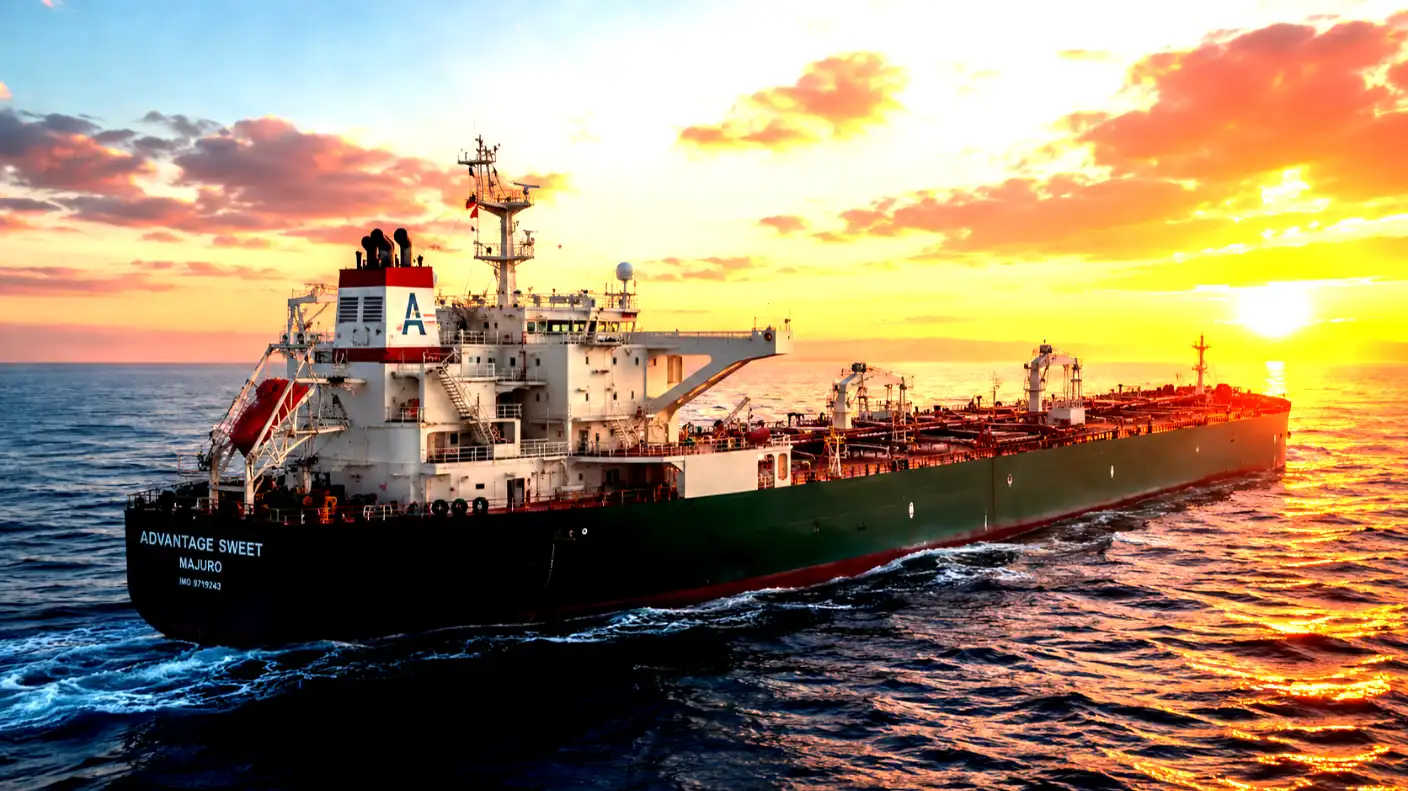
International energy markets have entered a high-stakes supply crisis as escalating military conflicts across critical maritime transit corridors and unexpected production halts in Central Asia threaten global crude oil availability. Benchmark Brent crude futures experienced a dramatic weekly advance exceeding 13.5%, climbing past $100 per barrel, while United States West Texas Intermediate crude surged 10.9% to trade near $91.50 per barrel. The rapid price escalation reflects widespread panic among international oil traders as physical supply lines face severe, simultaneous disruptions across the Middle East and the Black Sea.
The primary catalyst behind the latest market surge is a series of armed drone and missile strikes targeting commercial oil tankers in the Red Sea. Houthi militants in Yemen launched attacks on two Saudi Arabian crude oil tankers, declaring an active naval blockade near the strategic Bab el-Mandeb Strait. This dangerous development opens a second maritime front alongside the ongoing military paralysis of the Strait of Hormuz, effectively choking off the two primary export routes for Middle Eastern petroleum.
Compounding the Middle Eastern maritime crisis, Kazakhstan’s energy ministry confirmed that domestic oil companies were forced to scale back field production following drone strikes on Russia’s Black Sea coast. The attacks disabled the primary export terminal operated by the Caspian Pipeline Consortium, which handles roughly 80% of Kazakhstan’s crude oil exports. With key transit gateways compromised in multiple regions, global energy markets face an immediate physical deficit that threatens to drive crude prices toward multi-year highs.
TechGolly provides an in-depth analysis of the global crude oil supply shock, evaluating Red Sea tanker security risks, Black Sea pipeline disruptions, soaring maritime freight rates, refining margin dynamics, macroeconomic inflation threats, and long-term price projections from Wall Street financial analysts.
Unpacking the Red Sea Tanker Attacks and Bab el-Mandeb Disruption
The armed assault on Saudi crude tankers in the Red Sea represents a dangerous escalation in the battle for global energy infrastructure. The Bab el-Mandeb Strait serves as a vital maritime bottleneck connecting the Red Sea to the Gulf of Aden and the Indian Ocean. Under normal operating conditions, approximately 7.4 million barrels per day of crude oil and refined fuels pass through this narrow waterway, accounting for roughly 7% of total global seaborne petroleum trade.
The Houthi movement’s declaration of a naval blockade specifically targeting Saudi maritime traffic strikes at the heart of global supply contingency plans. Following earlier military clashes that restricted shipping through the Persian Gulf, Saudi Arabia had attempted to bypass regional friction points by pumping crude across land-based pipelines to its western port facilities at Yanbu on the Red Sea. By targeting tankers loading at Red Sea terminals, hostile forces have effectively undermined Saudi Arabia’s primary alternative export channel.
In response to the missile strikes, major commercial tanker operators and global oil companies ordered their fleets to suspend transits through the Red Sea immediately. Dozens of fully laden supertankers carrying millions of barrels of crude bound for European and Asian refineries were instructed to alter course, executing wide U-turns or anchoring in safe deepwater zones.
To avoid the contested Red Sea corridor, commercial vessels are being forced to take long-haul detour routes around the Cape of Good Hope at the southern tip of Africa. Redirecting oil tankers around Africa adds up to 30 days to a round-trip voyage between the Middle East and Western Europe. This massive increase in transit distance ties up tanker capacity for extended periods, reducing global vessel availability and creating severe physical delivery delays for international refineries.
The Parallel Crisis in the Strait of Hormuz
The Red Sea crisis compounds an existing logistics catastrophe in the Strait of Hormuz, where ongoing military confrontations between United States forces and regional actors have entered a third consecutive week. The Strait of Hormuz is widely recognized as the world’s most critical oil transit chokepoint, historically handling nearly 20% of global petroleum consumption, or roughly 20 million barrels per day of crude, condensate, and refined fuels.
Commercial shipping through the Persian Gulf has ground to a near-total standstill as naval engagements and electronic warfare jamming make navigation unacceptably dangerous. Marine insurance syndicates operating out of London and Zurich responded to the military escalations by officially canceling war-risk insurance coverage for merchant vessels operating in the Persian Gulf and the Gulf of Oman.
Without active insurance underwriting, commercial ship captains and global energy trading houses cannot legally or operationally charter vessels through the strait. The simultaneous paralysis of both the Strait of Hormuz and the Bab el-Mandeb Strait represents an unprecedented scenario in modern energy history, trapping tens of millions of barrels of crude oil in regional storage tanks while consuming countries face looming supply shortages.
Black Sea Supply Shocks: Kazakhstan Production Cuts and CPC Terminal Shutdown
While Middle Eastern waterways face military blockades, a second major supply shock erupted in Eastern Europe and Central Asia. Suspected drone strikes targeted the offshore loading facilities of the Caspian Pipeline Consortium near the Russian port of Novorossiysk on the Black Sea coast. The attack inflicted substantial structural damage to single-point mooring buoys, forcing terminal operators to suspend all crude oil loading operations indefinitely.
The shutdown of the Caspian Pipeline Consortium terminal creates an immediate operational crisis for Kazakhstan. The 1,500-kilometer CPC pipeline serves as the primary economic artery for the Central Asian nation, transporting crude oil from massive inland fields—including Tengiz, Kashagan, and Karachaganak—to Black Sea export tankers. The pipeline system handles approximately 1.8 million barrels per day, representing over 80% of Kazakhstan’s total crude oil export capacity.
Because Kazakhstan possesses limited onshore storage infrastructure, the inability to load tankers at the Black Sea terminal caused storage tanks at field sites to fill within days. Kazakhstan’s Energy Ministry issued an emergency statement confirming that upstream operating consortia had begun choking back wellhead production to prevent structural damage to pipeline systems and storage facilities.
The loss of 1.8 million barrels per day of Kazakh CPC Blend crude severely impacts European refining hubs. CPC Blend is a high-quality, light sweet crude grade that European refiners rely on heavily to produce high-margin transportation fuels like diesel and jet fuel. Deprived of both Russian Ural crude due to trade sanctions and Kazakh CPC crude due to terminal damage, Mediterranean and Northwestern European refiners are facing acute feedstock shortages.
Soaring Freight Charter Rates and Tanker Capacity Squeezes
The simultaneous redirection of global trade flows has triggered an explosive rally in maritime shipping costs. With tankers forced onto extended long-haul routes around Africa and Black Sea vessel availability severely restricted, global charter rates for oil tankers have reached historic highs.
Chartering data from global shipbrokers reveals that daily hire rates for Very Large Crude Carriers, capable of carrying 2 million barrels of crude, have skyrocketed across all major export routes. Shipping costs for Very Large Crude Carriers departing the United States Gulf Coast bound for Asian destinations increased by $6.00 to $7.00 per barrel, representing an 80% surge in transport costs in less than two weeks.
Smaller Aframax and Suezmax vessels, which carry between 600,000 and 1 million barrels, experienced even steeper percentage increases. Transatlantic Aframax charter rates jumped by more than 130%, adding up to $13.50 per barrel in freight surcharges for European importers purchasing American or West African crude. High shipping costs add directly to the delivered cost of physical crude, amplifying inflationary pressures for end consumers.
Refining Margins, Product Deficits, and Commercial Inventory Draws
The global crude supply shock is rapidly translating into an acute crisis for refined petroleum products, particularly middle distillates like diesel, heating oil, and aviation jet fuel. Global oil refineries were already operating near maximum processing capacity, running over 81.6 million barrels per day to meet strong summer travel and industrial demand.
As physical crude deliveries become unpredictable, global refining crack spreads—the profit margin refiners earn by converting crude oil into finished fuels—have exploded upward. Asian and European refining margins for diesel and jet fuel surged past $65 per barrel, compared to historical average margins of $15 to $20 per barrel. These elevated processing margins reflect severe market anxiety that airlines, trucking fleets, and industrial manufacturers will face physical fuel rationing if crude supply disruptions persist.
At the same time, commercial crude oil inventories across major industrial economies offer very little buffer against ongoing supply cuts. Official inventory data indicates that commercial crude stocks in the United States sit 17.2% below five-year historical averages for this period of the year. Storage levels at the primary American pricing hub in Cushing, Oklahoma, dropped below 20 million barrels, placing local storage near operational minimum levels required to maintain pipeline pressure.
Western governments face difficult policy choices regarding their Strategic Petroleum Reserves. While emergency reserve releases provided temporary price relief during previous energy crises, national strategic stockpiles have been significantly depleted by prior drawdowns. Furthermore, releasing government crude reserves into domestic markets does not solve the physical transport bottlenecks preventing tankers from navigating international maritime chokepoints.
Macroeconomic Consequences and Reignited Inflation Pressures
The sudden surge in crude oil benchmarks toward $100 per barrel poses a direct threat to global macroeconomic stability, threatening to reignite consumer price inflation and disrupt central bank monetary policy frameworks.
Energy prices function as a foundational cost across the global economy. Soaring crude prices feed immediately into higher retail gasoline prices, elevated trucking freight rates, increased airline ticket surcharges, and higher industrial manufacturing costs. For energy-importing nations across Europe, Asia, and the developing world, rising energy import bills strain national trade balances and exert downward pressure on domestic currencies relative to the United States dollar.
Central bank policymakers are monitoring the energy spike with deep concern. Over recent quarters, central banks—including the Federal Reserve, the European Central Bank, and the Bank of England—had begun lowering benchmark interest rates as headline inflation metrics cooled toward 2% target levels. However, if sustained $100+ crude oil prices trigger secondary inflation across consumer goods and services, central banks may be forced to halt interest rate cuts or consider renewed monetary policy tightening.
Bond yields across major sovereign debt markets rose sharply as fixed-income investors priced in higher long-term inflation expectations. Higher borrowing costs, combined with elevated energy expenses, threaten to slow corporate earnings growth and depress consumer confidence across major developed markets.
Wall Street Projections and Strategic Market Outlook
As physical supply constraints multiply, commodity strategists and Wall Street investment banks are aggressively revising their near-term crude oil price forecasts upward. Financial analysts warn that current market pricing has only partially absorbed the potential severity of a prolonged multi-region supply deficit.
Research notes published by major investment banks, including Goldman Sachs, outline scenarios where sustained blockades in the Middle East and Black Sea could remove between 2 million and 4 million barrels per day from global markets for months. Under an extended multi-strait disruption scenario, institutional analysts project that Brent crude futures could easily breach $120 per barrel during the fourth quarter, reaching price levels not seen since previous major geopolitical supply shocks.
Attempting to offset the global deficit, non-OPEC producers in the Americas are maximizing output. Field production in the United States expanded to approximately 13.86 million barrels per day, supported by steady drilling activity in the Permian Basin of West Texas and New Mexico. Meanwhile, offshore production facilities in Guyana and Brazil are operating at peak capacity, exporting light sweet crude to European refiners seeking alternatives to Middle Eastern and Kazakh barrels.
However, non-OPEC supply expansion cannot immediately replace millions of barrels of disrupted Middle Eastern and Central Asian production. Ramping up field drilling, constructing new export pipelines, and deploying additional supertankers require months of lead time and multi-billion-dollar capital investments, ensuring that physical supply gaps will remain unbridged in the short term.
Key Takeaways for Energy Executives and Market Participants
The dramatic acceleration in global crude oil prices delivers several vital strategic lessons for corporate decision-makers, supply chain managers, and commodity market participants navigating volatile energy markets.
First, physical supply security has permanently replaced just-in-time procurement logic. Corporate energy buyers and industrial refiners can no longer assume uninterrupted transit through major international chokepoints. Establishing long-term physical supply agreements with stable, Atlantic Basin producers provides essential protection against catastrophic maritime blockades.
Second, maritime freight management is as critical as underlying commodity hedging. Spiking charter rates for VLCC and Aframax vessels demonstrate that shipping costs can quickly erode refining margins and physical trade arbitrage windows. Energy trading desks must integrate long-term vessel charter coverage into their broader commodity risk management strategies.
Third, structural middle distillate shortages will keep refining margins elevated. With global refining capacity constrained and key export terminals damaged, demand for high-quality light sweet crude will remain intense, maintaining a firm price floor under global benchmarks.
Finally, the global energy system remains exceptionally vulnerable to geopolitical shocks. As military conflicts continue to threaten vital trade corridors, business leaders and investors must prepare for a prolonged period of elevated energy volatility, where physical supply availability dictates global economic performance.