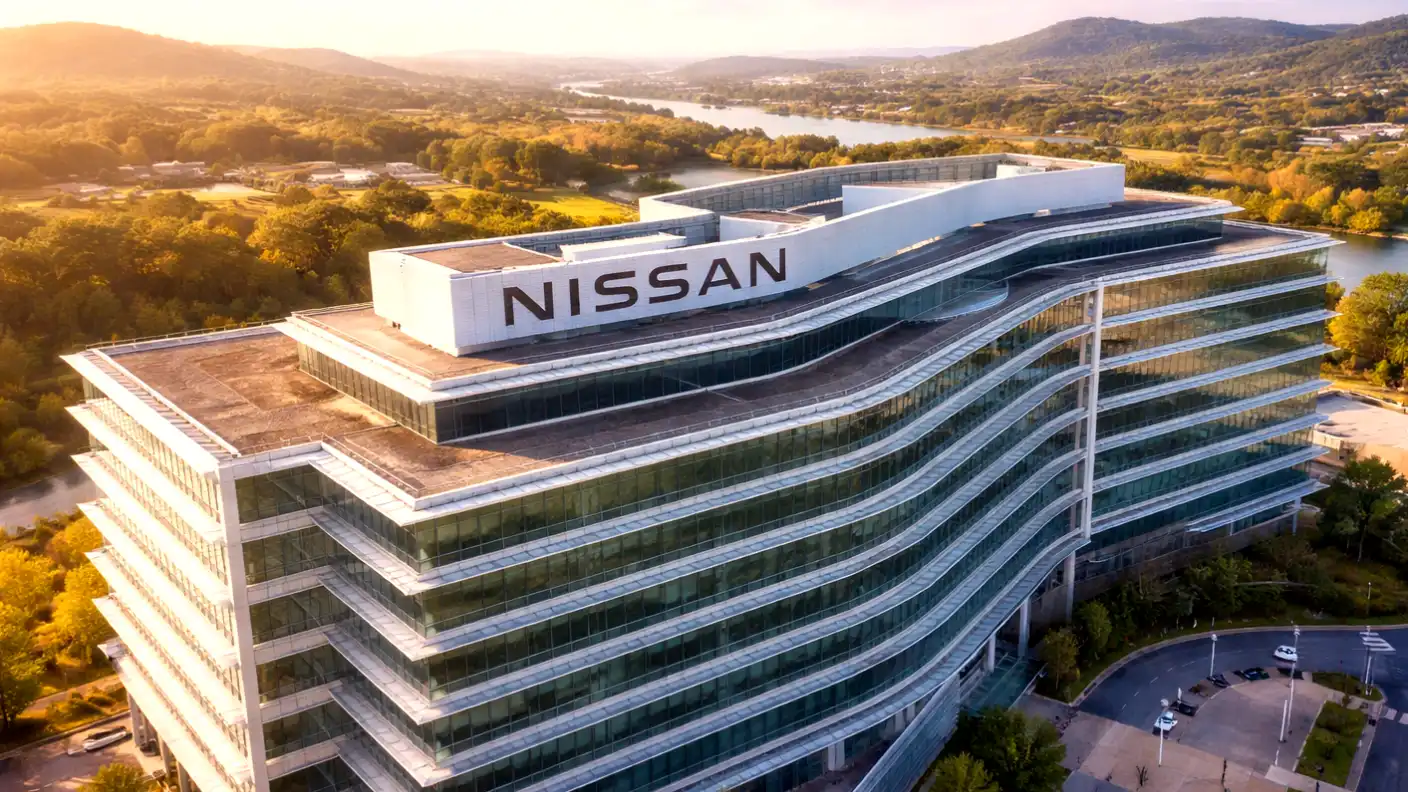
Japanese automotive giant Nissan Motor is executing a comprehensive reorganization of its domestic manufacturing base, pledging to maintain an annual production capacity of 1 million vehicles in Japan despite closing historic assembly plants. The restructuring forms a central pillar of the company’s broader global turnaround blueprint, known as The Arc, which seeks to restore operating profitability, optimize factory utilization rates, and accelerate the development of electrified vehicles.
Under the updated domestic manufacturing strategy, Nissan will consolidate its vehicle assembly operations around three primary industrial hubs: the Tochigi plant in eastern Japan and two sister facilities in southwestern Kyushu. By shifting vehicle models between regional factories rather than eliminating assembly lines entirely, the automaker plans to boost domestic production output by roughly 40% from previous fiscal baselines of around 700,000 units. The strategic overhaul allows Nissan to protect its domestic industrial foundation, optimize factory floor efficiency, and expand vehicle exports to North America, Europe, and Asia.
Consolidating Assembly Around Three Primary Manufacturing Hubs
The core of Nissan’s domestic manufacturing restructuring is the reallocation of vehicle nameplates across three high-capacity production complexes. Rather than spreading low volumes of diverse models across multiple underutilized factories, the company is grouping similar vehicle architectures under dedicated regional roofs.
Tochigi Plant Revamp with Minivan Production Transfer
The centerpiece of the operational reorganization is the Tochigi plant, located in Kaminokawa, north of Tokyo. Over the past several years, the Tochigi facility has operated well below its rated assembly potential, with annual production volume dropping to approximately 30,000 vehicles as consumer demand for pure battery electric vehicles grew more slowly than initial industry forecasts.
To solve this utilization bottleneck, Nissan is transferring the assembly of two of its most popular domestic passenger minivans—the high-volume Serena and the luxury flagship Elgrand—from factories in southwestern Japan directly to Tochigi.
The Tochigi plant already produces the all-electric Ariya crossover alongside the Fairlady Z sports car and premium Infiniti sedans. Integrating popular family minivans onto Tochigi’s automated assembly lines will immediately lift factory throughput, allowing the plant to run multi-shift operations and lower its fixed per-unit manufacturing costs. Nissan expects the model transfers to ramp up over the next several years, establishing Tochigi as the company’s premier assembly center for large, high-value passenger vehicles.
Specializing in Kyushu Facilities on Compacts and SUVs
While Tochigi takes over minivan production, Nissan is transforming its manufacturing complex in Kanda, Fukuoka Prefecture, into a dedicated powerhouse for compact cars and high-riding sport utility vehicles. The Kyushu manufacturing zone comprises two interconnected facilities: Nissan Motor Kyushu and Nissan Shatai Kyushu.
Under the new operational division, the Kyushu plants will absorb the production of popular compact vehicles, including the Note e-POWER hatchback and the Kicks compact crossover. The Kyushu complex offers major logistical advantages, including deepwater maritime berths that allow car-carrying vessels to load newly assembled vehicles directly from the factory floor.
By dedicating Kyushu to compact platforms and export-oriented SUVs, Nissan creates high-volume economies of scale. The plants can run high-speed stamping presses, automated welding lines, and paint shops at maximum capacity, reducing unit production costs while supplying both the domestic Japanese retail network and international dealerships across the Asia-Pacific region.
Managing the Closure of Historic Kanagawa Facilities
Maintaining an annual domestic production capacity of 1 million units requires Nissan to make painful structural cuts elsewhere in its domestic manufacturing network.
The Phased Wind-Down of Oppama and Shonan Plants
As part of its global initiative to close or restructure seven vehicle assembly plants worldwide, Nissan is phasing out operations at two historic manufacturing centers in Kanagawa Prefecture. The company plans to shutter vehicle assembly at its landmark Oppama plant in Yokosuka and close the Shonan plant operated by its subsidiary, Nissan Shatai, in Hiratsuka.
The Oppama plant holds deep historical significance for the Japanese automotive sector, having served as a primary mass-production facility since the early 1960s and as the original manufacturing birthplace of the pure-electric Nissan Leaf. However, land constraints, aging building infrastructure, and urban encroachment have made comprehensive factory expansions at Oppama financially prohibitive.
Nissan is managing the closure through phased transitions, shifting vehicle tooling and assembly schedules to Kyushu and Tochigi over a multi-year window. The company is coordinating with local labor unions and municipal authorities to redeploy skilled assembly technicians, plant engineers, and maintenance specialists to remaining facilities, minimizing regional job losses while streamlining corporate overhead.
Reallocating Assembly Lines Without Cutting Total Capacity
In previous corporate restructuring cycles, closing major vehicle assembly plants resulted in permanent cuts to total domestic manufacturing capacity. Nissan is taking a fundamentally different approach during this reorganization.
Instead of scrapping assembly capacity, the automaker is transferring robotic tooling, automated guided vehicle fleets, and powertrain mounting jigs from closing Kanagawa plants directly into available factory bays in Kyushu and Tochigi. Following the full closure of Oppama, Nissan’s internal factory capacity will stand at approximately 800,000 units, with contract manufacturing agreements through subsidiary entities lifting total domestic potential back to the 1 million vehicle benchmark. This reallocation strategy preserves Nissan’s ability to meet sudden spikes in export demand without carrying the real estate maintenance expenses of surplus factory sites.
Strategic Turnaround Under the Arc Business Blueprint
The restructuring of domestic assembly lines aligns directly with Nissan’s comprehensive medium-term business plan, The Arc. The corporate strategy aims to introduce 30 new vehicle models globally while achieving structural cost reductions across all vehicle segments.
Slashing Electric Vehicle Production Costs by 30 Percent
A central target of The Arc’s business plan is achieving cost parity between electric vehicles and traditional internal combustion engine cars before the end of the decade. Nissan aims to reduce the manufacturing and development costs of next-generation electric vehicles by 30% compared to current Ariya baseline figures.
To achieve these savings, Nissan is standardizing its modular vehicle architectures. Future electric and e-POWER hybrid vehicles will share common modular powertrain units, integrated drive motors, and standardized battery pack enclosures.
By grouping modular production at the revamped Tochigi and Kyushu hubs, Nissan can assemble pure battery-electric cars, series-hybrid e-POWER models, and conventional gasoline vehicles along the exact same physical assembly line. This modular flexibility allows factory managers to adjust daily production mixes in real time based on shifting consumer demand, preventing factory slowdowns when electric vehicle sales fluctuate.
Joint Development with Honda for Software-Defined Vehicles
To compete effectively against well-funded technology entrants and rapidly expanding Chinese electric vehicle makers, Nissan has formed a strategic technological partnership with domestic rival Honda Motor. The two Japanese automakers have signed joint development agreements to standardize core automotive software platforms, electronic control units, and next-generation battery architectures.
Developing proprietary automotive software from scratch requires billions of dollars in software engineering and artificial intelligence research. By sharing foundational software stacks with Honda, Nissan reduces its capital expenditure requirements while accelerating development timelines for software-defined vehicles.
Standardized electronic control units and unified operating systems will enter mass production across Nissan’s restructured Japanese assembly lines, allowing vehicles rolling off Tochigi and Kyushu lines to feature advanced driver-assistance systems, automated over-the-air firmware updates, and integrated intelligent cockpit displays.
Boosting Factory Utilization from Sluggish 15 Percent Lows
The overarching financial objective of Nissan’s domestic overhaul is to restore plant utilization rates to healthy, profitable benchmarks.
Addressing the Slower Adoption of Pure Battery Electrics
Over the past three years, global automotive markets have experienced an uneven transition toward full electrification. While consumer interest in electrified transport remains high, high vehicle purchase prices, charging infrastructure deficits, and the reduction of state purchase subsidies across major markets have slowed the sales growth of pure battery electric cars.
This market cooling hit Nissan’s advanced Tochigi plant heavily, where factory utilization languished at roughly 15% of total capacity. Modern automotive assembly facilities require utilization rates of at least 75% to 80% to cover fixed capital depreciation and generate operating profits.
Relying exclusively on premium electric crossovers like the Ariya left Tochigi vulnerable to market shifts. By transferring steady, high-volume gasoline and e-POWER hybrid minivans like the Serena into Tochigi, Nissan immediately raises plant utilization toward 80%, transforming an underperforming capital asset into an efficient, cash-generative assembly center.
Flexible Multi-Powertrain Assembly Lines
Achieving high factory utilization requires modernizing assembly technology. At the Tochigi plant, Nissan has deployed its advanced Intelligent Factory production system, representing an initial capital investment exceeding 33 billion yen, or roughly $300 million.
The Intelligent Factory system features automated Universal Powertrain Mounting rigs capable of installing any of Nissan’s 30 distinct powertrain configurations into vehicle chassis automatically. Automated optical sensors and laser alignment tools measure sub-millimeter tolerances, securing battery packs, hybrid transaxles, or traditional combustion engines into car bodies in a single automated work cycle.
Furthermore, automated painting booths cure entire vehicle bodies at low temperatures, cutting factory carbon emissions by 25% while accommodating both steel and carbon-composite vehicle panels. This automated flexibility ensures that Nissan’s domestic plants can transition smoothly between different vehicle models without requiring multi-month factory shutdowns for tooling changeovers.
Long-Term Outlook for Nissan’s Global Export and Domestic Strategy
Nissan’s commitment to maintaining a domestic production base of 1 million vehicles reflects a balanced strategy that pairs domestic market defense with aggressive international export growth.
Expanding Vehicle Exports from Japanese Coastal Ports
While domestic retail sales in Japan provide a stable revenue floor, expanding vehicle exports is essential to maintaining high manufacturing capacity. A competitive Japanese yen and strong foreign demand for reliable hybrid vehicles create favorable conditions for Japanese automotive exports.
Nissan is optimizing its coastal shipping routes to increase exports of compact crossovers and light commercial vehicles to Southeast Asia, Oceania, Latin America, and the Middle East. By leveraging Kyushu’s proximity to Asian maritime trade lanes, the company can deliver vehicles to regional distribution centers in days rather than weeks.
Furthermore, exporting high-value minivans and sports cars from eastern ports near Tochigi allows Nissan to capture higher revenue per shipped unit, offsetting freight inflation and supporting total operating earnings.
Defending Domestic Market Share Against Rising Competition
Inside Japan, the automotive retail sector is entering a period of intense competition. Domestic rivals like Toyota and Suzuki continue to dominate the popular kei-car compact segment, while foreign electric vehicle manufacturers are attempting to establish retail dealer networks in major metropolitan areas.
Nissan is defending its domestic market position by refreshing its core model lineup. Over the medium term, the company plans to introduce an all-new compact passenger car alongside next-generation iterations of its best-selling e-POWER hybrid lineup.
By keeping vehicle engineering, powertrain fabrication, and final assembly inside Japan, Nissan preserves its reputation for high build quality, reliability, and precision manufacturing. Maintaining a strong domestic industrial footprint reassures Japanese consumers and corporate fleet buyers, ensuring that the brand retains its foundational position in the domestic mobility market.
Securing the Future of Japanese Automotive Manufacturing
Nissan’s decision to maintain a 1-million-unit domestic production capacity while restructuring its factory network marks a decisive turning point in the company’s corporate recovery. By moving past defensive retrenchment and executing a targeted reallocation of assembly lines, the automaker is building a leaner, more resilient manufacturing ecosystem.
Consolidating vehicle assembly around Tochigi and Kyushu eliminates structural inefficiencies, lifts factory utilization from historic lows, and provides the production flexibility required to navigate the electric vehicle transition. Supported by strategic partnerships with Honda and the cost-reduction targets of The Arc business plan, Nissan is equipping its domestic factories to compete on the global stage.
As the international automotive industry navigates shifting consumer preferences, technological disruptions, and trade complexities, Nissan’s modernized Japanese manufacturing base will serve as an adaptable industrial anchor, driving the company’s global growth and vehicle innovation for decades to come.