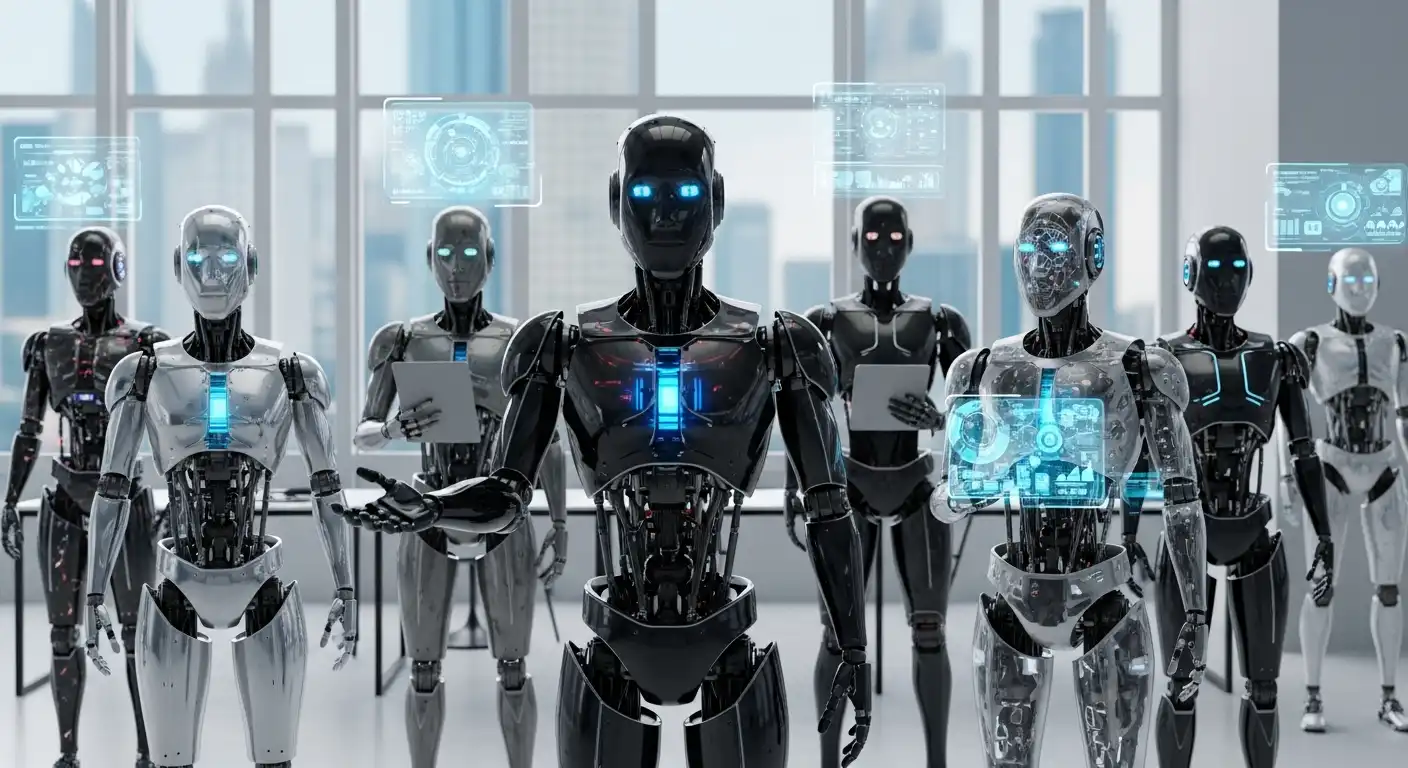
Humanoid robotics has reached a crucial inflection point where flashy physical demonstrations must give way to real industrial utility. For years, robotics developers have wowed global audiences with bipedal machines that sprint down running tracks, execute martial arts kicks, and perform gymnastic backflips. Yet, when placed on a factory floor or inside a logistics fulfillment center, these same multi-million-dollar machines often struggle with the simplest physical actions, such as picking up a flexible wire or plugging a power cord into an electrical port.
This practical reality took center stage at the second World Humanoid Robot Games and the World Robot Conference in Beijing. Held inside the National Speed Skating Oval, the events gathered 2,056 humanoid robots from 666 competing teams across 16 countries. While athletic competitions like track sprints and boxing matches drew loud cheers, industry leaders turned their attention to the scenario-based challenges. These practical trials tested fine motor skills, two-handed manipulation, and real-time visual reasoning across 21 industrial scenarios, representing over 40% of all competitive events.
The global robotics race is no longer just about who can build the fastest bipedal walker. Investors, manufacturers, and software engineers want to know whether artificial intelligence-powered humanoids can reliably take over mundane, physically demanding jobs in automotive assembly, electronics manufacturing, and consumer warehousing. Moving from controlled laboratory obstacle courses to chaotic factory environments represents the true barrier to mass commercial adoption.
The Shift from High-Speed Sprints to Real-World Dexterity
Robotic development has historically followed an uneven progression known to computer scientists as Moravec’s paradox. Tasks that humans find intellectually difficult, like playing master-level chess or computing complex mathematical models, are relatively easy for computers. Conversely, everyday sensory and motor skills that toddlers perform instinctively—such as identifying an irregularly shaped object, picking it up without crushing it, and rotating it to fit into a slot—demand immense computational power and physical adaptability.
At the Beijing Games, robots demonstrated sprinting speeds exceeding 10 meters per second, outpacing standard human capabilities on flat tracks. However, when judges placed those same machines in front of a workbench and instructed them to insert a standard USB cable, many stalled. The contrast illustrates the difference between gross motor locomotion and fine motor dexterity.
The commercial marketplace is rewarding practical utility over theatrical performance. While viral social media videos generate headlines, factory operators need machines that can operate continuously for eight-hour shifts without jamming assembly lines or requiring human intervention every few minutes.
Breaking Down the Beijing Humanoid Robot Games and Real-World Scenarios
The expansion of practical testing categories at the Beijing event reflects a deliberate push by industrial planners to accelerate commercialization. Unlike earlier exhibitions that focused almost entirely on mechanical agility, the current competition introduced 51 distinct events, spanning 30 sporting contests and 21 practical industrial challenges.
Teams competed across simulated manufacturing, service, and medical environments. Key testing categories included:
- Precision cable connection, requiring robots to identify plug orientation and insert connectors into electronic sockets.
- Fine tool manipulation, where robotic hands used tweezers to sort individual dried beans and used measuring spoons to scoop exactly 20 grams of powder within a 0.5-gram tolerance margin.
- Parcel handling and sorting, challenging machines to lift packages of varying weights, balance them during transit, and scan barcodes.
- Component feeding and pre-assembly, requiring robots to align automotive rear-view mirrors and seat wire harnesses into car chassis frames.
- Service hospitality tasks, including folding household garments, pouring liquids into delicate glasses, and clearing dining tables.
In the cable connection challenge, only 14 teams out of 24 qualifiers completed the task within the allotted time limit. The high failure rate highlighted the massive technical hurdles that remain before humanoid hands can match the fluid precision of human fingers.
Why Plugging a Cable is Harder than Running a Marathon
Running on a flat track relies on established principles of dynamic balancing and rhythmic leg movement. Once engineers calculate the correct center of mass, joint torque limits, and footstep frequencies, an artificial intelligence model can execute stable running patterns across smooth surfaces.
Plugging a deformable cable into a fixed socket introduces unpredictable physical variables that cannot be solved through simple repetitive programming. First, a charging cable bends, twists, and changes shape whenever a robotic gripper touches it. Unlike rigid metal bars or solid plastic blocks, flexible objects do not maintain a predictable geometry.
Second, the robot must use computer vision to examine the port, determine the exact angle of entry, and distinguish between positive and negative connector orientations. A USB-A plug, for example, only fits in one specific direction. If the robot attempts to force the connector in upside down, it risks snapping the internal pins.
Finally, the machine must apply a carefully modulated insertion force. It must exert enough forward pressure to seat the connector securely into place while avoiding excessive force that could damage delicate electronic components. Achieving this balance requires constant, sub-millisecond coordination between visual sensors, tactile finger pads, and motor actuators.
The Engineering Frontier of Tactile Feedback and Fine Motor Control
Bridging the dexterity gap requires fundamental breakthroughs in both physical hardware and embodied artificial intelligence models. Traditional industrial robots operate with rigid metal grippers that open and close like basic clamps. While these tools excel at lifting heavy steel parts along fixed automotive lines, they cannot handle delicate, irregular, or deformable materials.
To build genuinely versatile humanoids, robotics firms are designing multi-articulated mechanical hands featuring 20 or more degrees of freedom. These robotic hands incorporate flexible artificial tendons, miniature electric brushless motors, and high-density tactile sensor arrays embedded directly into rubberized fingertips.
Hardware alone, however, cannot solve the problem. Robotic systems require advanced sensory-motor neural networks that interpret tactile signals in real time, allowing the machine to feel what it is doing rather than relying solely on visual camera feeds.
Bi-Manual Coordination and Orientation Recognition
Human workers routinely use both hands together to solve complex physical tasks. When inserting an electrical harness, a worker holds the wiring bundle with one hand while aligning and pressing the terminal pin with the other.
Replicating this natural bimanual coordination in robotics requires complex neural networks. During the dexterity competitions in Beijing, judges observed clear performance differences between robots that attempted tasks with a single arm and those that utilized both hands simultaneously. Machines capable of coordinated two-handed manipulation completed cable assembly tasks nearly 60% faster than single-arm competitors.
Bi-manual coordination forces the robot’s central processing computer to manage dual kinematic chains at the same time. The machine must ensure that the movement of the left arm does not block the camera view of the right hand, while constantly adjusting the grip pressure of both hands to keep the workpiece stable. Achieving this level of mechanical harmony represents one of the most active research areas in modern physical artificial intelligence.
Soft Material Manipulation and Deformable Object Handling
Handling soft and flexible materials has long been the bane of industrial automation. Global supply chains spend billions of dollars on manual human labor each year because rigid automated machinery cannot manage textiles, rubber hoses, flexible cables, or pliable food products.
When a robot grips a rigid metal bolt, the contact points remain stationary relative to the gripper. In contrast, when a robot lifts a rubber hose or a piece of cloth, the material deforms, slides, and changes its center of gravity. Standard computer vision models often lose track of edges and contact points when materials bend.
Robotics engineers are overcoming this limitation by training visual-tactile foundation models using synthetic physics simulations. By generating millions of simulated cable-bending and fabric-folding scenarios across virtual environments, engineers teach neural networks to predict how soft materials will respond to varying touch pressures before the physical robot ever touches a real wire.
Managing Micro-Force Sensors to Prevent Component Damage
Human fingers contain thousands of mechanoreceptors that detect pressure, vibration, and skin shear. When a human slips a key into a lock or slides a chip into a socket, they do not rely on vision alone; they feel the physical resistance and adjust their hand angle until the piece slides smoothly.
Robotic hands are now integrating electronic skin consisting of piezoresistive and capacitive sensor matrices. These sensors measure contact pressure down to fractions of a millinewton.
When a robot attempts to plug in a cable, these tactile sensors provide immediate feedback:
- Detecting microscopic slippage before an object drops from the gripper.
- Measuring insertion resistance to determine whether pins are misaligned.
- Adjusting lateral grip strength to keep fragile plastic clips from cracking.
- Confirming that a connector has clicked fully into its locking mechanism.
Without this sensory feedback loop, humanoid hands operate blindly. If the robot relies only on cameras, a sudden shadow, a reflective metal glare, or a hand blocking the line of sight can cause the machine to push in the wrong direction, bending pins and ruining expensive hardware.
Commercial Pressures Driving Industrial Deployment in Factories
The intense focus on dexterity is driven by clear economic necessity. Global investors have poured tens of billions of dollars into humanoid robotics startups, and balance sheets are facing growing scrutiny. Proving that humanoids can generate positive cash flow in commercial settings has become an urgent survival priority for robotics executives.
In China, which delivered over 40,000 humanoid robots in the first half of 2026 alone, the government has designated embodied artificial intelligence as a strategic national priority. Regional tech hubs in Beijing, Shanghai, and Shenzhen are establishing massive industrial testing zones where robotic prototypes work alongside human technicians in operational manufacturing plants.
The market appetite for commercial robotics was demonstrated during the blockbuster public debut of Unitree Robotics on the Shanghai Stock Exchange. The Hangzhou-based manufacturer saw its stock surge by 460% on its first trading day after raising 6.1 billion yuan, or roughly $904 million, in an initial public offering that was oversubscribed by thousands of times.
Unitree’s Massive IPO and the Rush for Commercial Viability
The public listing of Unitree Robotics marked a defining milestone for the broader humanoid sector. As the first major pure-play humanoid manufacturer to go public on China’s Star Market, the company’s valuation reflects massive investor optimism surrounding commercial automation.
However, Unitree founder Wang Xingxing used the Beijing conference to sound a realistic note. While celebrating the company’s market debut, Wang cautioned that humanoid robots still face steep hurdles in matching human operational efficiency on factory floors. He emphasized that building an impressive mechanical body is only 20% of the challenge; perfecting the software intelligence and fine manipulation required for reliable industrial work accounts for the remaining 80%.
Investors are looking past initial public offering euphoria to track concrete metrics: mean time between failures, task completion success rates, and total cost of ownership. If companies fail to show that their robots can perform useful assembly tasks without frequent breakdowns, market valuations could experience sharp corrections.
Automotive Assembly Lines and Logistics Warehouses as First Proving Grounds
Automotive assembly lines and logistics distribution centers are serving as the initial commercial proving grounds for humanoid deployment. Global car manufacturers face structural labor shortages and rising hourly wages in heavy assembly roles, making automation an attractive financial alternative.
Automakers are deploying humanoid robots for specific, repetitive station duties, including:
- Picking up heavy structural components and placing them into precision welding jigs.
- Routing interior electrical wiring harnesses through narrow automotive door frames.
- Fastening small bolts and attaching plastic protective trim clips.
- Sorting irregular spare parts bins and restocking mobile assembly carts.
- Moving finished battery modules and testing high-voltage charging plugs.
Logistics companies are also testing humanoid parcel sorters in high-volume distribution hubs. Startups like Robotera have deployed over 100 parcel-sorting humanoids across 15 logistics centers in China, using two-handed grip algorithms to handle fragile cartons and irregularly shaped bags.
These early deployments provide developers with petabytes of real-world operational data, allowing them to refine fine-motor control algorithms in live factory settings.
The Road Ahead for Humanoid Labor in Global Supply Chains
The transition from specialized robotic arms to general-purpose humanoid workers marks a fundamental change in industrial philosophy. Dedicated single-purpose robotic arms require expensive, custom-built factory cells that take months to design and install. If an automaker changes a vehicle model, the entire assembly line often requires complete reconstruction.
Humanoid robots, by contrast, utilize the same physical form factor as human laborers. They can walk through standard factory doors, climb stairs, operate human-designed tools, and fit into compact assembly workstations without requiring manufacturers to redesign their entire physical infrastructure.
However, realizing this flexible automation vision requires closing the remaining performance gap between software reasoning models and physical mechanical execution.
Bridging the Gap Between Embodied AI and Physical Automation
The rapid evolution of large multimodal artificial intelligence models has revolutionized robot cognitive reasoning. Modern humanoids can understand natural language instructions, visually analyze complex scenes, and break multi-step goals down into logical sequences.
The true bottleneck lies in translating high-level reasoning into precise, low-level motor actuation. When an AI model decides to pick up a charging cable, it must translate that high-level concept into thousands of coordinated joint movements, voltage adjustments, and balance corrections every second.
Robotics developers are solving this problem by combining vision-language-action foundation models with end-to-end reinforcement learning. Instead of hand-coding every specific finger movement, engineers allow neural networks to learn optimal manipulation strategies through millions of trial-and-error repetitions in physics simulation engines. When deployed onto physical hardware, these models adapt to physical friction, shifting weights, and unexpected mechanical obstacles on the fly.
Cost Realities and Return on Investment for Industrial Adoption
For factory owners, the decision to deploy humanoid labor comes down to simple return on investment calculations. A commercial humanoid robot currently costs between $30,000 and $90,000, depending on its actuator quality, sensor payload, and battery capacity.
To justify this capital outlay, a humanoid must achieve a payback period of less than two to three years. That calculation requires the machine to match the output speed and accuracy of a human worker while operating reliably for at least 16 to 20 hours a day with minimal maintenance costs.
Currently, humanoids in industrial testing operate at roughly 30% to 50% of the speed of an experienced human technician on complex dexterity tasks. Increasing that task velocity while maintaining a 99.5% success rate on intricate assembly jobs represents the primary milestone needed to unlock multi-billion-dollar commercial purchase orders. As production volumes scale and standardized component costs fall, the economic case for humanoid labor will become compelling across manufacturing hubs worldwide.
The demonstrations at the World Humanoid Robot Games in Beijing have clearly shown that the robotics industry is moving away from athletic stunts toward practical commercial dexterity. While teaching a bipedal machine to sprint or perform backflips showcases impressive mechanical agility, the true commercial test lies in the delicate precision of inserting a charging cable, picking up a wire, or fastening a bolt without human assistance. As developers integrate advanced tactile sensing, bi-manual coordination, and embodied artificial intelligence, humanoid robots are steadily conquering the complexities of the physical world, paving the way for a transformative new era in global industrial manufacturing.