The story of International Business Machines (IBM) Corporation is, in many respects, the story of modern computing itself. Few corporate entities have survived, let alone actively shaped, the industrial and technological transitions of the past century and a half. From the mechanical gears of the late nineteenth century to the silicon-based microchips of the twentieth, and onward to the hybrid cloud architectures, generative artificial intelligence, and quantum computing systems of 2026, IBM has consistently functioned as a foundational architect of global enterprise infrastructure. This longevity is not the result of static dominance, but rather of a disciplined, sometimes painful, willingness to periodically dismantle and rebuild its entire business model to meet the demands of the next technological era.
For over a hundred years, the company affectionately known as “Big Blue” has navigated geopolitical crises, severe economic downturns, intense antitrust scrutiny, and existential shifts in market demand. By examining IBM’s history, organizational transformations, technological milestones, and current strategic direction, we gain a comprehensive understanding of how enterprise technology has evolved from manual record-keeping to autonomous, utility-scale computational systems. This deep dive explores the historical trajectory, structural pivots, core technological portfolios, research contributions, and contemporary challenges of one of the world’s most enduring technology corporations.
| Founded | June 16, 1911, Endicott, New York, United States |
| Founders | Herman Hollerith Charles Ranlett Flint Thomas J. Watson, Sr. |
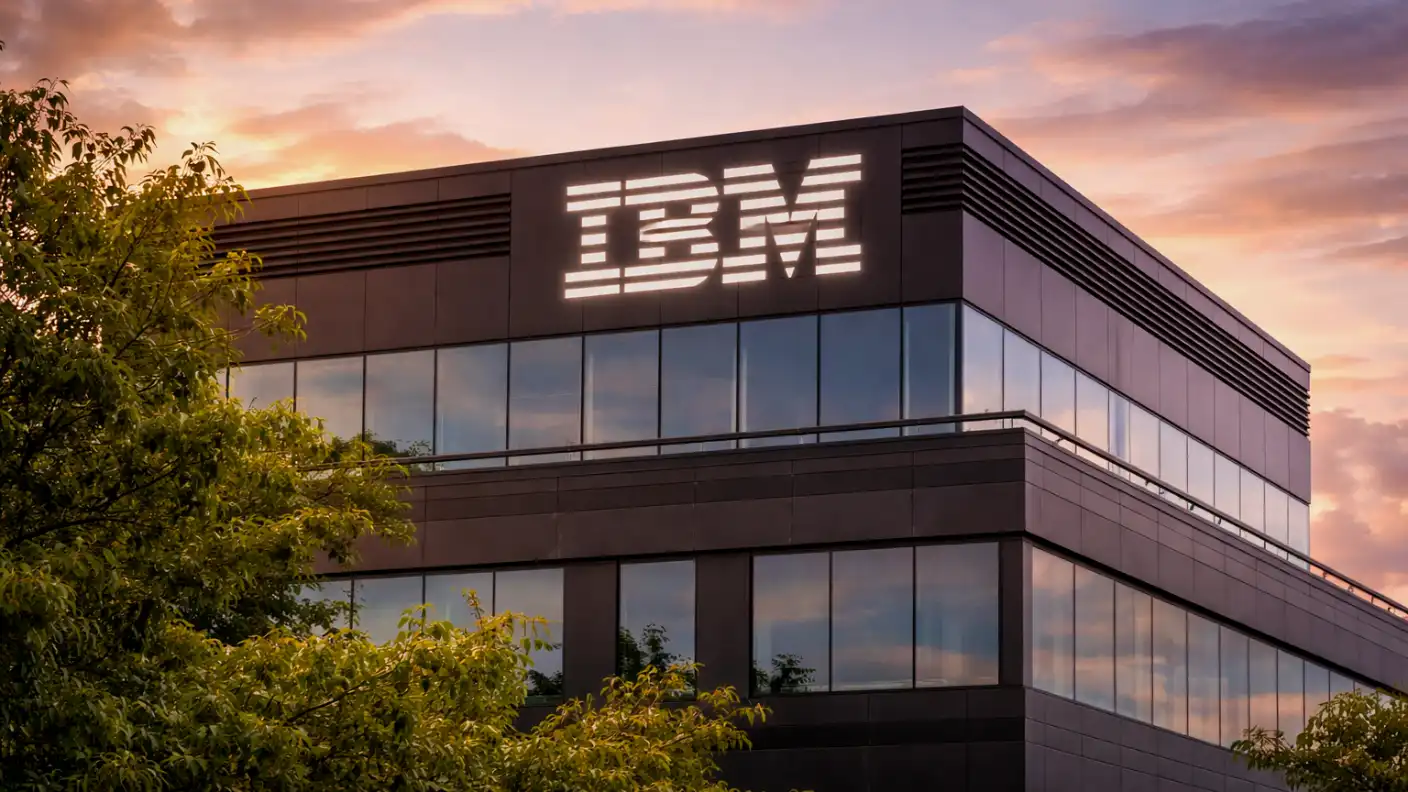
| Headquarters | 1 Orchard Road, Armonk, New York, United States |
| Type | Public [Traded as – NYSE: IBM] |
| Industry | Information technology |
| Products | Automation, Robotics, Artificial intelligence, Cloud computing, Consulting, Blockchain, Computer hardware, Software, Quantum computing |
| Services | Outsourcing, Professional services, Managed services |
| Website | https://www.ibm.com/ |
The Foundations of Big Blue (1880s–1924)
To understand the origins of IBM, one must examine the late nineteenth century, a period marked by rapid industrialization, urbanization, and a ballooning global population. Governments and expanding corporations faced a critical bottleneck: the sheer volume of manual data processing had outstripped human capacity. In the United States, the 1880 census had taken nearly a decade to compile by hand, creating a looming administrative crisis for the upcoming 1890 census. This administrative challenge provided the catalyst for the development of automated data processing.
An inventor and statistician named Herman Hollerith solved this crisis by developing an electromechanical punched-card tabulating machine. Hollerith’s system utilized paper cards with hole patterns representing demographic data, which were then processed by electromagnetic sensing pins to compile results. The system reduced the census processing time from years to mere months, proving the immense commercial and administrative value of automated data tabulating. In 1896, Hollerith founded the Tabulating Machine Company to commercialize his invention, targeting railway companies, insurance firms, and government agencies.
In 1911, a prominent financier named Charles Ranlett Flint orchestrated a merger that would redefine Hollerith’s enterprise. Flint brought together the Tabulating Machine Company with three other manufacturing firms to create a consolidated holding company: the Computing-Tabulating-Recording Company (C-T-R).
The early years of the Computing-Tabulating-Recording Company were marked by a diverse and somewhat fragmented product line.
The merger brought together several distinct manufacturing enterprises that had previously operated in completely different industries.
- The Tabulating Machine Company: Herman Hollerith’s enterprise, which focused on punched-card data processing systems for government and commercial accounting.
- The International Time Recording Company: A manufacturer of industrial time clocks, employee punch card machines, and synchronized clock systems used in factories.
- The Computing Scale Company of America: A producer of commercial weighing scales and food-slicing machines utilized in retail groceries and butcher shops.
- The Bundy Manufacturing Company: A pioneer in mechanical time-recording devices that helped industrial managers track shift labor patterns.
C-T-R initially struggled to find cohesive operational synergy. The constituent companies operated largely as independent fiefdoms, and the organization carried significant debt. In 1914, Flint made a pivotal decision by hiring Thomas J. Watson Sr. as general manager. Watson, who had risen through the ranks of the National Cash Register (NCR) company, was a master salesman and an exceptional organizational leader. He immediately set out to build a unified corporate culture, resolve the company’s financial instability, and focus resources on the high-margin tabulating machine business.
Watson Sr. introduced the “THINK” motto, which was placed on signs throughout the company’s offices and factories. He established formal training programs for salesmen, instituted strict behavioral standards, and mandated that all employees wear dark suits and white shirts, creating the iconic “IBM look.” Watson also focused heavily on international expansion, establishing operations in Europe, South America, and Asia. In 1924, reflecting the global footprint and unified corporate identity of the organization, C-T-R was officially renamed the International Business Machines (IBM) Corporation.
The Watson Sr. Era, “THINK”, and the Mechanical Age (1924–1952)
Under the leadership of Thomas Watson Sr., IBM solidified its dominance in the market for mechanical business systems. The core of the company’s business model in this era was the lease-only policy. Rather than selling its tabulating machines outright, IBM leased them to customers and sold the proprietary punched cards required to operate them. This created a highly predictable, recurring revenue stream that insulated the company from economic volatility.
In 1928, IBM introduced the 80-column punched card, which featured rectangular holes rather than the circular holes used by its competitors. This design doubled the data storage capacity of the cards and became the globally accepted standard for data processing for the next fifty years. The high-margin business of manufacturing and selling these cards generated the capital needed to fund continuous research and development.
When the Great Depression struck in 1930, Watson Sr. made a counter-intuitive and highly risky decision. While other corporations enacted massive layoffs and shut down factories, Watson kept IBM’s factories running at full capacity, accumulating a vast inventory of unsold tabulating machines and parts. He believed that the economic downturn would eventually end and that the demand for automated accounting would return stronger than ever.
This gamble paid off in 1935 when the United States Congress passed the Social Security Act. The federal government suddenly faced the monumental task of tracking the employment and tax records of over 26 million working citizens.
The implementation of this massive administrative program required an unprecedented volume of data processing equipment.
IBM was the only corporate entity with the ready inventory and production capacity to fulfill the government’s urgent requirements.
- Punched-Card Accounting Machines: IBM provided hundreds of accounting systems to compile and calculate monthly social security contributions.
- Standardized Sorters and Reproducing Punches: These machines allowed administrative workers to sort, organize, and duplicate millions of citizen records daily.
- Proprietary Punched Card Media: The federal government purchased billions of IBM’s standardized 80-column cards to maintain the national database.
This landmark government contract established IBM as the primary data processing partner for the public sector, a position of trust that it would maintain for decades. During World War II, the company shifted its manufacturing facilities to produce munitions, military computing systems, and mobile punched-card units used by Allied forces to manage logistics and troop movements.
Following the war, IBM began exploring the intersection of electronics and mechanical calculation. In 1944, in collaboration with Harvard mathematician Howard Aiken, IBM completed the construction of the Automatic Sequence Controlled Calculator, commonly known as the Harvard Mark I. This massive electromechanical computer, which stretched over 50 feet in length and utilized mechanical relays, was used by the U.S. Navy to calculate ballistics tables.
In 1948, IBM completed the Selective Sequence Electronic Calculator (SSEC), which combined vacuum tubes with electromagnetic relays, representing a transitional step toward pure electronic computing.
The Mainframe Revolution and the Watson Jr. Era (1952–1971)
In 1952, Thomas Watson Sr. stepped aside, passing the leadership of IBM to his son, Thomas Watson Jr. This transition marked a critical turning point. While Watson Sr. had been hesitant to fully embrace electronic computing, fearing it would cannibalize the company’s profitable mechanical tabulator business, Watson Jr. recognized that the future of data processing lay in solid-state electronics. He launched a massive, well-funded effort to transition the company’s engineering focus from mechanical gears to vacuum tubes, magnetic core memory, and eventually, transistors.
Under Watson Jr.’s direction, IBM introduced the IBM 701 in 1952, the company’s first commercial scientific computer, followed by the IBM 650 in 1953, which became the first mass-produced computer in the world. The company also pioneered commercial data storage systems. In 1956, IBM introduced the RAMAC 305 (Random Access Method of Accounting and Control), which featured the first commercial hard disk drive, utilizing fifty rotating aluminum platters to store five megabytes of data.
Despite these individual successes, IBM’s computer portfolio in the early 1960s was highly fragmented. The company manufactured multiple incompatible lines of computers, each designed for a specific market niche (scientific, commercial, small business, large enterprise). Each line utilized its own unique operating system, peripheral devices, and programming software. This meant that if a customer outgrew their low-end IBM computer, they could not easily upgrade to a larger model without completely rewriting their software and purchasing new accessories.
Watson Jr. recognized that this fragmentation was unsustainable and threatened the company’s long-term market leadership. In 1961, he initiated a massive, high-stakes development program to design a single, compatible family of computers that could serve both scientific and commercial users.
This project, which cost over $5 billion (representing one of the largest private research expenditures of the twentieth century), culminated in the release of the IBM System/360 in 1964.
The launch of this unified computer family established a series of technical standards that continue to influence modern system architecture.
- Instruction Set Compatibility: A single program compiled for a low-cost, entry-level System/360 machine could run on the largest, most powerful model in the family.
- The 8-bit Byte: IBM standardized the 8-bit byte as the fundamental unit of data representation, replacing various proprietary byte sizes.
- Backward Compatibility: The architecture guaranteed that future software updates and hardware upgrades would remain compatible with existing enterprise applications.
- Virtual Memory Architecture: Later iterations of the System/360 family introduced the ability to address virtual memory, allowing programs to exceed physical RAM limits.
The System/360 was a monumental success, establishing IBM as the undisputed ruler of the global mainframe market. It created a highly profitable monopoly, with IBM capturing up to 70% of the worldwide computer market by the end of the 1960s. The rest of the industry, comprised of competitors like Burroughs, Univac, NCR, Control Data, and Honeywell, was collectively referred to as “IBM and the Seven Dwarfs.”
The mainframe became the computational backbone of modern society, powering airline reservation systems, banking transactions, insurance processing, and scientific research. IBM’s proprietary operating systems, such as OS/360, and its systems network architecture (SNA) became the standard frameworks for enterprise data centers.
Antitrust Battles and the Rise of the Personal Computer (1970s–1980s)
IBM’s overwhelming dominance did not escape the attention of government regulators. In 1969, the United States Department of Justice filed a massive antitrust lawsuit against IBM, accusing the company of monopolizing the digital computer market. The litigation dragged on for thirteen years, consuming millions of dollars in legal fees and occupying the attention of senior management. The lawsuit was eventually dismissed in 1982 by Assistant Attorney General William Baxter, who declared it to be “without merit.”
However, the threat of the antitrust suit had already altered IBM’s corporate behavior. In 1969, to mitigate accusations of anti-competitive practices, IBM made the strategic decision to “unbundle” its offerings.
Before this decision, the company sold its hardware, software, and services as a single, all-inclusive package.
The separation of these business segments created immediate commercial opportunities for independent technology providers.
- The Independent Software Industry: Third-party developers could now write and sell software applications directly to IBM mainframe users.
- System Integration Services: Independent consulting firms emerged to help enterprises manage, deploy, and customize their computing hardware.
- Compatible Hardware Peripherals: Competitors began manufacturing plug-compatible storage systems and printers that connected directly to IBM mainframes.
This unbundling decision effectively laid the groundwork for the modern software and IT services industries, creating a more diverse technology ecosystem.
By the late 1970s, a new technological wave was emerging: the microcomputer. Companies like Apple, Commodore, and Tandy were beginning to sell small, affordable “personal computers” directly to consumers and small businesses. IBM’s highly centralized, bureaucratic product development process, which was optimized for designing multi-million-dollar mainframes over multi-year cycles, was ill-equipped to compete in this fast-moving consumer market.
In 1980, IBM’s President, John Opel, authorized the creation of an independent business unit (IBU) in Boca Raton, Florida, led by an engineer named Don Estridge. The team, known as “Project Chess,” was given a mandate to break all of IBM’s traditional corporate rules to build a personal computer in less than twelve months.
To achieve this goal, Estridge and his team made the radical decision to use open-architecture design and off-the-shelf components from third-party suppliers, rather than developing everything in-house.
The engineering team quickly finalized the specifications for the first IBM Personal Computer (Model 5150), which was launched in August 1981.
The component choices made for this machine would go on to define the baseline standards for the global personal computer market.
- The Intel 8088 Microprocessor: IBM selected an off-the-shelf 16-bit processor from Intel, establishing the x86 architecture as the industry standard.
- The Microsoft Operating System (MS-DOS): IBM licensed the operating system from a small, relatively unknown company named Microsoft, allowing Microsoft to retain the rights to license the OS to other manufacturers.
- Standardized Expansion Slots: The open bus architecture allowed third-party companies to design and sell expansion cards, memory upgrades, and graphics adapters.
- The IBM mechanical keyboard: Renowned for its tactile feedback and build quality, the keyboard set a standard for data entry devices.
The IBM PC was an immediate commercial success, legitimizing the personal computer in the corporate world. However, IBM’s open-architecture strategy carried a major structural flaw. Because IBM did not secure exclusive rights to the Intel processor or the Microsoft operating system, and because competitors (most notably Compaq) successfully reverse-engineered IBM’s proprietary BIOS chip, other manufacturers were free to build cheaper “IBM PC compatible” clones.
The profit margins of the personal computer industry rapidly shifted away from IBM to the “Wintel” duopoly (Windows and Intel). IBM found itself locked in a brutal price war with agile clone manufacturers, eventually losing control of the very market standard it had established.
The Near-Death Experience and the Gerstner Turnaround (1990–2002)
By the early 1990s, IBM was facing an unprecedented financial and existential crisis. The mainframe business, which had historically generated the vast majority of the company’s profits, was under severe pressure. The industry was shifting toward client-server computing architectures, where decentralized networks of cheap Unix workstations and personal computers performed tasks that had previously required centralized mainframes.
Many industry analysts declared the mainframe to be a dying technology, and IBM’s high overhead, bloated bureaucracy, and rigid product divisions were ill-suited to adapt. In 1992, IBM recorded a net loss of $4.97 billion, which was the largest single-year corporate loss in United States history up to that point. The company’s board of directors ousted CEO John Akers and began looking for an outsider to save the company.
In April 1993, the board hired Louis V. Gerstner Jr. as CEO. Gerstner, who had previously led RJR Nabisco and American Express, was the first leader in IBM’s history who did not rise through the company’s internal ranks. Upon taking office, he famously remarked to the press, “The last thing IBM needs right now is a vision,” indicating that he would focus immediately on operational execution, cost reduction, and cash preservation.
Gerstner rejected the recommendations of many investment bankers and technology analysts who argued that IBM should be broken up into a collection of independent, specialized companies (the “Baby Blues”). Instead, Gerstner recognized that IBM’s greatest unique competitive advantage was its scale and its ability to provide integrated, end-to-end technology solutions to large enterprise customers.
Gerstner implemented a series of dramatic reforms that fundamentally changed the company’s strategic direction.
He stabilized mainframe pricing, restructured the global sales force, and shifted the center of gravity of the corporation away from selling individual hardware boxes and toward providing technology integration services.
His turnaround strategy was built upon several core operational pillars that allowed Big Blue to reclaim its position as an essential enterprise partner.
- The Expansion of IBM Global Services: Gerstner built up the IT consulting, outsourcing, and systems integration division, turning it into the company’s fastest-growing and most profitable business unit.
- The Acquisitive Growth of Software: IBM acquired Lotus Development Corporation in 1995 for $3.5 billion to gain control of Lotus Notes, and Tivoli Systems in 1996 to build out its systems management software portfolio.
- The “e-business” Campaign: IBM launched a highly successful marketing and consulting initiative that positioned the company as the trusted advisor to corporations navigating the transition to the commercial internet.
- Support for Open Source (Linux): Gerstner authorized a massive, billion-dollar investment in the open-source Linux operating system, ensuring that Linux ran reliably across IBM’s entire hardware portfolio, including its mainframes.
By the time Gerstner retired in 2002, IBM had executed one of the most successful corporate turnarounds in business history. The company’s stock price had risen significantly, its financial position was stabilized, and it had transformed itself from a struggling hardware manufacturer into a global software and IT services powerhouse.
The Cognitive Era, Cloud Stagnation, and Ginni Rometty (2002–2020)
Following Louis Gerstner’s retirement, Sam Palmisano took the helm as CEO in 2002. Palmisano continued the transformation of IBM’s portfolio by shedding low-margin commoditized businesses. In 2005, in a highly symbolic transaction, IBM sold its iconic personal computer division, including the ThinkPad brand, to the Chinese computer manufacturer Lenovo for $1.75 billion. In 2014, the company similarly divested its x86 server business to Lenovo.
Palmisano introduced the concept of the “Globally Integrated Enterprise,” which involved shifting resources and personnel to lower-cost emerging markets, most notably India, where IBM’s total employee headcount eventually surpassed its workforce in the United States. He also initiated the “Smarter Planet” campaign, which focused on applying data analytics and IT services to optimize physical infrastructure, including smart grids, transportation networks, and water management systems.
In 2011, IBM Research achieved a major public relations success when its artificial intelligence system, Watson, defeated former champions Ken Jennings and Brad Rutter on the television quiz show Jeopardy!.
This victory was intended to showcase the potential of Watson’s natural language processing and cognitive computing capabilities.
The company immediately began attempting to commercialize the technology, targeting several high-stakes enterprise sectors.
- Watson Health: A major initiative designed to analyze medical literature, patient records, and genomic data to assist oncologists in designing personalized cancer treatments.
- Watson Financial Services: A suite of tools built to analyze financial regulatory compliance, risk management, and market data for global banking institutions.
- Watson IoT: An enterprise platform designed to process and analyze massive streams of sensor data from industrial machinery and manufacturing systems.
- Watson Advertising: An analytical toolset designed to optimize digital ad targeting and consumer engagement using natural language understanding.
In 2012, Virginia “Ginni” Rometty became the first female CEO of IBM. Her tenure was marked by a challenging transition. As legacy software and IT consulting businesses experienced structural declines, the technology landscape was shifting rapidly toward public cloud computing, dominated by hyperscalers like Amazon Web Services (AWS), Microsoft Azure, and Google Cloud.
IBM struggled to adapt to this public cloud shift. The company’s public cloud platform, which was bolstered by the acquisition of SoftLayer in 2013, was unable to match the scale, developer mindshare, and rapid feature deployment of AWS or Microsoft Azure. Rometty introduced the “Strategic Imperatives” framework, which prioritized cloud, analytics, mobile, social, and security (CAMSS) businesses, but the growth in these segments was often offset by declines in the company’s traditional high-margin legacy businesses.
Recognizing that IBM was lagging in the public cloud race, Rometty and Arvind Krishna, then head of IBM’s Cloud and Cognitive Software division, orchestrated a bold strategic move. In October 2018, IBM announced the acquisition of the open-source software pioneer Red Hat for $34 billion, representing the largest corporate acquisition in IBM’s history.
The transaction closed in July 2019, positioning Red Hat OpenShift as the cornerstone of IBM’s new focus on hybrid cloud computing, allowing enterprise clients to run applications across private servers, on-premises data centers, and multiple public clouds.
IBM in the Era of Hybrid Cloud, watsonx, and Agentic AI (2020–2026)
In April 2020, Arvind Krishna became the CEO of IBM, succeeding Ginni Rometty. Krishna, a computer scientist with a Ph.D. in electrical engineering, brought a deep technical focus back to the corporate leadership. He immediately set out to simplify the company’s complex structure and narrow its strategic focus to two core pillars: hybrid cloud and artificial intelligence.
In October 2020, Krishna announced a dramatic restructuring plan: the spin-off of IBM’s Managed Infrastructure Services division (part of Global Technology Services) into an independent, publicly traded company.
This transaction was completed in November 2021 with the creation of Kyndryl, a separate, multi-billion-dollar enterprise focusing on legacy IT infrastructure management.
Shedding this labor-intensive, lower-margin services division allowed the post-spin-off IBM to operate as a highly focused software and consulting entity.
- Red Hat OpenShift Platform: The foundational hybrid cloud software layer that enables enterprise clients to deploy containerized applications uniformly across any public or private cloud.
- IBM Consulting: Restructured to align closely with partners like SAP, Salesforce, AWS, and Azure to manage complex digital transformations.
- Enterprise Software Portfolio: Optimized around data, security, automation, and system management toolsets that integrate with Red Hat software.
- IBM Systems: Continued development of high-margin, security-focused hardware platforms, including the IBM zSystems mainframes and Power servers.
In May 2023, IBM launched its enterprise artificial intelligence and data platform, watsonx. The platform was designed to address the unique requirements of enterprise AI deployments, focusing on data governance, model transparency, and safety, which are critical for regulated industries like finance, healthcare, and government.
The watsonx platform is structured around three core, integrated software modules.
These tools allow corporations to curate trusted data, train custom foundation models, and automate governance workflows across a distributed computing environment.
- watsonx.ai: A development studio for machine learning, enabling enterprise developers to train, validate, tune, and deploy both generative AI foundation models and traditional machine learning algorithms.
- watsonx.data: A high-performance data store built on an open lakehouse architecture, allowing enterprises to scale analytics and AI workloads while managing data storage costs.
- watsonx.governance: An automated toolkit that monitors AI lifecycles, tracks model lineage, provides transparency regarding model inputs, and ensures compliance with global AI regulations.
By 2026, under Krishna’s leadership, the strategic focus has transitioned toward “agentic AI” and automation. At the IBM Think 2026 conference, Krishna demonstrated how organizations are moving past simple chatbots and pilot projects to deploy autonomous AI agents that can execute complex, multi-step enterprise workflows at scale. These agents, managed through systems like watsonx Orchestrate, can autonomously execute financial reconciliations, process supply-chain orders, and manage IT system operations while maintaining strict audit trails and compliance standards.
IBM Research also achieved major milestones in advanced hardware and materials science. In late June 2026, IBM announced the development of the world’s first sub-1 nanometer chip technology. This breakthrough, which utilizes advanced nanosheet transistor architectures and novel materials, represents a major leap in semiconductor scaling, promising to significantly reduce the power consumption and environmental footprint of the massive data centers required to run generative AI models.
The Quantum Frontier
While IBM has built a robust business around hybrid cloud and enterprise AI, the company is also widely recognized as a global leader in the development of quantum computing. Unlike classical computers, which process information in binary bits (0s and 1s), quantum computers utilize quantum mechanical properties—such as superposition and entanglement—to process information in quantum bits (qubits), allowing them to perform complex calculations that are currently impossible for even the most powerful classical supercomputers.
IBM has pursued a highly transparent development roadmap since 2020, systematically delivering on its milestones. The company’s strategy focuses on building what it calls “quantum-centric supercomputers,” which integrate quantum processors with classical high-performance computing (HPC) systems.
To transition quantum computing from theoretical research to practical commercial utility, IBM has established a clear progression of hardware and software milestones.
These milestones represent a continuous effort to increase qubit counts, reduce error rates, and establish a serverless execution framework for quantum algorithms.
- The Eagle Processor (2021): A 127-qubit processor that broke the 100-qubit barrier and served as a foundational testbed for multi-chip scaling.
- The Osprey Processor (2022): A 433-qubit processor that demonstrated advanced high-density wiring and packaging technologies.
- The Condor and Heron Processors (2023): Highlighted by Heron’s 133-qubit tunable architecture, which achieved a significant reduction in gate error rates, demonstrating the viability of quantum utility.
- The Kookaburra Processor (2026): The first quantum processor module capable of storing quantum information in a quantum low-density parity-check (qLDPC) memory, which is critical for error correction.
- The Starling System (2029): IBM’s projected goal for delivering its first fully fault-tolerant quantum computer, designed to solve complex chemical, physical, and financial algorithms with high precision.
IBM operates the IBM Quantum Network, which includes over 250 global partners—including Fortune 500 corporations, academic institutions, and national research laboratories—who access IBM’s quantum systems over the cloud via the Qiskit open-source programming framework. In 2026, IBM is focusing heavily on demonstrating the first practical examples of “quantum advantage”, where a quantum computer performs a specific, industrially useful calculation—such as simulating a molecular structure for drug discovery or optimizing a financial portfolio—more accurately and efficiently than any classical supercomputer.
IBM Research, Patents, and Corporate Innovation
The survival and technological transitions of IBM are directly attributable to its massive and sustained investment in fundamental scientific research. IBM Research is one of the world’s premier industrial research organizations, operating several global laboratories, including the Thomas J. Watson Research Center in Yorktown Heights, New York; the Almaden Research Lab in San Jose, California; and IBM Research – Zurich in Switzerland.
IBM scientists have made foundational contributions to the field of physics, materials science, and computer engineering. Over the decades, researchers working for IBM have been awarded several Nobel Prizes in Physics for their groundbreaking discoveries.
The Nobel-winning scientific work conducted inside IBM’s laboratories helped lay the foundation for modern nanotechnology and superconductive electronics.
These academic accolades reflect the company’s historical commitment to funding fundamental, long-term scientific exploration.
- The Scanning Tunneling Microscope (1986 Nobel Prize): Gerd Binnig and Heinrich Rohrer developed an instrument capable of imaging and manipulating individual atoms, giving birth to the field of nanotechnology.
- High-Temperature Superconductivity (1987 Nobel Prize): J. Georg Bednorz and K. Alex Müller discovered a class of ceramic materials that exhibit superconductivity at higher temperatures than previously thought possible.
- Semiconductor Esaki Diode (1973 Nobel Prize): Leo Esaki was awarded the prize for his pioneering experimental discoveries regarding electron tunneling in semiconductors.
Beyond theoretical physics, IBM Research has also been responsible for many of the most ubiquitous practical technologies used in modern business and daily life.
The division’s list of commercial and technical inventions is extensive, shaping the way humanity stores, processes, and manages digital information.
These inventions were quickly integrated into global standards, generating significant licensing revenues and proving the commercial value of industrial research.
- FORTRAN (1957): Developed by an IBM team led by John Backus, FORTRAN was the first widely adopted high-level compiled programming language, simplifying software development.
- Dynamic Random-Access Memory (DRAM) (1966): Robert Dennard invented the single-transistor memory cell, enabling the creation of cheap, dense random-access memory for all modern computers.
- The Relational Database (1970): Edgar F. Codd formulated the mathematical relational model for databases, replacing complex hierarchical systems and giving rise to SQL.
- The Universal Product Code (UPC) Barcode (1973): IBM engineer George Laurer designed the standardized linear barcode and laser scanning systems that automated retail checkout and inventory logistics.
- RISC Architecture (1970s): IBM researcher John Cocke pioneered the Reduced Instruction Set Computer design philosophy, which optimized processor efficiency and powers most modern mobile and server processors.
For 29 consecutive years, IBM led the world in the number of annual patents granted by the United States Patent and Trademark Office. However, in 2022, CEO Arvind Krishna announced a deliberate shift in the company’s intellectual property strategy, moving away from sheer patent volume to focus resources on securing high-impact, proprietary innovations in hybrid cloud, AI, and quantum systems, while actively contributing to open-source software communities.
Strategic Challenges and Future Outlook
Despite its successful turnaround and strong positioning in hybrid cloud, AI, and quantum computing in 2026, IBM faces several significant challenges as it navigates a highly volatile global market. The company is not a consumer-facing tech giant like Apple or Google, nor is it a massive public cloud infrastructure provider like AWS or Microsoft. It occupies a unique, complex niche as an enterprise technology partner, which requires a delicate strategic balancing act.
One of the primary challenges confronting IBM is the hyper-competitive nature of the cloud software market. While Red Hat OpenShift is a highly regarded platform, public cloud hyperscalers are continuously developing their own competing hybrid-cloud integration tools.
Additionally, as the initial hype surrounding generative AI matures into a demand for operational efficiency, IBM must assist its clients in navigating the financial realities of scaling these models.
The company’s acquisition of Apptio in 2023 for $4.6 billion was a direct strategic response to this challenge, focusing on the growing field of FinOps (Financial Operations).
- FinOps Cloud Cost Management: Apptio allows enterprise clients to gain complete transparency regarding their hybrid cloud and AI infrastructure spending, preventing “sticker shock”.
- AI Model Optimization: Helping clients identify which business processes actually require expensive generative AI models, and which tasks can be handled by cheaper, specialized small-scale models.
- Sovereign Cloud Compliance: Assisting global corporations in designing computing environments that comply with increasingly strict regional data sovereignty laws, such as the European Union’s AI Act.
- Digital Transformation Consultation: IBM Consulting works to integrate and deploy these complex optimization tools across multi-vendor cloud architectures.
IBM’s financial strategy has also transitioned from relying on high-volume, low-margin IT infrastructure outsourcing contracts (which were spun off with Kyndryl) to high-margin, recurring software subscription revenue and asset-based consulting. The success of this strategy is highly dependent on the continued growth and enterprise adoption of Red Hat OpenShift, the watsonx platform, and the company’s mainframes, which remain highly profitable but face secular shifts.
Geopolitics also presents a complex landscape for IBM. As supply chains fracture and nations seek technological sovereignty, IBM’s focus on secure, local, and regulatory-compliant hybrid computing is a compelling value proposition.
The company’s ability to maintain its deep relationships with global governments and highly regulated industries will be crucial for its long-term stability.
Conclusion
The history of International Business Machines Corporation is a compelling narrative of corporate survival, continuous innovation, and structural adaptation. From the electromechanical gears of the 1890 census tabulator to the sub-1 nanometer transistor architectures and multi-qubit quantum processors of 2026, IBM has consistently adapted to, and frequently established, the technical standards of each successive computing era.
The “IBM Way” has transformed over the decades. The rigid, blue-suited hierarchy of the mid-twentieth century has transitioned into a highly technical, open-source-aligned, and collaborative enterprise.
The core identity of the corporation, however, remains remarkably consistent: serving as the essential, trusted technological partner to the world’s most critical and complex organizations.
Whether managing hybrid cloud infrastructures, deploying governed generative AI models, or building the foundations of a fault-tolerant quantum future, the corporation that Thomas Watson Sr. built continues to define how the modern enterprise thinks.