

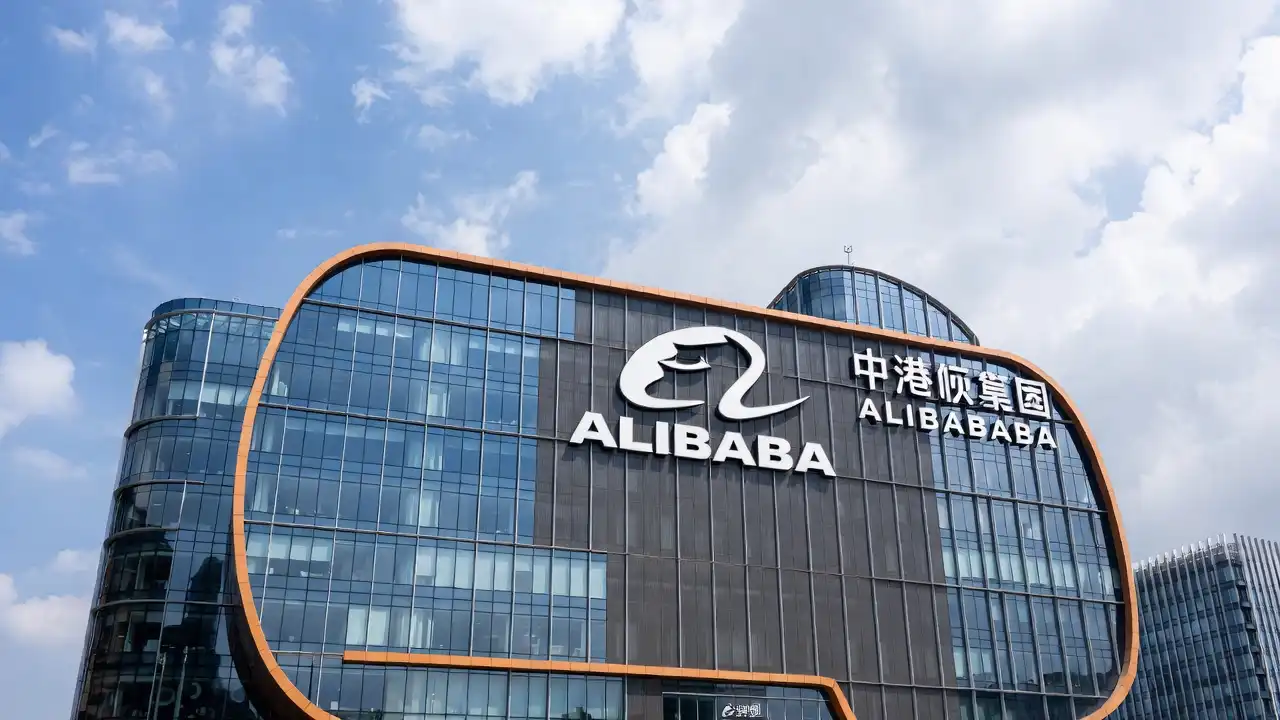
Chinese short-video giant Kuaishou Technology announced a massive capital restructuring for its generative artificial intelligence division, Kling AI. According to a regulatory filing submitted to the Hong Kong Stock Exchange, the spun-off AI video unit has raised 13.82 billion yuan, or approximately $2.04 billion, in its first external fundraising round. The high-profile transaction drew direct financial backing from the country’s premier technology conglomerates, including Alibaba Group Holding, Baidu Inc., and existing Kuaishou backer Tencent Holdings.
The successful fundraising round marks the largest single investment in a Chinese generative video startup to date. While the transaction originally targeted a post-money valuation of $20 billion in April, changing market conditions and a shift toward realistic deal pricing narrowed the final pre-investment valuation to $15 billion. However, Kuaishou confirmed that the financing round could eventually expand to $3 billion as more institutional and private investors join the consortium. If the funding reaches this target, Kling AI’s post-money valuation will touch $18 billion, establishing the startup as the most valuable independent player in China’s rapidly growing artificial intelligence video generation space.
The Financial Mechanics and Kuaishou’s Strategic Restructuring
The $2.04 billion capital injection represents a major strategic transformation for Kuaishou Technology. By bringing in external investors, the transaction dilutes Kuaishou’s ownership stake in its prized AI subsidiary from 100% to approximately 68.33%. This move creates a discloseable transaction under the Hong Kong listing rules, but it represents a highly calculated effort to separate capital-intensive, high-growth artificial intelligence assets from Kuaishou’s mature, cash-generating short-video and live-streaming business units.
This structural separation has multiple strategic advantages:
- It protects Kuaishou’s core operating margins from the massive capital expenditures required to run and train large-scale generative models.
- It allows Kling AI to establish its own independent, professional governance structure to attract specialized talent and secure custom hardware.
- It positions the AI unit for a planned initial public offering (IPO) on the Hong Kong Stock Exchange within the next twelve months.
- The announcement triggered immediate optimism in the markets, with Kuaishou shares surging up to 7% on the Hong Kong Stock Exchange before paring gains to close up 0.4% at HK$41.60.
- Tencent’s Hong Kong-listed shares gained over 3% in tandem, while Baidu rose over 2% and Alibaba added 0.3%, demonstrating strong market support for the collaborative investment.
By listing on the Hong Kong stock market, Kling AI can access global capital pools directly, using the IPO proceeds to fund the construction of high-performance computing centers and secure the advanced semiconductors necessary to compete with Western rivals.
The Exploding Demand for Generative AI Video
Since its official launch in June 2024, Kling AI has experienced an extraordinary growth trajectory, transforming from an experimental in-house project into one of the most popular video generation tools in the world. The platform utilizes an advanced diffusion-based transformer (DiT) architecture, which Kuaishou’s engineers enhanced with a proprietary 3D variational autoencoder (VAE) network to support synchronous spatiotemporal compression. This unique technology allows Kling to generate highly realistic, detailed video clips from simple natural language text prompts, maintaining high visual quality and physical consistency across every frame.
The rapid adoption of the technology is reflected in the company’s operational metrics. By April, Kling AI had accumulated over 22 million active users globally. The platform has also built a highly lucrative enterprise business, serving more than 10,000 corporate clients, filmmakers, advertisers, and developers through its dedicated application programming interfaces (APIs). This commercial scale allowed the company’s annualized revenue run rate (ARR) to surpass $100 million in early 2025, with revenues continuing to surge at an exponential pace as more businesses integrate automated video generation into their marketing and content-creation workflows.
The International Footprint of Chinese Generative AI
One of the most significant revelations in Kling AI’s financial data is the global nature of its revenue generation. During the first quarter of the year, the company’s revenues surged by over 300% year-over-year, exceeding 650 million yuan (approximately $95.8 million). Remarkably, 75% of this revenue originated from overseas markets outside of mainland China.
This high international export rate demonstrates that Western creative professionals, marketing agencies, and media companies are actively embracing Chinese generative video tools. While U.S.-based developers face high operational costs and restrictive access conditions, Kling AI has built a highly accessible, cost-effective global platform. By offering premium features and high-speed generation at a fraction of the cost of Western alternatives, the company has successfully built a massive international user base, proving that high-quality, Chinese-made software can compete effectively on the global stage.
The Competitive Battleground Against OpenAI and ByteDance
The massive $2.04 billion funding round arrives at a time of intense, global competition in the generative video sector. In February, ByteDance sent shockwaves through Hollywood with the release of its advanced Seedance 2.5 model, which can generate lifelike, 30-second native video clips at 4K resolution. This development raised serious concerns among entertainment executives regarding the potential for AI technology to disrupt traditional film production and displace creative jobs.
To maintain its competitive edge, Kling AI recently released its advanced Kling 3.0 model, introducing significant improvements in motion physics, character consistency, and prompt adherence. The company must also compete with powerful global rivals, including OpenAI’s Sora, Google’s Veo 3.1, and Runway’s Gen-4.5. By securing $2.04 billion in funding, Kling AI has built a massive financial cushion that will allow it to purchase high-end GPUs, upgrade its server farms, and continue refining its model architectures, ensuring it remains a dominant player in the global creative technology race.
The Wave of Chinese AI Spinoffs and Hong Kong IPO Listings
Kling AI’s planned Hong Kong IPO is part of a broader, structural trend rewriting the Chinese technology sector. Over the past year, several of the country’s leading artificial intelligence startups have opted to go public in Hong Kong, creating a highly active hub for AI investment in Asia.
This listing wave includes several prominent domestic champions:
- MiniMax: The high-growth AI startup completed its Hong Kong IPO earlier this year, securing substantial capital to fund its research operations.
- Zhipu AI: The prominent language model developer has also transitioned to a public listing on the Hong Kong Stock Exchange.
- Strategic Alignment: Both MiniMax and Zhipu AI received significant pre-IPO backing from the same cohort of strategic tech giants, including Alibaba and Tencent, demonstrating that the country’s major tech conglomerates are actively pooling their resources to support the domestic AI ecosystem.
By listing in Hong Kong, these companies can bypass some of the strict geopolitical and regulatory barriers associated with listing on U.S. exchanges, while maintaining access to international capital and protecting their technological sovereignty.
Navigating Strict Regulatory Frameworks on AI Generation
The rapid growth of generative video tools has also forced regulators to implement strict security and copyright protections to prevent the spread of deceptive content. As AI-generated deepfakes and manipulated videos become increasingly difficult to distinguish from real footage, governments are moving to enforce strict transparency rules.
In China, these concerns led to the implementation of comprehensive national regulations requiring all generative AI services to clearly label and watermark AI-generated content. These rules, which officially took effect on September 1, 2025, require platforms like Kling AI to embed permanent digital signatures and visible watermarks into every video generated on their servers. By complying with these strict domestic regulations, Kling AI is building a highly structured, legally compliant operational model. This compliance reassures corporate and enterprise clients that the marketing materials, advertisements, and creative videos they generate on the platform are fully compliant with national security and consumer protection laws.
The Future Outlook: Building Next-Generation AI Factories
The successful close of the $2.04 billion funding round provides Kling AI with the necessary capital to build out its physical infrastructure. A significant portion of the proceeds will be used to construct next-generation, high-performance data centers and “AI factories” equipped with advanced liquid cooling and specialized power management systems.
Securing this physical capacity is essential for the company’s long-term survival. As generative video models become more complex, the computing power required to train and run them is growing exponentially. By investing heavily in its own domestic server farms and data pipelines, Kling AI can reduce its hosting costs, improve its generation speeds, and support millions of additional active users. Furthermore, the company will use the funding to launch aggressive recruitment campaigns, hiring top-tier machine learning engineers, computer vision scientists, and software developers from around the world to ensure its research team remains at the cutting edge of the global AI revolution.
Conclusion
The 13.82 billion yuan fundraising round completed by Kuaishou’s Kling AI represents a major milestone for the global artificial intelligence industry. By securing $2.04 billion in its first external funding round and drawing direct backing from tech heavyweights Alibaba, Tencent, and Baidu, the generative video startup has proved that its technology carries immense strategic and commercial value. The planned spinoff and subsequent Hong Kong Stock Exchange listing will allow the company to separate its high-capital, AI-heavy assets from Kuaishou’s mature core business, optimizing its corporate profit profile while securing direct access to international capital.
While the competitive threats from powerful rivals like ByteDance’s Seedance and OpenAI’s Sora remain intense, Kling’s strong international revenues and advanced 3.0 model architecture provide a solid foundation for long-term growth. As the company uses its new capital to build advanced data centers and recruit top-tier engineering talent, its focus on full-stack innovation will ensure it remains an indispensable leader of the creative technology revolution. By balancing rapid technological advancement with strict compliance under China’s AI labeling laws, Kling AI is building a highly resilient, scalable business model, proving that the companies that can successfully bridge the gap between creative software and high-performance hardware will be the ones that control the future of the digital age.






