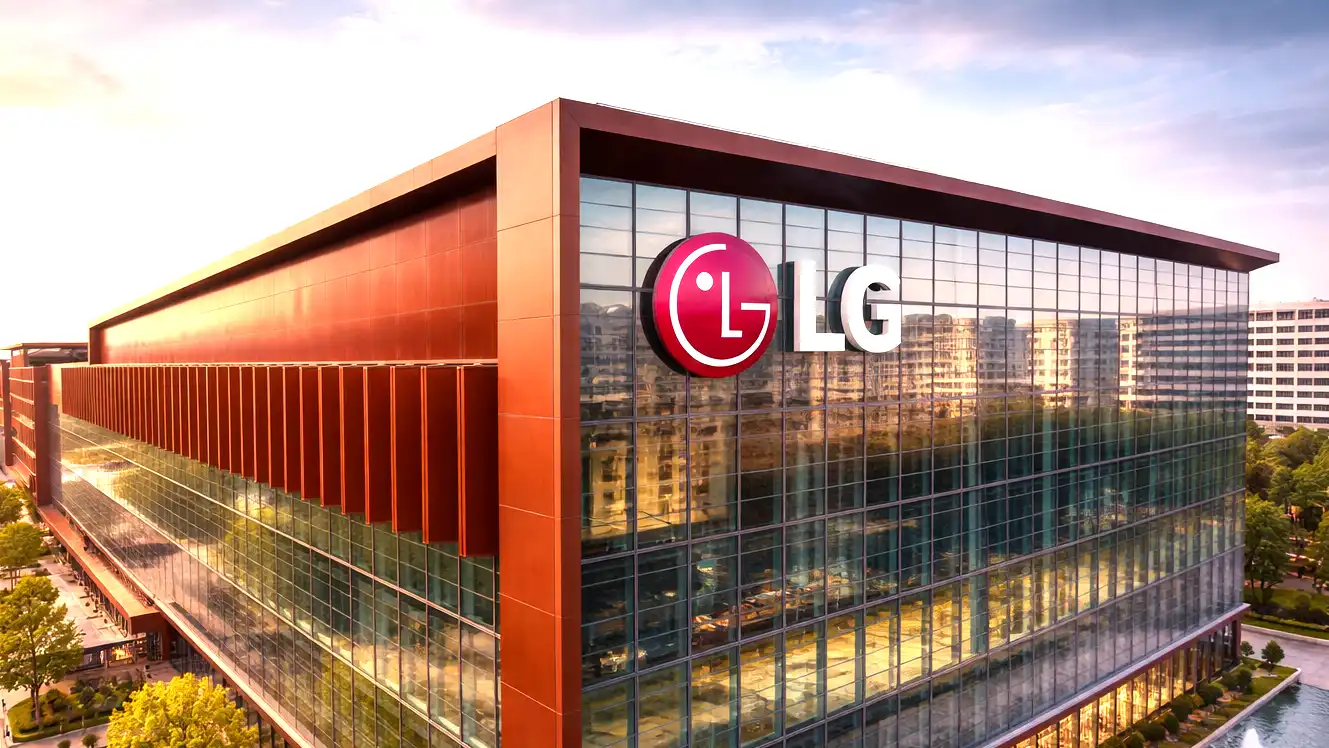
The global transition to clean energy is experiencing a highly challenging adjustment phase, and the impact is being felt directly by the world’s leading battery manufacturers. South Korea’s LG Energy Solution, a prominent supplier to global automotive giants including Tesla, General Motors, and Hyundai, released its preliminary second-quarter financial results. The numbers paint a sobering picture of an industry grappling with a significant slowdown in consumer electric vehicle adoption, high manufacturing costs, and growing geopolitical policy risks.
According to corporate filings released in Seoul, LG Energy Solution expects its second-quarter operating profit to plunge by 77% year-on-year to 113.3 billion won, which translates to approximately $73.91 million.
This performance fell significantly short of market expectations, missing the consensus analyst estimate of 210.7 billion won by a wide margin.
The sharp drop in profitability highlights the severe margin squeeze facing the battery sector as automakers scale back their ambitious electrification targets in response to sluggish demand.
However, the revenue figures provided a silver lining. LG Energy Solution’s preliminary revenue for the April-to-June quarter rose by 24.8% year-on-year to reach 7.56 trillion won, equivalent to roughly $5 billion.
This performance marked the first time the company’s quarterly revenue has surpassed the 7 trillion won threshold since the end of 2023, signaling that while battery shipment volumes continue to expand, intense price wars and underutilized factory lines are preventing that volume from translating into healthy corporate profits.
This comprehensive analysis explores the root causes of the North American electric vehicle slump, the critical role of US federal subsidies in keeping the battery maker in the black, the company’s strategic pivot toward AI-powered storage systems, and the long-term outlook for the global clean-tech supply chain.
The Harsh Reality of the North American EV Slump
To understand the primary driver of LG Energy Solution’s 77% profit drop, one must examine the sudden cooling of the North American electric vehicle market. For the past several years, South Korean battery makers invested billions of dollars building massive manufacturing facilities in the United States, confident that government mandates and consumer enthusiasm would drive a rapid transition away from internal combustion engines.
However, that demand has failed to materialize at the projected scale. High interest rates, premium retail pricing, and persistent concerns regarding public charging infrastructure have caused everyday consumers to hesitate, prompting major automakers to radically overhaul their product roadmaps.
The Halt of Ultium Cells Joint Venture Plants
The commercial impact of this consumer slowdown is highly visible in LG Energy Solution’s manufacturing operations. Ultium Cells, the high-profile joint venture between LG Energy Solution and General Motors, was forced to execute temporary production halts at its first plant in Ohio and its second plant in Tennessee in early 2026.
These factory suspensions were a direct response to General Motors slowing down its electric vehicle rollout to align with actual market demand.
For LG Energy Solution, having state-of-the-art facilities sit idle is exceptionally expensive.
The company must continue to pay fixed maintenance costs, utility bills, and labor expenses for thousands of specialized technicians, resulting in massive write-downs that severely eroded the quarter’s operating margins.
The Ripple Effect of Ford’s EV Overhaul
The headwinds in the North American market were further worsened by major contract cancellations from other strategic clients.
Ford Motor Company announced a massive $19.5 billion restructuring cost linked to an overhaul of its electric vehicle program, electing to cancel several high-end electric SUV projects in favor of mid-priced hybrid vehicles.
As part of this corporate pivot, Ford terminated a massive 9.6 trillion won battery supply contract with LG Energy Solution.
At the same time, General Motors warned its investors of up to $6 billion in asset write-downs and charges tied directly to its decision to delay its EV manufacturing targets.
These rapid cancellations from Detroit’s legacy automakers have left South Korean battery manufacturers with a severe overcapacity problem, forcing them to re-evaluate their long-term supply agreements and factory expansion timelines.
The Inflation Reduction Act: A Vital Life Support Machine
The second-quarter earnings report also highlighted a critical structural vulnerability in LG Energy Solution’s business model: its extreme dependence on United States government subsidies to maintain reported profitability.
Analyzing the Reported vs. Earned Margin
Under the Advanced Manufacturing Production Credit (AMPC) program of the US Inflation Reduction Act (IRA), battery manufacturers receive direct tax credits from the US Treasury for every kilowatt-hour of battery cells and modules produced domestically in North America.
For the second quarter, LG Energy Solution reflected a vital 241 billion won, or roughly $157 million, in AMPC tax credits in its financial statements.
When this government payout is included, the company managed to report a positive operating profit of 113.3 billion won.
However, if we strip out these US tax credits, LG Energy Solution’s underlying business actually recorded an operating loss of 127.7 billion won.
This stark contrast demonstrates that the company’s core manufacturing operations are currently running in the red, relying entirely on US taxpayer support to mask structural losses.
The Trump Policy Shift and Regulatory Risks
This structural reliance on US subsidies introduces a massive layer of political and regulatory risk for the South Korean battery giant.
Following his election victory, US President Donald Trump began scaling back the extensive electric vehicle tax credits and emission-reduction standards implemented by the previous administration.
The Trump administration’s efforts to weaken the IRA and reduce direct support for clean-energy manufacturing have complicated the long-term planning of foreign battery makers.
If the US government decides to place caps on the AMPC program or eliminate the production tax credits entirely, LG Energy Solution’s North American factories could transition from subsidized profit centers into permanent financial liabilities, creating a severe capital allocation challenge for corporate leadership in Seoul.
The Strategic Pivot to AI-Driven Energy Storage Systems (ESS)
Recognizing that the electric vehicle market is entering a multi-year consolidation phase, LG Energy Solution’s executive team is executing an aggressive strategic pivot.
The company is redirecting its manufacturing capacity and research and development budgets toward the rapidly growing battery energy storage systems (ESS) market.
The primary driver of this ESS boom is the rapid expansion of artificial intelligence.
Global technology giants are building out massive hyperscale data centers to train and run next-generation AI models, driving a historic increase in electricity consumption.
Because these data centers require highly stable, 24/7 electricity, and tech companies are committed to utilizing renewable energy, they must deploy massive, utility-scale battery installations to store excess wind and solar power for use when the sun is not shining or the wind is not blowing.
Converting EV Lines to Grid-Scale Storage
To capture a dominant share of this high-margin market, LG Energy Solution has begun converting several underutilized electric vehicle battery production lines in North America into specialized ESS cell assembly lines.
The company plans to expand its global ESS manufacturing capacity from 36 gigawatt-hours (GWh) to at least 60 GWh in the near term, with a clear corporate goal of winning at least 90 GWh in new grid-scale contracts this year.
By utilizing its existing factory footprints for grid storage, the company can quickly improve its factory utilization rates, reduce idle capacity charges, and qualify for the same lucrative IRA production tax credits that apply to EV cells, shielding its North American operations from the worst of the automotive downturn.
The 1.6 Billion Dollar DTE Energy Deal and Tesla Contracts
The strategic pivot is already delivering substantial commercial victories.
In May 2026, LG Energy Solution signed a landmark $1.6 billion contract with DTE Energy to develop and install a series of massive battery energy storage systems across Michigan, carrying a combined capacity of six gigawatt-hours.
This major utility-scale win follows closely on the heels of a massive $4.3 billion supply agreement secured by LG Energy Solution to provide customized energy storage modules for Tesla’s commercial Megapack business.
These multi-billion-dollar deals demonstrate that the demand for utility-scale grid batteries is expanding rapidly, providing LG Energy Solution with a highly stable, non-cyclical revenue stream that can comfortably bridge the financial gap until the global automotive EV market recovers.
Cylindrical Batteries and the European Mid-Market Buffer
While the company focuses heavily on expanding its energy storage division, it is also taking steps to defend its core automotive battery business through technological innovation and market diversification.
Ramping Up next-generation 46-Series Cells
A key technological defense is the rapid commercialization of the company’s new 46-series cylindrical batteries.
These next-generation cells, which carry a much larger physical diameter than older formats, offer a massive five-fold increase in energy capacity and a six-fold boost in power output, allowing automakers to design electric vehicles with significantly longer driving ranges and faster charging times.
LG Energy Solution is currently expanding its production lines in South Korea and North America to mass-produce these advanced cylindrical cells for strategic customers, including Tesla and several premium European brands.
By leading the transition to these high-performance, lower-cost cell designs, the company aims to maintain its technological lead over Chinese competitors like CATL and BYD, who are also working aggressively to penetrate the global cylindrical market.
Steady Mid-Priced Shipments to Europe
The company has also benefited from a steady recovery in EV battery shipments to the European market.
Despite sluggish consumer demand for premium electric SUVs, European automakers are experiencing steady sales growth for mid-priced, compact electric vehicles and plug-in hybrids.
By supplying customized, cost-effective lithium iron phosphate (LFP) and nickel-manganese-cobalt (NMC) battery packs for these mass-market European models, LG Energy Solution has managed to maintain stable production volumes at its European facilities.
This European mid-market demand, supported by a weaker South Korean won that makes exports highly competitive, has served as a vital buffer, protecting the company’s global balance sheet from the severe downturn experienced in the North American market.
Conclusion and Long-Term Outlook
The second-quarter preliminary financial results of LG Energy Solution serve as a vital case study of the complex transition phase currently facing the global clean-technology sector.
The 77% drop in operating profit to 113.3 billion won is a painful reminder that the road to full electrification is paved with unexpected economic cycles, factory idle charges, and regulatory policy shifts.
However, the company’s proactive response to this crisis demonstrates the resilience of its corporate leadership.
By aggressively pivoting underutilized manufacturing lines to capture the massive demand for AI-driven energy storage systems, securing multi-billion-dollar contracts with utility providers, and leading the commercialization of next-generation 46-series cylindrical batteries, LG Energy Solution is successfully diversifying its revenue engines.
As the global battery market moves toward the second half of 2026, the company is well-positioned to navigate the ongoing EV winter.
While the reliance on US policy subsidies remains a near-term challenge, the rapid convergence of grid-scale battery storage and the artificial intelligence infrastructure boom ensures that LG Energy Solution will emerge from this consolidation phase as a highly resilient, diversified leader in global energy technology.