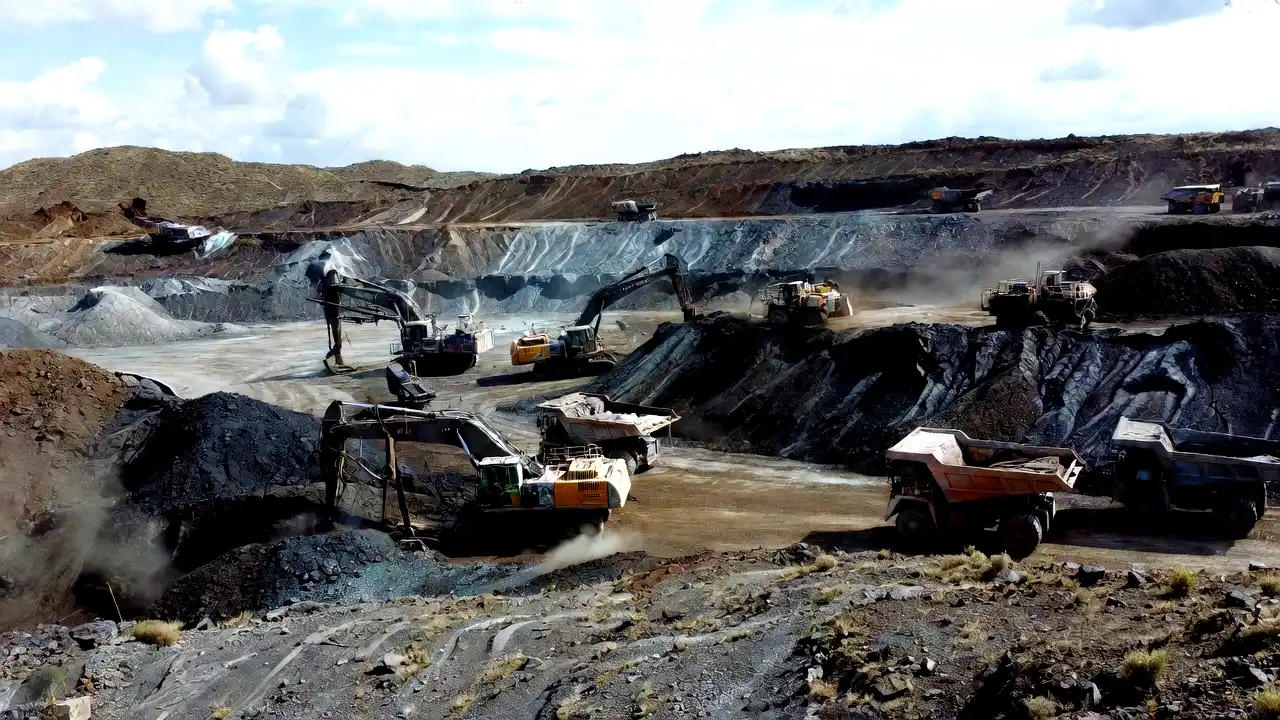
Major lithium mining corporations across Australia, China, North America, and South America are reporting a dramatic rebound in corporate profitability, driven by an extraordinary surge in global demand for utility-scale battery energy storage systems. Following a multi-year commodity downturn that pushed lithium prices to multi-year lows, the rapid acceleration of stationary grid storage projects has tightened global chemical supplies, lifting benchmark prices and restoring double-digit profit margins for the world’s premier extraction and refining giants.
The financial turnaround is visible across leading producers’ balance sheets. Australia’s premier hard-rock producer, Pilbara Minerals, posted full-year revenue of A$1.934 billion and net profits of A$526 million, fueled by a 92% year-over-year recovery in realized spodumene prices and record production volumes. International chemical giants Albemarle, SQM, Tianqi Lithium, and Ganfeng Lithium recorded similar operational rebounds. While consumer electric vehicle sales experienced slower percentage growth across select Western markets, total global lithium consumption expanded by more than 45%, propelled by utility companies, industrial microgrids, and artificial intelligence data centers racing to install massive battery arrays.
The rise of grid storage marks a structural realignment of the clean energy metals market. Stationary battery storage installations grew by 48% in the previous year to reach 112 gigawatts globally, with annual additions projected to jump to 158 gigawatts across current deployment cycles. By providing essential grid-balancing services, smoothing out intermittent solar and wind generation, and securing backup power for energy-intensive computing campuses, stationary battery storage has emerged as an indispensable pillar of global industrial electrification, transforming the lithium sector from a volatile speculative trade into a mature, high-yielding infrastructure commodity.
A Historic Rebound in Global Lithium Profitability
The global lithium market has experienced one of the most violent commodity price cycles in modern mining history. Between late 2022 and 2024, an influx of new mining supply collided with a temporary cooling in consumer electric vehicle sales, triggering an 80% collapse in lithium carbonate and hydroxide spot prices. High-cost producers suspended operations, expansion projects were put on hold, and junior exploration firms suffered severe equity declines.
However, the supply overhang cleared far faster than Wall Street anticipated. Instead of remaining depressed for years, spot prices for battery-grade lithium carbonate in Asian spot markets rebounded past 150,000 yuan per metric ton, supported by relentless procurement orders from battery cell manufacturers.
The rapid recovery proved that the underlying demand for electrochemical storage is expanding across multiple industrial verticals. Rather than depending exclusively on automotive passenger car demand, mining companies are benefiting from a diversified customer base spanning public electric utilities, commercial real estate developers, and telecommunications operators.
Pilbara Minerals Delivers A$526 Million Profit on Record Output
The operational performance of Australia’s Pilbara Minerals provides a textbook demonstration of the sector’s recovery. Operating the world-class Pilgangoora hard-rock spodumene asset in Western Australia, the mining company leveraged operational efficiencies and capacity expansions to capture high-margin cash flows.
The company’s annual financial release revealed standout operational milestones:
- Total commercial production reached a record 879,500 tonnes of spodumene concentrate, confirming Pilgangoora as one of the largest and lowest-cost hard-rock deposits in the world.
- Annual corporate revenue climbed to A$1.934 billion, supported by rising realized sales prices and long-term offtake contracts with major Asian chemical refiners.
- Net profit after tax surged to A$526 million, allowing the corporate board to fully reinstate shareholder dividend distributions.
- Cash operating costs remained disciplined below A$590 per tonne, providing substantial cash profit margins even during cyclical pricing dips.
- Management advanced engineering studies for its major P2000 expansion program, which could expand annual production capacity toward 2.0 million tonnes.
Pilbara Minerals’ strong balance sheet performance proved that Tier-1 mining assets with low operating costs and high ore grades can generate massive free cash flow as structural demand recovers.
Albemarle and SQM Benefit from 92% Rebound in Benchmark Prices
In the Americas, the world’s leading chemical processors experienced similar financial rebounds. Charlotte-based Albemarle Corporation and Chilean brine producer Sociedad Química y Minera de Chile (SQM) reported strong sequential revenue and operating profit growth, supported by the 92% recovery in realized contract prices.
These diversified chemical leaders benefited from integrated processing assets:
- SQM expanded high-efficiency brine extraction across the Salar de Atacama in northern Chile, utilizing advanced evaporation technologies to lower per-unit chemical refining expenses.
- Albemarle ramped up commercial output at its Kemerton and Meishan conversion plants, transforming raw spodumene ore into high-purity battery-grade lithium hydroxide.
- Multi-year supply contracts signed with international battery manufacturers protected sales volumes, ensuring that processing plants operated at utilization rates exceeding 85%.
- Capital expenditure budgets were optimized, focusing growth capital on high-yield brownfield expansions while trimming non-essential administrative overhead.
Executive leadership across both corporations emphasized that while short-term market volatility remains a reality, the long-term secular trend toward global electrification provides multi-decade demand visibility.
The Stationary Battery Storage Revolution Driving New Demand
The primary catalyst transforming lithium market fundamentals is the unprecedented expansion of stationary battery energy storage systems, commonly referred to as BESS. Unlike mobile electric vehicle batteries that power passenger cars, stationary storage systems consist of massive, containerized battery banks installed adjacent to solar farms, wind parks, electrical substations, and industrial manufacturing plants.
For years, stationary storage represented a minor niche within the broader battery ecosystem, accounting for less than 8% of total global cell production.
Today, utility storage represents the fastest-growing segment of the battery industry, expanding at an annual rate that outpaces electric vehicle growth by more than two times.
The rapid scaling of grid storage is driven by basic electrical physics: as national power grids integrate hundreds of gigawatts of variable solar and wind energy, utilities require massive battery reserves to prevent voltage fluctuations and store excess daytime generation for evening peak demand.
Expanding Global Storage Installations from 112 GW to 158 GW
The statistical growth of stationary battery storage has shattered historical energy forecasting models. According to industry data compiled by international energy research groups, global energy storage additions reached 112 gigawatts in 2025, adding 307 gigawatt-hours of battery capacity worldwide in a single year.
Forecasts for current and upcoming deployment cycles project continued exponential expansion:
- Annual global energy storage additions are projected to jump to 158 gigawatts, representing a 41% year-over-year increase.
- Long-term infrastructure modeling estimates that annual additions will reach 308 gigawatts by 2036, requiring hundreds of thousands of metric tons of lithium carbonate equivalent.
- The installation ratio between solar and batteries has narrowed dramatically, shifting from 56 megawatts of solar for every 1 megawatt of batteries in 2016 down to a 4-to-1 ratio today.
- The average duration of utility battery projects has expanded from two hours to four and eight hours, doubling the physical volume of lithium cells required per installation.
This massive volume demand absorbs hundreds of thousands of tonnes of processed lithium, effectively absorbing previous market surpluses and creating tight physical market balances.
Offsetting Electric Vehicle Growth Moderation Across Western Markets
The surge in grid storage demand arrived at a critical moment for mineral miners, successfully offsetting cooling passenger electric vehicle sales in specific Western jurisdictions. In North America and parts of Europe, consumer electric vehicle sales experienced slower adoption rates due to charging infrastructure deficits, the removal of consumer purchase subsidies, and political policy adjustments.
However, the rapid acceleration of utility storage more than compensated for slower consumer automotive demand:
- A single utility-scale 200-megawatt, four-hour battery storage facility consumes approximately 800 megawatt-hours of lithium cells, equivalent to the battery materials required to build 10,000 consumer electric cars.
- Utility battery procurement operates on multi-year infrastructure capital planning cycles, providing miners with stable, long-term offtake contracts that are insulated from short-term retail consumer sentiment.
- Battery cell manufacturers dynamically adjusted production lines, shifting factory capacity away from slower-moving automotive formats toward high-capacity stationary storage cells.
- Global lithium consumption expanded by 45% despite automotive headwinds, proving that the energy transition is supported by broad industrial electrification.
This structural diversification ensures that the lithium mining industry no longer depends on a single consumer product category to sustain profitable pricing.
China’s 54% Market Dominance and Australia’s Sixfold Storage Surge
Geographical adoption patterns reveal that the battery storage boom is an international phenomenon led by the world’s largest industrial economies. China remains the dominant global leader, accounting for 54% of all energy storage capacity installed worldwide.
Chinese provincial governments have mandated that all newly constructed solar and wind farms must incorporate dedicated battery storage equivalent to 10% to 20% of nameplate generation capacity, creating guaranteed domestic demand for millions of lithium battery cells.
Outside of China, regional markets are expanding at explosive rates:
- In Australia, utility-scale battery deployments surged nearly sixfold year-over-year, driven by lucrative frequency-control ancillary service markets and aggressive state-level storage subsidies.
- In the United States, grid storage installations captured a 16% global market share, led by massive multi-gigawatt-hour deployments across California, Texas, and the desert Southwest.
- In the Middle East, Saudi Arabia and the United Arab Emirates have emerged as major clean energy storage markets, ordering multi-gigawatt-hour systems to support national giga-projects.
- In Europe, high wholesale electricity price volatility has accelerated private investments in commercial and residential battery systems across Germany, the United Kingdom, and Italy.
This synchronized international expansion provides lithium miners with diversified geographic export channels, protecting mining revenues against localized regional downturns.
Grid Stabilization, Renewable Intermittency, and AI Data Center Power
The commercial value of battery energy storage is anchored in its unique ability to solve the primary engineering challenges of modern electrical grids. Traditional thermal power stations burning coal or natural gas delivered steady, synchronous baseload electricity that grid operators could dial up or down on demand.
Replacing fossil-fuel generators with weather-dependent solar arrays and wind turbines creates acute grid instability. When cloud cover passes over a solar farm or wind speeds drop, electricity generation falls instantly, threatening transmission line frequency stability.
Lithium-ion battery storage systems provide the sub-second response times needed to stabilize grid frequencies, absorb excess renewable generation, and deliver clean, reliable electricity during periods of peak demand.
Shifting from Four-Hour Utility Peaking to Multi-Day Energy Buffers
The technical capabilities of stationary battery storage are expanding rapidly as battery cell costs decline. Historically, battery installations were limited to short-duration applications of one to two hours, designed primarily to provide rapid frequency response and capture brief price spikes on wholesale electricity markets.
Modern utility projects are deploying long-duration four-hour and eight-hour storage architectures:
- Four-hour battery systems allow utilities to store massive daytime solar surpluses and discharge that clean electricity throughout the critical four-hour evening peak window between 6:00 PM and 10:00 PM.
- Battery storage facilities are directly replacing expensive natural gas peaking turbines, delivering identical grid reliability with zero local air emissions.
- Utilities are engineering multi-facility virtual power plants that coordinate distributed residential and commercial batteries to discharge power simultaneously during grid emergencies.
- Long-duration systems provide essential capacity firming, transforming variable wind and solar farms into dependable, dispatchable baseload clean energy assets.
As battery durations lengthen from two hours to four and eight hours, the volume of processed lithium required per megawatt of grid capacity doubles and quadruples, creating an exponential demand multiplier for extraction miners.
Powering High-Density Computing Campuses with Dedicated Battery Arrays
An unexpected and powerful new demand driver for lithium batteries is the rapid expansion of artificial intelligence data centers. Modern hyperscale computing campuses packed with thousands of high-density graphics processors consume hundreds of megawatts of continuous electrical power, placing immense strain on local utility transmission substations.
Technology giants, including Microsoft, Amazon Web Services, Alphabet, and Meta, are investing billions of dollars to deploy massive battery energy storage systems directly on computing campuses:
- High-capacity battery arrays provide sub-second uninterrupted power supply, protecting sensitive server racks from microscopic voltage dips on public utility lines.
- On-site batteries act as load-leveling buffers, absorbing grid power during low-cost overnight hours and discharging during expensive daytime peak tariff windows.
- Dedicated battery systems allow data centers to operate on-site microgrids powered by local solar farms, ensuring 100% clean-energy compliance.
- Battery storage replaces legacy diesel backup generators, eliminating particulate emissions and reducing corporate Scope 1 carbon footprints.
The convergence of artificial intelligence infrastructure and electrical power constraints has transformed technology conglomerates into some of the largest private corporate buyers of lithium battery storage in the world.
Supply Chain Dynamics, Production Discipline, and Chemical Refineries
The financial resurgence of the lithium industry is supported by disciplined operational management across global mining basins. Having experienced the painful consequences of previous oversupply cycles, major mining executives are managing capital expenditures with strict discipline.
Rather than flooding the market with uncommitted raw ore, producers are pacing project expansions to match long-term customer purchase contracts.
Furthermore, mining companies are investing heavily in downstream chemical refining facilities to convert raw spodumene and brine into high-purity battery chemicals, capturing higher profit margins across the value chain.
Understanding these operational dynamics clarifies why current corporate profitability is significantly more resilient than in previous boom-and-bust cycles.
Hard-Rock Spodumene Versus South American Brine Extraction Costs
The global lithium extraction industry divides into two primary geological production methods: hard-rock pegmatite mining and continental brine extraction. Each production method carries distinct cost structures, capital requirements, and processing timelines.
The economics of global extraction highlight regional competitive advantages:
- South American Brine Operations: Producers in Chile and Argentina extract lithium from underground brine reservoirs in the Lithium Triangle, achieving low cash operating costs between $4,000 and $6,000 per metric ton of lithium carbonate equivalent.
- Australian Hard-Rock Spodumene: Open-pit pegmatite mines in Western Australia produce high-grade spodumene concentrate with mining cash costs ranging from $400 to $650 per tonne, which converts into finished battery chemicals at total costs between $8,000 and $11,000 per ton.
- North American and European Development: Emerging hard-rock and direct lithium extraction projects in the United States, Canada, and Europe face higher capital costs but offer regional supply chain security and reduced transportation emissions.
- Direct Lithium Extraction (DLE): Advanced adsorption and membrane technologies are entering commercial deployment in Argentina and North America, reducing extraction timelines from eighteen months to a few hours while recovering over 85% of contained lithium.
Disciplined production from low-cost brine and hard-rock producers establishes a solid price floor, ensuring that Tier-1 miners generate healthy operating margins across all market environments.
Evaluating Sodium-Ion Competition in Short-Duration Stationary Storage
A critical strategic question facing the lithium industry is the potential commercial emergence of alternative battery chemistries, most notably sodium-ion batteries. Because sodium is abundant and inexpensive, sodium-ion technology has attracted significant research and commercial investment from Chinese battery manufacturers seeking to diversify raw material dependencies.
However, comprehensive market analysis indicates that sodium-ion technology will complement, rather than displace, lithium-ion dominance:
- Energy Density Advantages: Lithium-ion batteries maintain a 40% to 60% higher volumetric energy density than sodium-ion cells, making lithium indispensable for long-duration four-hour and eight-hour storage facilities where physical space is constrained.
- Established Supply Chains: Decades of multi-billion-dollar investments have created mature, globally optimized manufacturing and recycling supply chains for lithium-ion chemistries.
- Market Segmentation: Sodium-ion batteries will capture market share in short-duration storage (one to two hours), low-cost two-wheelers, and extreme cold-weather applications, leaving high-capacity utility storage and long-range transport to lithium.
- Lithium Iron Phosphate Dominance: Lithium iron phosphate (LFP) chemistry remains the undisputed gold standard for stationary storage, combining non-flammable thermal safety, low cost, and long operational lifespans exceeding 15 years.
Rather than disrupting lithium demand, the massive scale of the global energy transition ensures that both lithium and alternative chemistries will experience robust growth as the world replaces fossil fuels with clean electrical power.
Strategic Implications for the Clean Energy Transition and Global Capital
The return of strong profitability across the lithium mining sector carries profound implications for global capital markets and the broader clean energy transition. The transition from fossil fuels to clean electrification requires unprecedented volumes of critical raw materials, including lithium, copper, nickel, and cobalt.
Without healthy corporate profit margins, mining companies cannot justify spending the billions of dollars required to explore, permit, construct, and commission new extraction projects.
The current financial recovery provides miners with the balance sheet strength needed to fund the next wave of capital projects, ensuring that raw material shortages do not slow the global deployment of renewable energy.
Shifting Global Commodity Balances from Oversupply to Structural Deficits
Financial analysts and commodity strategists across Wall Street are revising their long-term supply-and-demand models. While the market previously expected a prolonged supply surplus to persist through 2028, the explosive growth of stationary battery storage has accelerated the market rebalancing timeline.
Leading investment banks, including Citigroup, UBS, and Bernstein, project that the global lithium market could transition back into a structural supply deficit within the next twelve to twenty-four months:
- Annual global lithium demand is projected to triple by 2030, climbing from roughly 1.1 million metric tons of lithium carbonate equivalent today to more than 3.2 million metric tons.
- Project development lead times for new greenfield lithium mines remain exceptionally long, averaging six to nine years from initial discovery to commercial production.
- Environmental permitting challenges, community consultations, and water management regulations continue to delay new mine construction across North America and Europe.
- Existing operational mines are operating near maximum technical capacity, leaving limited spare capacity to absorb sudden demand spikes.
The prospect of emerging structural deficits provides strong multi-year support for lithium equity valuations, encouraging institutional investors to increase their strategic allocations to critical mineral producers.
The Long-Term Horizon for Critical Mineral Mining and Refining Capacity
The long-term trajectory of the lithium industry will be defined by technological innovation, supply chain localization, and sustainable mining practices. As sovereign governments designate lithium as a critical strategic national security mineral, capital investment is expanding across extraction, refining, and recycling ecosystems.
Key structural trends that will shape the next decade of the industry include:
- Geopolitical Supply Chain Diversification: Western nations are expanding bilateral critical mineral alliances to build integrated extraction and refining supply chains outside dominant processing hubs.
- Closed-Loop Battery Recycling: Industrial battery recycling plants are scaling commercial operations to recover over 95% of lithium, nickel, and cobalt from decommissioned electric vehicle and grid battery packs.
- Direct Lithium Extraction Innovation: Commercial deployment of direct extraction technologies across geothermal brines and oilfield wastewaters, unlocking massive new domestic supplies in North America and Europe.
- Value-Added Chemical Integration: Mining companies partnering directly with automotive manufacturers and utility operators through long-term offtake joint ventures that guarantee multi-decade mineral security.
By maintaining disciplined production, embracing technological innovation, and supplying the raw materials powering the battery storage revolution, the lithium industry stands as an indispensable pillar of the modern global economy.
The remarkable surge in profitability across global lithium mining corporations marks a defining milestone in the clean energy transition. By proving that stationary battery energy storage systems represent an explosive, structural pillar of demand capable of absorbing global production and lifting benchmark prices, the industry has successfully overcome its cyclical downturn. Supported by record results from industry champions like Pilbara Minerals, Albemarle, and SQM, and fueled by a global grid storage buildout that will reach 158 gigawatts, lithium producers have secured a profitable, multi-decade growth runway. As power grids worldwide replace fossil fuels with intermittent renewables and artificial intelligence data centers demand massive battery buffers, the lithium mining sector stands as the indispensable foundation powering the electrified future of the global economy.