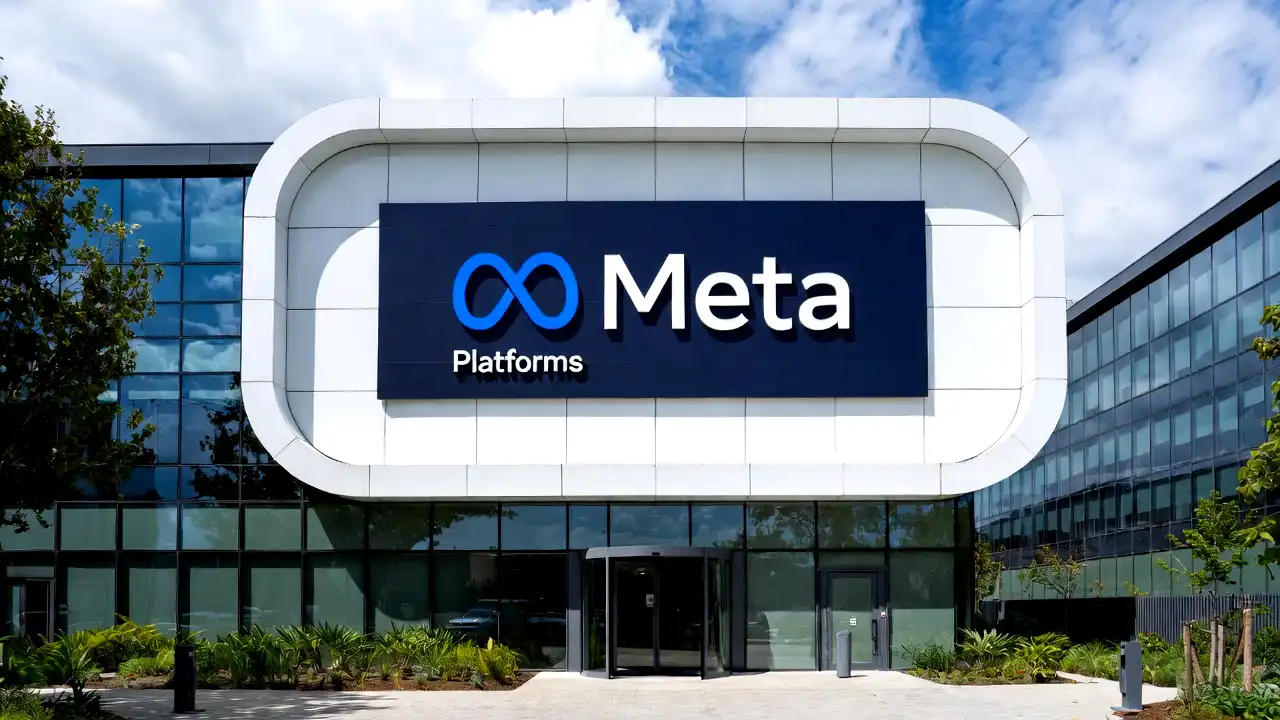
The global technology sector is currently experiencing a profound and challenging transition. For several quarters, Wall Street rewarded technology companies simply for announcing new artificial intelligence products, scaling their computing clusters, or hiring prominent research teams. During this initial phase of the AI boom, corporate stock prices regularly surged on the mere promise of future digital capabilities. However, that era of easy optimism has officially ended. Public investors and financial analysts have shifted their focus, demanding clear evidence of monetization, rising profit margins, and a tangible return on investment.
No company illustrates this changing market dynamic more clearly than Meta Platforms. Throughout June, the social media and technology giant launched a massive flurry of artificial intelligence initiatives designed to showcase its rapid technological progress. The company introduced lower-cost smart glasses, unveiled automated enterprise tools for small businesses, outlined plans for an innovative prediction-markets application, and signed a key strategic partnership with chipmaker Qualcomm to expand its data center computing capacity.
Yet, despite this rapid wave of product rollouts, Meta’s stock has remained stubbornly stuck in a downward trend. Since raising its full-year capital expenditure guidance to historic levels in its recent earnings report, the company’s shares have faced intense selling pressure, falling below key support levels. This disconnect between technological output and stock market performance highlights a major, growing concern among institutional investors.
As Meta pours tens of billions of dollars into constructing massive data centers and acquiring advanced silicon, Wall Street is no longer rewarding volume alone. To unlock the value of its struggling stock, the company must prove that its massive, near-unprecedented capital spending can generate durable, long-term revenue and earnings growth that extends far beyond its core advertising business.
The June Product Blitz: Wearables, Prediction Apps, and Custom Silicon Partnerships
To demonstrate its technological leadership and build consumer momentum, Meta executed a rapid, highly coordinated series of product launches and strategic announcements throughout June. These initiatives were designed to show that the company is successfully translating its advanced large language models into practical, everyday consumer and enterprise applications.
Launching Affordable Smart Glasses to Captivate Mass Consumers
The most visible consumer initiative of the month was the launch of Meta’s next-generation smart glasses, with starting retail prices set at $299. Developed in close collaboration with eyewear giant EssilorLuxottica, the new glasses are designed to bring wearable artificial intelligence directly into the mainstream consumer market.
The smart glasses represent a critical hardware pillar of Meta’s long-term strategy. Instead of requiring users to look down at their smartphones, the glasses allow wearers to interact with Meta’s digital assistant hands-free using natural voice commands.
The onboard AI can translate foreign signs in real-time, identify landmarks, describe surrounding objects, and broadcast live video feeds directly to Instagram and Facebook. By pricing the glasses at a highly competitive $299, Meta is attempting to capture the consumer wearables market before its rivals can establish a foothold, turning the glasses into a primary portal for its digital services.
Creating the Controversial Prediction Markets Platform
Alongside its hardware push, Meta has ventured into the highly popular, controversial arena of digital prediction markets. Under the direct guidance of Chief Executive Officer Mark Zuckerberg, the company is actively constructing a dedicated prediction-markets application.
The planned application will allow users to use virtual tokens or real currency to bet on the outcomes of real-world events, ranging from upcoming political elections and economic indicators to sports matches and pop culture developments.
While the concept has drawn immediate scrutiny from financial regulators and consumer safety organizations concerned about gambling risks on social platforms, Meta views the project as a powerful tool to drive user engagement and gather valuable, crowd-sourced data.
By analyzing the betting patterns and consensus opinions of millions of active users, Meta’s AI systems can generate highly accurate forecasts, helping to improve its search algorithms and deliver unique, real-time insights to its advertising clients.
Qualcomm Collaboration to Strengthen Data Center Compute Power
To support these advanced, energy-heavy software applications, Meta is working to optimize its underlying hardware infrastructure. The company announced a strategic, multi-generation agreement with mobile silicon pioneer Qualcomm to co-develop custom data center central processing units (CPUs).
For decades, Qualcomm’s fortunes depended almost entirely on the slow-growing smartphone market. By partnering with Meta, the chipmaker is aggressively diversifying into enterprise AI infrastructure.
Qualcomm’s experience in designing highly power-efficient processors for mobile devices could prove to be a major differentiator in the data center market, where electricity consumption and heat management are the primary operational bottlenecks.
By deploying these custom, energy-efficient chips across its massive server farms, Meta aims to reduce its reliance on standard, expensive hardware, lowering its daily operating costs and improving the overall processing speed of its AI models.
The Massive Capital Expenditure Overhang
Despite the strategic promise of these June initiatives, they have failed to lift Meta’s stock price. The primary reason for this market hesitation is the staggering, unprecedented scale of the company’s capital expenditure (CapEx) program, which has spooked even the most bullish Wall Street supporters.
Shifting Capital Guidance Spooks Wall Street
The primary catalyst for the stock’s recent decline occurred during the company’s first-quarter earnings call. Chief Financial Officer Susan Li announced that Meta was raising its full-year capital spending guidance for the fiscal year to between $125 billion and $145 billion, representing a massive $10 billion increase at the midpoint compared to previous projections.
The scale of this spending is difficult to comprehend. A $145 billion CapEx budget is larger than the annual gross domestic product of many small countries. Susan Li explained that the increased spending was necessary to cover higher semiconductor component pricing, fund massive land acquisitions for new data center campuses, and pay for the high-voltage electrical connections required to power its servers.
However, Wall Street reacted with immediate panic, sending Meta’s shares down by 9% in a single trading session following the update. Investors worry that this aggressive land grab is eroding the company’s free cash flow, turning a highly profitable social media cash cow into a capital-intensive utility business.
The Threat of Flat Cash Flows Amid High Data Center Leases
The financial pressure is further highlighted by the company’s efforts to raise capital to fund this expansion. Meta is currently preparing a massive, $25 billion corporate bond offering to secure the long-term cash needed to construct its digital infrastructure.
At the same time, the company is committing billions of dollars to long-term data center leases. In a recent joint report, industry analysts noted that Meta and Microsoft are leading an unprecedented, $850 billion boom in data center lease commitments, locking in massive, multi-year leasing liabilities to secure server space before their competitors can claim it.
Piper Sandler analyst Thomas Champion noted that while Meta’s core advertising business remains highly profitable, the optimism around this revenue growth is being tempered by the massive CapEx outlook and weaker free cash flows, making investors exceptionally skittish about holding the stock during a high-interest-rate economic cycle.
Reaping the Yield: Tracking the True AI Revenue Scale
As investors express growing weariness over the record-breaking infrastructure spending, the critical question facing the tech sector is whether these investments are beginning to generate real, sustainable cash flows.
Generative AI Reaches One Hundred Seventy-Five Billion in Annualized Revenue
According to a comprehensive industry report published by market research group Exponential View, the global artificial intelligence sector is beginning to show signs of financial maturity, proving that the massive technology spending is not entirely built on wild hype.
The report disclosed that as of June, the global annualized revenue from generative artificial intelligence—excluding China—has officially reached $175 billion, with actual realized revenue over the past twelve months totaling approximately $110 billion.
More importantly, the study revealed that in the first quarter of the year, the AI industry’s total quarterly revenue surpassed its infrastructure depreciation expenses for the first time in history.
This is a critical financial milestone, proving that the industry’s computing power is finally generating enough cash flow to cover the physical wear-and-tear of its data centers. However, whether this progress can translate into healthy, long-term returns across the full capital investment cycle remains to be seen, as much depends on how much corporate clients and retail consumers are willing to pay for these digital services over the next few years.
Scaling WhatsApp Business Interactions and Monetization Hurdles
For Meta, the primary channel to monetize its AI investments is through its massive, global messaging ecosystem. The company has focused heavily on deploying automated AI agents across its WhatsApp, Messenger, and Instagram platforms to help businesses handle customer service and sales.
The early operational results are highly encouraging. Meta reported that the number of weekly business AI conversations across its messaging platforms surged from 1 million to over 10 million during the first quarter, representing a spectacular tenfold increase in user engagement.
These automated assistants allow small businesses to run round-the-clock customer support, answer product queries, and process transactions directly within the chat window.
However, despite this rapid volume growth, financial analysts remain concerned about the long-term revenue impact. Because Meta does not operate a high-margin public cloud business like Amazon’s AWS, Microsoft’s Azure, or Google Cloud, it cannot easily resell its raw computing power or database services to other enterprises.
This means that every dollar Meta spends on AI must be subsidized and justified by its core advertising business, placing an exceptionally high burden of proof on the company’s product teams to show that these automated chat tools can drive meaningful, high-margin sales growth.
Proving the Return: AI-Powered Content Moderation and Workforce Reductions
Faced with intense pressure from Wall Street to justify its spending and protect its operating margins, Meta has turned to its own artificial intelligence tools to drive massive, internal cost savings and streamline its operations.
Replacing Human Reviews to Drive Operational Cost Savings
The most significant and controversial efficiency initiative of the month is the rapid expansion of AI-powered content moderation. According to a detailed report from the Financial Times, Meta is accelerating the deployment of its advanced models to review and moderate content, posts, and advertisements across Facebook and Instagram.
The company has already transitioned approximately 50% of its content moderation workload to automated AI systems and plans to increase this proportion significantly by the end of the year, with some categories of content scheduled to see a 90% reduction in human review.
This transition is expected to generate billions of dollars in annual operating cost savings. To defend the quality of the technology, Meta revealed that during extensive trials conducted since March, its advanced AI moderation systems actually made 13% fewer mistakes than human reviewers when identifying policy-violating content, while simultaneously detecting 10% more actual violations.
By proving that the technology can outperform humans at a fraction of the cost, Meta aims to show investors that its high CapEx is delivering immediate, tangible efficiency gains that protect the company’s bottom line.
Systemic Workforce Cuts to Offset Rising Capital Demands
The transition to automated content moderation is part of a broader, systemic restructuring of the company’s workforce. To offset its massive AI infrastructure spending, Meta has had to execute painful, consecutive waves of employee layoffs.
In April, the company announced a major corporate restructuring program to eliminate approximately 10% of its total workforce, resulting in the layoff of roughly 8,000 employees. As part of this efficiency drive, the company also chose to permanently scrap its plans to hire for 6,000 open roles.
This downsizing followed a smaller, previous round of 3,600 layoffs executed in January 2025, which coincided with the company’s decision to roll back its diversity, equity, and inclusion initiatives and alter its content moderation guidelines.
By cutting its physical headcount while simultaneously reallocating 10% of its remaining software engineers and researchers to dedicated AI positions, Meta is attempting to transform itself into a lean, highly automated enterprise, proving to Wall Street that it can manage its costs aggressively even during a massive capital spending cycle.
Overcoming Internal Morale Woes and Security Violations
While Meta’s financial planners focus on cost-cutting and product rollouts, the company’s rapid, high-pressure transition to AI has triggered significant internal friction, threatening to undermine its corporate stability.
Andrew Bosworth and the Morale Dilemma
The intense, rapid pace of the restructuring has had a severe, negative impact on employee morale. The constant threat of layoffs, combined with the sudden reorganization of major departments and the reallocation of staff to AI roles, has left many workers feeling exhausted, insecure, and disconnected from the company’s mission.
This internal tension was highlighted in a leaked memo written by Chief Technology Officer Andrew Bosworth. Bosworth made stark, highly critical comments regarding employee morale, admitting that workers are facing significant emotional and professional strain.
Because an investment in any technology company is also an implicit bet on the creative talent behind the software, these morale struggles are worth paying close attention to. If Meta’s top-tier software engineers and research scientists choose to leave the company due to a toxic, high-pressure work environment, it will severely limit the company’s ability to develop the next generation of advanced models, giving a critical advantage to rivals like Google and OpenAI.
The Paused Employee Surveillance Program
The company’s internal struggles reached a crisis point in late June, following a severe security violation that forced Meta to pause a controversial internal data collection initiative known as the Model Capability Initiative.
Implemented in April despite strong opposition from staff, the program utilized specialized surveillance software to track the real-time computer activity of Meta’s own employees—including tracking their keystrokes, mouse clicks, and application usage across programs like Gmail, Google Chat, and Metamate, an internal employee assistant.
The goal of the program was to harvest high-quality, real-world work data to train Meta’s advanced AI models.
However, the initiative collapsed after a security glitch made the highly sensitive, private personal data of employees accessible to the entire company.
Following a massive internal protest and a petition signed by more than 1,600 employees calling on the company to respect their boundaries and privacy, Meta was forced to suspend the program. This high-profile failure has highlighted the growing ethical and security challenges of the AI era, proving that even the tech giants themselves are struggling to manage the powerful, invasive technologies they are unleashing on the world.
Unlocking the Value of Meta Platforms
The completed June product blitz and the ongoing regulatory and financial struggles show that Meta Platforms has entered a highly critical, transition phase. While the company has demonstrated extraordinary technical agility by launching smart glasses, building prediction platforms, and automating its content moderation, these initiatives have failed to lift the stock because they do not address Wall Street’s primary concern: the massive, $145 billion capital expenditure overhang.
To unlock the value of its struggling stock, Meta must move past the phase of sheer product volume and prove that its investments can deliver healthy, sustainable profit margins.
As the new earnings season begins in July and the company prepares to present its progress to the public, the management team must remain focused on demonstrating how its custom Qualcomm chips, automated WhatsApp business tools, and internal AI efficiencies will translate into steady, predictable returns.
Until Mark Zuckerberg can prove that the trillion-dollar AI bet has entered its payoff validation phase, the stock will continue to face headwinds, proving to the world that in the mature digital economy, the ultimate winner is not the company that spends the most money, but the one that delivers the most disciplined, profitable, and sustainable growth.