

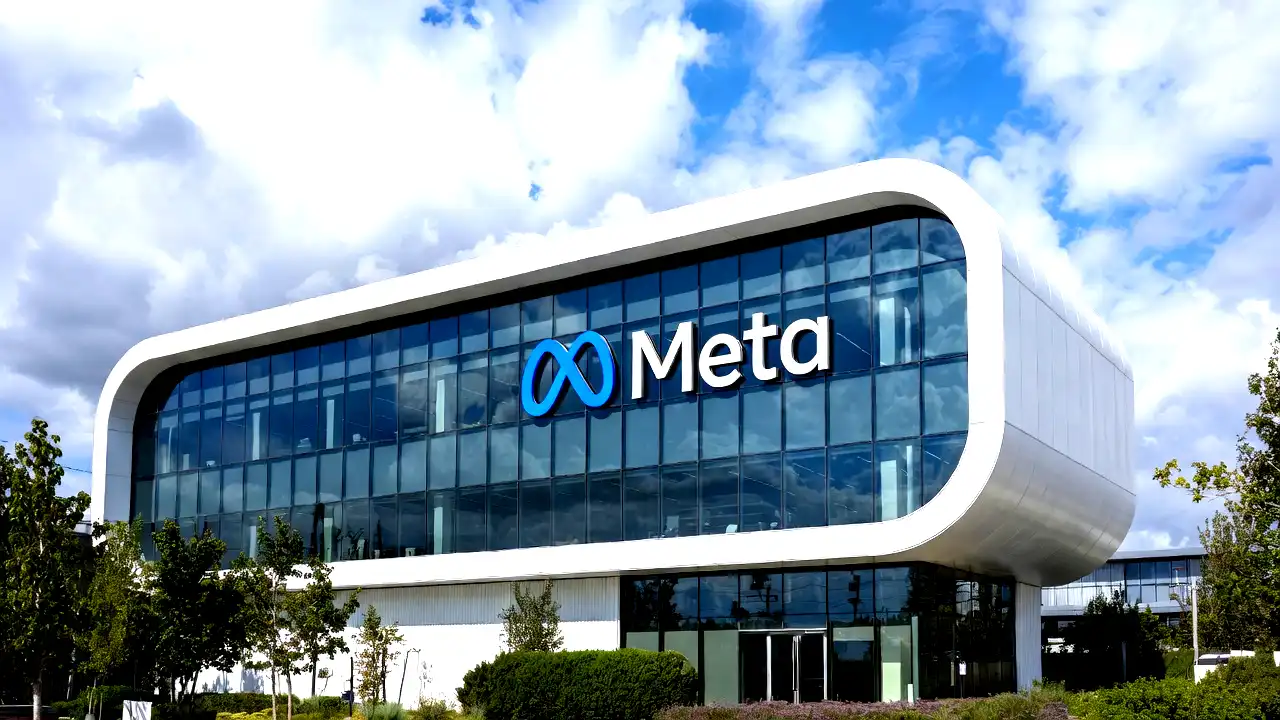
Meta Platforms Inc. is developing plans for a brand-new cloud infrastructure business, marking a massive pivot in how the social media giant commercializes its extensive artificial intelligence investments. The initiative, temporarily operating under the internal name Meta Compute, will sell excess AI computing capacity and hosted access to the company’s proprietary AI models to external enterprise customers. The news triggered an immediate wave of optimism on Wall Street, sending Meta shares surging nearly 9% to close at $612.91 on Wednesday, July 1, 2026.
The proposed business unit represents a significant evolution for the parent company of Facebook and Instagram, which has historically focused almost entirely on digital advertising as its primary source of income. By entering the public cloud infrastructure market, Meta is preparing to compete directly with entrenched hyperscale leaders like Amazon Web Services (AWS), Microsoft Azure, and Google Cloud. For investors, the move offers a highly credible framework to re-evaluate the company’s massive capital expenditure budget, transforming a heavily maligned cost center into a potentially lucrative new revenue generator.
The Core Strategy of Meta Compute: Dual-Pronged Monetization
To successfully enter the highly competitive cloud computing market, Meta is reportedly exploring a dual-pronged business model designed to appeal to different segments of the artificial intelligence ecosystem. The project is developing under the leadership of several senior Meta figures, including Infrastructure Chief Santosh Janardhan, Superintelligence Labs leader Daniel Gross, and President Dina Powell McCormick. By structuring the service around both high-level model access and low-level physical hardware, the company can address the diverse needs of modern software developers.
The first part of this strategy targets developers who want to build applications using pre-trained models without the hassle of managing physical servers. The second part targets enterprise clients and large-scale AI developers who require raw, high-performance computing power to train their own custom models. Together, these two offerings represent a comprehensive, flexible platform that could rapidly capture a significant share of the global AI compute market.
Model-as-a-Service: Offering Hosted AI with Muse Spark
The first pillar of the Meta Compute strategy is a Model-as-a-Service (MaaS) offering. Under this framework, Meta will give developers direct access to various artificial intelligence models hosted entirely on Meta’s own server infrastructure, including its recently introduced “Muse Spark” models.
This approach is conceptually similar to Amazon Web Services’ Bedrock platform, which lets developers tap into powerful foundation models via APIs. Instead of downloading, configuring, and running these massive models locally, developers can simply send queries to Meta’s servers and receive instant outputs. Meta will manage the complex underlying data centers, cooling systems, and specialized graphics processing units (GPUs) required to run the models, charging customers based on the volume of data processed or tokens consumed. This highly scalable, low-friction model allows startups and enterprise developers to integrate advanced AI capabilities into their software quickly, without needing to invest in their own expensive hardware.
Bare-Metal Rental: A Direct Assault on Neocloud Providers
The second, more disruptive pillar of the Meta Compute initiative involves selling direct access to raw, bare-metal computing capacity. This service allows enterprises and research institutions to rent high-performance GPU resources directly from Meta to train their own proprietary models, bypassing Meta’s software layer entirely.
This model represents a direct assault on specialized “neocloud” providers, such as CoreWeave and Nebius, which have experienced explosive growth over the past two years by renting out scarce GPU capacity to artificial intelligence developers. Because Meta has spent years purchasing tens of thousands of advanced processors from Nvidia, it possesses one of the largest and most concentrated arrays of computing power in the world. By opening up this vast infrastructure to external clients, Meta can immediately offer raw computing capacity at a scale that smaller, specialized cloud providers find impossible to match, potentially starting a major price war in the raw compute market.
Reshaping the Maligned Capex Narrative into a Revenue Engine
The report of Meta’s planned entry into the cloud market has successfully reframed one of the most controversial aspects of the company’s corporate strategy: its massive capital expenditure (capEx) budget. Over the past year, Meta has invested heavily in building out its AI infrastructure, causing significant anxiety among Wall Street analysts who questioned when these multi-billion-dollar investments would actually begin to pay off.
Before this report, Meta stock had been under sustained pressure, trading down approximately 8% since the beginning of the year as investors worried that the company’s heavy infrastructure spending was squeezing its free cash flows and compressing its valuation multiples. By introducing a clear, credible business plan to monetize this excess capacity, Meta has transformed this spending from a pure cost burden into a highly promising revenue-generating asset, easing investor fears and driving the massive 9% stock rally.
Easing Wall Street’s Jitters Over the $145 Billion Budget
The scale of Meta’s capital expenditure plans for the current year is staggering. The company has forecast capital expenditures of between $125 billion and $145 billion in 2026, driven primarily by the urgent need to construct state-of-the-art AI data centers and secure scarce, high-end GPUs like Nvidia’s Blackwell and Hopper processors.
For months, investors have expressed deep concern over this aggressive cash outlay. Unlike its hyperscale rivals—Microsoft, Amazon, and Google—which can easily justify their massive capital budgets because they operate highly profitable public cloud businesses, Meta had no direct way to recoup its infrastructure investments from external customers. Its AI buildout was used exclusively to support its own internal applications, such as improving ad targeting algorithms on Instagram or running consumer-facing chatbots. By launching Meta Compute, the company can now use its excess capacity to generate direct, high-margin revenues, helping to offset its massive spending and proving that its investments can deliver sustainable financial returns.
Zuckerberg’s Strategic Hedge Against Overbuilding
The plan to sell spare computing capacity is a logical continuation of comments made by Meta Chief Executive Officer Mark Zuckerberg during the company’s shareholder meeting in May. When asked by investors about the risk of overbuilding the company’s physical infrastructure, Zuckerberg called the idea of selling excess compute capacity “definitely on the table.”
Zuckerberg revealed that external technology companies and research groups approach Meta “almost every week” asking if they can purchase access to the company’s spare capacity or pay a premium to run their APIs on Meta’s high-performance servers. While he noted that Meta still expects to use the vast majority of its infrastructure internally to train its own next-generation models, selling off excess capacity acts as a powerful strategic hedge. If the company temporarily overbuilds its data centers, it can easily rent out the spare capacity to external buyers, protecting its profit margins and ensuring that its expensive hardware assets never sit idle.
The Shockwave Sent Through the Semiconductor and Neocloud Sectors
While Meta’s shareholders cheered the news of the planned cloud business, the report sent a powerful shockwave through other sectors of the technology market. The prospect of a massive new competitor entering the AI infrastructure space weighed heavily on existing cloud providers and semiconductor manufacturers.
The market fallout was particularly severe for specialized neocloud vendors:
- CoreWeave: Shares of the high-growth AI cloud provider plummeted approximately 14% on Wednesday, as investors recognized that Meta’s entry represents a major threat to its core business model.
- Nebius: The European-based infrastructure provider saw its stock drop 15%, reflecting fears that a massive inflow of cheap, excess capacity from Meta could erode rental prices.
- Nvidia: Shares of the AI chip giant fell about 2%, while Super Micro Computer fell 4%, as some investors worried that overall AI supply might finally catch up to demand if tech hyperscalers begin selling off their excess capacity.
This market reaction shows that the AI infrastructure trade is entering a more mature, highly competitive phase. As supply constraints ease and major tech companies begin to monetize their excess resources, the high pricing power previously enjoyed by chipmakers and specialized compute providers may begin to normalize, forcing the entire industry to adapt to a more competitive environment.
The Competitive Battle for Public Cloud Dominance
If Meta proceeds with its plans for Meta Compute, it will set up a historic battle for dominance in the global public cloud market. For over a decade, this highly lucrative sector has been dominated by a powerful oligopoly: Amazon Web Services, Microsoft Azure, and Google Cloud. These three tech giants have built massive, global networks of data centers, locked in millions of enterprise customers, and generated hundreds of billions of dollars in highly stable, recurring revenues.
Entering this market presents a major challenge for Meta, which has no prior experience operating as a public cloud utility. Providing cloud services requires far more than just owning high-speed servers; it requires building complex billing systems, establishing global enterprise sales forces, and providing round-the-clock technical support for corporate clients. However, Meta possesses two critical advantages that could help it overcome these barriers:
- Vast Scale: The company boasts nearly 4 billion monthly active users across its Family of Apps, giving it an unparalleled global footprint and deep relationships with millions of digital businesses.
- Developer Trust: By maintaining a strong commitment to open-source AI development through its popular Llama model series, Meta has built immense goodwill and trust within the global developer community.
If Meta can successfully leverage these advantages, it can position its new cloud business as a highly attractive, open-source alternative to the proprietary ecosystems of Microsoft and Google, disrupting the established cloud order and reshaping the global technology landscape for years to come.
Conclusion
The report that Meta Platforms is developing an independent cloud computing business represents a major turning point for the social media giant and the wider artificial intelligence sector. By moving to monetize its excess computing power through Meta Compute, the company has found a highly credible, strategic way to reframe its massive $145 billion capital expenditure story, converting what was once viewed as a massive cost burden into a highly lucrative potential revenue stream. Backed by a strong balance sheet and boasting a market capitalization of $1.59 trillion, the company is well-positioned to challenge established cloud giants like AWS, Microsoft Azure, and Google Cloud.
While the specifics of the business model remain unfinalized, the positive reaction from Wall Street—which sent META shares surging nearly 9%—shows that investors value this pragmatic approach to capital discipline. As the company continues to build out its physical data centers and acquire next-generation GPUs, the ability to sell off spare capacity will act as a powerful strategic hedge against the risk of overbuilding. Whether Meta can successfully transition from a social media company into a premier global cloud utility will be closely watched in the coming months, proving that in the high-stakes AI race, the ability to adapt, monetize, and compete across the entire technology stack remains the ultimate key to corporate survival.






