

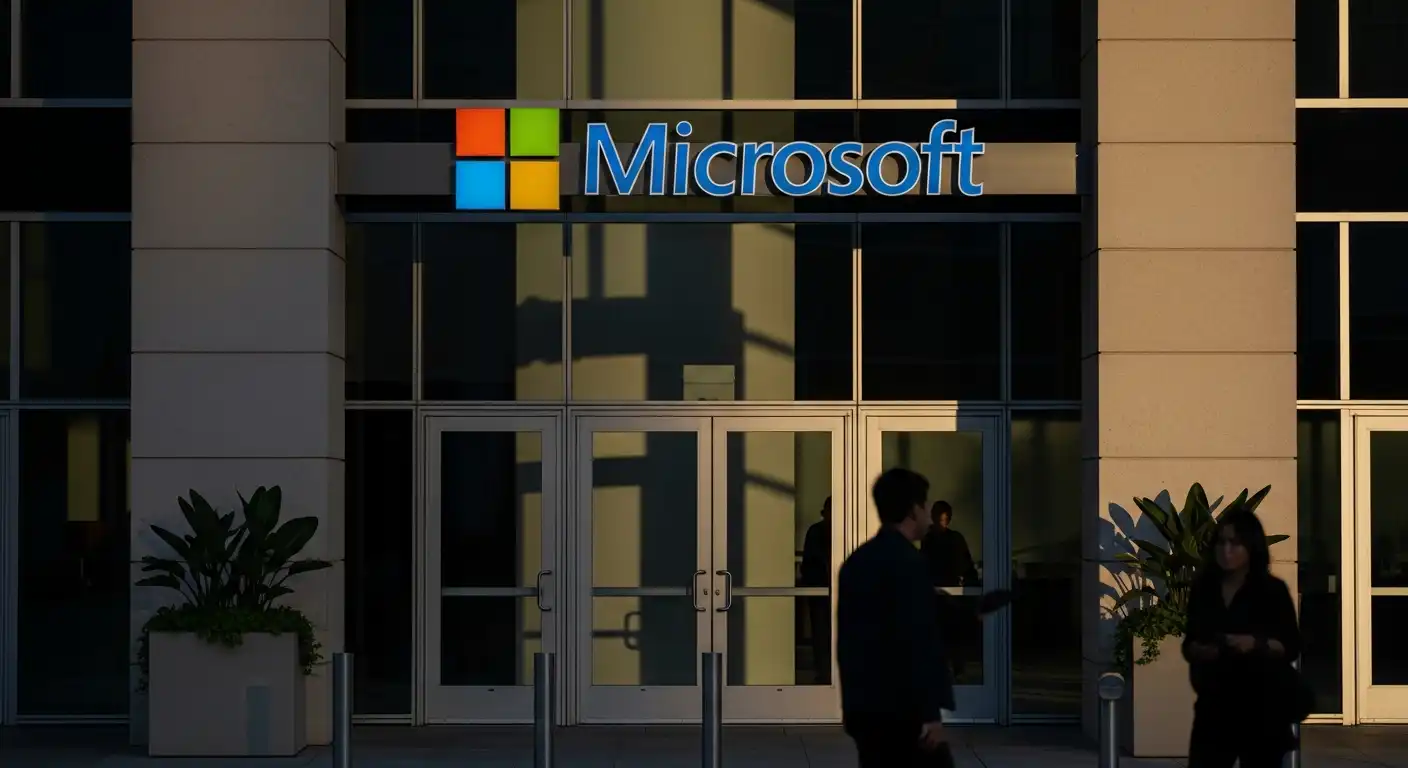
Microsoft Corporation is preparing to announce another significant round of layoffs, continuing its multi-year effort to trim legacy operations and reallocate resources toward next-generation technologies. According to reports from people familiar with the plans, the upcoming job cuts will affect thousands of roles across several of the company’s core business units, including sales, consulting, and the Xbox gaming division. The software giant could announce the restructuring as early as next week, matching a familiar corporate pattern of reshuffling operations around the close of its fiscal year on June 30.
The planned redundancies are projected to affect less than 2.5% of Microsoft’s global workforce, which stands at approximately 228,000 employees. Based on current headcount estimates, this means roughly 5,500 jobs are at risk. While any loss of employment represents a difficult transition for affected workers, company leaders are trying to soften the blow by preparing immediate redeployment packages. Some individuals whose roles are eliminated will receive offers for alternative positions within the company on the same day as the announcement. The strategic transition highlights the intense financial pressures currently reshaping the global technology sector, where even the most profitable conglomerates must continuously re-evaluate their labor costs to fund their massive artificial intelligence infrastructure goals.
The Financial Context of Microsoft’s Tech-Industry Layoffs
The upcoming reductions reflect a persistent, industry-wide shift toward lean corporate operations. During the early years of the decade, major technology firms engaged in an unprecedented hiring spree to meet the surging demand for digital services during the pandemic. This rapid expansion left many tech giants with elevated headcounts and bloated operating budgets. As global economic growth cooled, interest rates remained high, and the focus of the tech sector shifted from software services to capital-intensive hardware, companies began a painful process of reversing this pandemic-era overhiring.
While the loss of 5,500 roles represents a significant disruption, this upcoming round of layoffs is actually smaller in scale than the reductions Microsoft carried out last year. During the close of the 2025 fiscal year, the company executed two separate, massive rounds of layoffs. It eliminated roughly 6,000 positions in May 2025, followed by a much larger wave of 9,000 cuts in early July 2025, representing nearly 4% of the company’s total workforce at the time. The smaller footprint of the July 2026 layoffs is largely due to a highly successful voluntary retirement program that the company introduced earlier in the year.
The Mechanics and Impact of the 2026 Voluntary Buyout Program
To reduce headcounts without relying entirely on involuntary terminations, Microsoft launched its first-ever voluntary retirement program for U.S.-based employees. The buyout offer targeted staff ranked at level 67 and below whose combined age and years of service at the company totaled 70 years or more. For example, a 50-year-old employee who had worked at the company for 20 years would qualify for the package.
The program was highly successful:
- Approximately 8,750 U.S. employees met the eligibility requirements for the retirement package.
- About one-third of those eligible workers chose to accept the buyout, leading to roughly 2,900 voluntary departures.
- To protect essential revenue pipelines, Microsoft excluded commission-based sales employees from participating in the program.
- The high adoption rate of the voluntary buyouts significantly cushioned the impact of the upcoming July cuts, allowing the company to meet its structural cost-reduction targets with fewer involuntary layoffs.
By encouraging senior, high-earning employees to retire voluntarily, Microsoft managed to reduce its overall payroll expenses while retaining younger, specialized engineering talent required to build and deploy its next-generation software platforms.
Wall Street Panic and the Worst Monthly Stock Slump Since the Dot-Com Era
Despite the company’s aggressive cost-cutting measures, investors on Wall Street remain highly anxious about Microsoft’s financial trajectory. The company’s stock has faced intense pressure over the past month, slumping approximately 19% to 21% to close near a 52-week low of $373.02. This downturn represents the company’s worst monthly performance since the height of the dot-com bubble collapse, wiping out billions of dollars in market capitalization and fueling debates over whether the market’s enthusiasm for artificial intelligence has run ahead of reality.
The core of investor anxiety is the astronomical cost of the AI infrastructure race. While Microsoft has successfully integrated AI features into its core products, such as Office 365 and Azure Cloud, the revenues generated by these services have not yet scaled fast enough to offset the massive capital expenditures required to build and run them. Furthermore, investors are growing increasingly concerned that advanced generative AI models could eventually replace traditional software services, potentially cannibalizing some of Microsoft’s own highly profitable, legacy software offerings. This fear has prompted some institutional asset managers to reduce their holdings in the company, placing immense pressure on management to prove that its multi-billion-dollar investments will deliver robust, sustainable profit margins.
Navigating the Massive $100 Billion AI and Cloud CapEx Boom
The upcoming layoffs are a direct consequence of Microsoft’s massive reallocation of capital. During the fiscal year that concluded on June 30, the company’s capital expenditures reached an unprecedented level, surpassing $100 billion. This represents a significant increase from the $88.7 billion spent during the previous fiscal year, highlighting the extreme capital requirements of the modern technology industry.
A massive portion of this $100 billion infrastructure budget—roughly two-thirds—is spent directly on purchasing the specialized high-end silicon processors, primarily designed by Nvidia, required to train and run advanced large language models. The remaining third is allocated to constructing physical data center facilities, securing gigawatt-scale electrical power commitments, and installing advanced liquid cooling networks. Because these infrastructure components are incredibly expensive and in high demand, Microsoft has had to systematically trim its operating expenses in other areas, treating its massive employee payroll as a primary source of savings to fund its hardware goals.
The Critical Restructuring and Reset of the Xbox Gaming Division
The division facing some of the most visible structural changes in this upcoming round of layoffs is Xbox. The gaming unit has struggled with a deep, systemic components crisis and a sharp decline in global console hardware sales, forcing management to reconsider the division’s long-term business model. In an internal memo sent to employees, Xbox chief executive officer Asha Sharma and content chief Matt Booty warned that the gaming business cannot continue on its current trajectory, calling for a broad operational reset.
To protect its overall corporate profit margins, Microsoft is implementing significant budget, marketing, and staffing cuts across the Xbox unit. Rather than shutting down its recently acquired game studios outright, the company is reportedly considering options to spin off several of its creative studios, including Compulsion Games, Double Fine, and Ninja Theory, into independent or joint-venture operations. Furthermore, some industry reports suggest that Microsoft is exploring a broader structural split, potentially spinning the entire Xbox gaming division off into a wholly-owned subsidiary or an independent public company. This transition toward a leaner, software-focused gaming business is a direct attempt to insulate the parent company from the volatile capital cycles of console hardware.
The Reignited H-1B Visa Controversy in the Midst of Layoffs
The news of the upcoming layoffs has also reignited a fierce public debate over Microsoft’s employment of foreign contract workers. As the company prepares to eliminate approximately 5,500 domestic roles, trade unions and labor advocates have pointed out a stark contradiction in the company’s workforce strategy. Despite cutting thousands of jobs over the past three years, Microsoft has remained the sixth-largest sponsor of H-1B specialty occupation visas in the United States since 2020, bringing in thousands of foreign workers annually.
This practice has drawn intense criticism on professional networking platforms like Blind and X, where affected domestic workers argue that major technology companies are using the H-1B program to replace high-earning domestic engineers with lower-cost foreign contractors. Critics point out that while the law requires companies to prove that there are no qualified U.S. workers available before sponsoring an H-1B visa, Microsoft continues to hire foreign nationals even as it lays off thousands of its own highly experienced domestic staff. As the upcoming July cuts take effect, this controversial labor practice is expected to face growing scrutiny from federal regulators and immigration reform advocates, potentially complicating the company’s future recruitment strategies.
The Reality of Tech Decoupling and Corporate Restructuring
The challenges facing Microsoft are by no means unique, as the entire U.S. technology sector is undergoing a massive, structural transition. According to national labor data, U.S.-based technology companies have announced a total of 123,653 job cuts so far this year. This represents a staggering 66% increase compared to the same period in the previous year, proving that the labor-heavy growth model of the past decade has officially come to an end.
As artificial intelligence and automated workplace assistants become more capable, technology firms are systematically restructuring their operations to require fewer human workers. Companies like Amazon, Meta, and Oracle have spent billions of dollars on severance packages and restructuring fees over the past year to transition their workforces toward AI-first structures. This global decoupling of technology growth from labor expansion suggests that the tech industry is entering a new era, where corporate success is measured not by the size of a company’s global headcount, but by the efficiency of its algorithms and the scale of its cloud computing infrastructure.
Conclusion
The upcoming layoff of approximately 5,500 Microsoft employees represents a painful but necessary step in the company’s transition toward an AI-first future. Faced with intense pressure from Wall Street over its worst monthly stock slump since the dot-com era and confronted with an astronomical $100 billion annual infrastructure budget, the company has chosen to prioritize capital discipline and operating efficiency. By cutting under 2.5% of its global workforce, particularly across its sales, consulting, and struggling Xbox divisions, the software giant is freeing up the massive capital resources required to fund its competitive cloud goals.
While the successful voluntary retirement program helped soften the overall impact of the July cuts, the lingering controversy over the company’s heavy use of the H-1B visa program in the midst of domestic layoffs highlights the complex labor and political challenges of this transition. As the technology sector continues its massive structural reorganization, Microsoft’s ability to balance its environmental and financial ambitions with responsible labor management will determine its long-term success. While the transition will introduce significant short-term volatility, the strategic shift toward high-performance cloud infrastructure and specialized software services remains the only viable path to securing the company’s technological dominance in the digital age.






