Key Points:
- South Korean portal giant Naver partnered with Nvidia to build a massive global artificial intelligence infrastructure.
- The expansion begins with Naver’s Gak Sejong data center, targeting 55 megawatts by early 2027, before scaling to a global gigawatt.
- Naver will join the Nemotron Coalition to upgrade its proprietary HyperCLOVA X model and develop a spatial Seoul World Model using Nvidia Cosmos.
- The strategic agreement establishes a comprehensive profit-and-risk-sharing alliance spanning the entire technology and infrastructure value chain.
A massive infrastructure alliance is taking shape in East Asia as global technology companies move to secure the physical foundations of the artificial intelligence era. On Monday, June 8, 2026, South Korean internet portal giant Naver Corporation announced a major strategic partnership with American chipmaker Nvidia Corporation to construct large-scale, global artificial intelligence data networks. The announcement coincides with the final day of Nvidia Chief Executive Officer Jensen Huang’s high-profile, four-day visit to Seoul, where he is scheduled to tour Naver’s advanced technology headquarters later in the afternoon.
The newly established alliance will begin with a significant expansion of Naver’s existing Gak Sejong data center in Sejong, central South Korea. Naver plans to utilize Nvidia’s proprietary DSX platform to scale up the facility’s power capacity, targeting an initial 55 megawatts of operational output by the first half of 2027. Following this domestic expansion, the two companies plan to gradually roll out similar high-capacity data centers in major overseas markets, with long-term blueprints to scale their joint infrastructure network to an immense gigawatt capacity.
To understand the sheer physical scale of a gigawatt-class data center, one must look at the computing hardware it can house. A single gigawatt represents nearly four times the maximum data capacity of Naver’s state-of-the-art Gak Sejong center. This immense electrical capacity can power and cool hundreds of thousands of Nvidia’s latest high-performance graphics processing units (GPUs) simultaneously. By building these massive computing hubs, the partners are securing the raw processing power necessary to support the next generation of generative AI models and heavy industrial workloads.
Beyond building physical warehouses, the partnership establishes a deep, collaborative relationship in advanced software engineering. Naver plans to actively participate in Nvidia’s Nemotron Coalition, a global collaborative network that brings together open-source model builders and artificial intelligence developers. By joining this coalition, Naver’s engineering team aims to integrate Nvidia’s advanced training algorithms to accelerate the development of HyperCLOVA X, Naver’s proprietary large language model designed specifically to handle complex Korean-language nuances and regional Asian business requirements.
The two technology giants will also collaborate closely in the emerging field of physical AI and spatial intelligence. Naver plans to develop a highly detailed virtual mapping system called the “Seoul World Model.” To construct this system, Naver will combine its proprietary, high-definition urban street-view data and advanced spatial modeling technology with Nvidia’s “Cosmos” world foundation models. This highly precise virtual twin of the South Korean capital will serve as a digital training ground, allowing autonomous vehicles, delivery drones, and smart factory robots to safely simulate real-world maneuvers before deploying onto physical streets.
This strategic risk-and-profit-sharing agreement represents a highly pragmatic approach to handling the immense costs of the AI transition. Constructing a global, gigawatt-scale infrastructure footprint requires massive investments, with companies committing more than $10 billion to independent hardware programs, easily exceeding the traditional data center’s standard $1 billion capital threshold. Naver’s executive leadership clarified that the partnership with Nvidia goes far beyond a simple technical exchange, representing a comprehensive alliance that spans every stage of the value chain—from identifying global customer demand to direct capital collaboration.
The Monday announcement crowns Jensen Huang’s highly active four-day diplomatic blitz across South Korea’s technology landscape. Since arriving in Seoul on Friday, the Nvidia chief has met with the heads of major conglomerates, including Hyundai Motor Group Executive Chair Euisun Chung and the leaders of gaming giants Krafton and NCSOFT. By securing these high-level alliances, Nvidia is weaving its hardware and software ecosystems directly into South Korea’s core automotive, entertainment, and digital infrastructure industries, protecting its market share from emerging Western and Asian competitors.
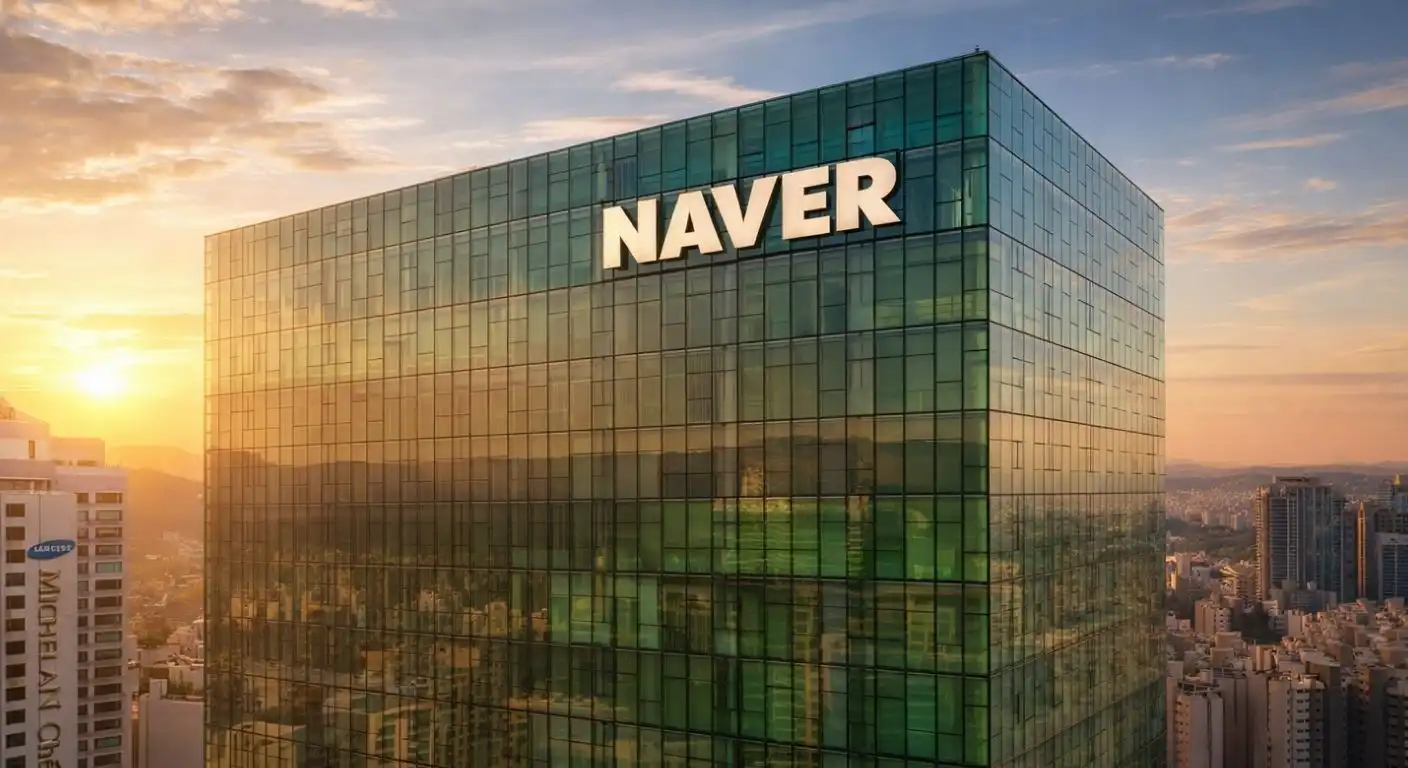
Later on Monday, Huang is scheduled to visit Naver’s 1784 building in Gyeonggi Province, located just south of Seoul. The 28-story corporate headquarters serves as a live, highly advanced testbed for Naver’s core cloud, artificial intelligence, and robotics technologies. The building features an array of autonomous delivery robots that navigate offices via private 5G networks, demonstrating that the company has already mastered the local integration of software and hardware. Touring this physical test bed allows Huang to evaluate firsthand how Naver’s spatial mapping and Nvidia’s processors can operate together in real-world environments.
The massive energy requirements of these planned data centers are forcing both firms to evaluate local utility grids carefully. With global energy supplies facing tight capacity, even a minor 1.5% lag in power grid modernization can delay data center energization, prompting tech companies to secure custom, high-efficiency power networks early. By collaborating with local utility providers and investing in energy-efficient cooling solutions, Naver and Nvidia aim to ensure that their massive computing hubs remain reliable, cost-effective, and fully compliant with regional environmental regulations.
In the end, the Naver-Nvidia partnership marks a vital milestone for the global technology sector. By combining advanced GPU hardware with proprietary local data and spatial modeling, the two companies are building a highly resilient, integrated ecosystem designed for the digital age. As the joint engineering teams begin expanding the Gak Sejong data center and developing the Seoul World Model over the coming months, this landmark collaboration proves that the next phase of the artificial intelligence revolution will require a perfect, multi-layered alignment of physical infrastructure and software intelligence.