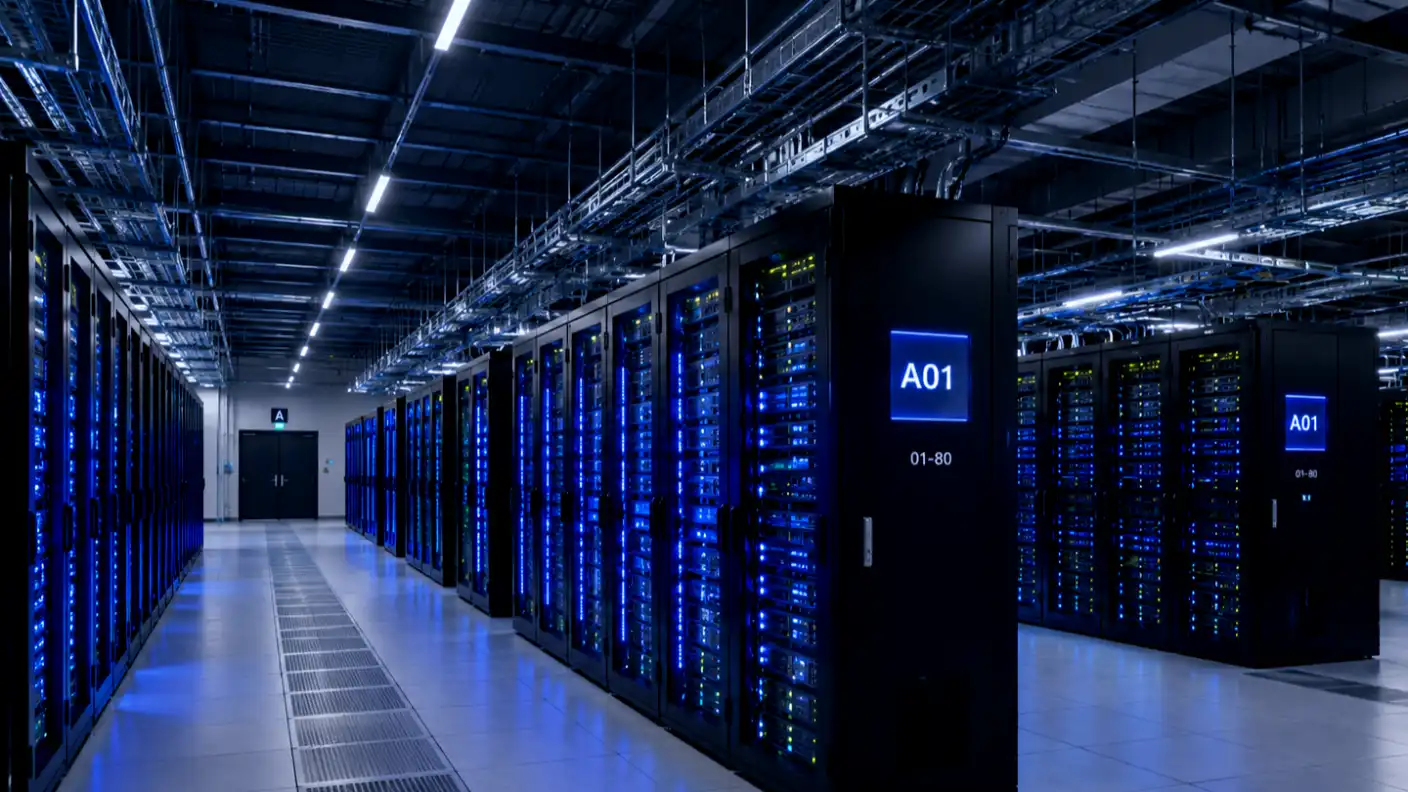
The physical infrastructure that supports the global digital economy is facing a critical resource collision, and the state of New York has officially stepped forward to write the rulebook for the next decade of technological development. Following her highly controversial decision to impose a first-of-its-kind, one-year statewide moratorium on environmental permits for massive new data centers, New York Governor Kathy Hochul took to the pages of the Wall Street Journal to defend her administration’s policies.
In her detailed op-ed, Hochul outlined a comprehensive, forward-looking roadmap designed to ensure that the Empire State can successfully build out its artificial intelligence capabilities without compromising its electrical grid, draining its natural resources, or raising utility bills for everyday citizens.
This policy defense arrives at a highly sensitive, politically charged moment. Just days prior, U.S. President Donald Trump publicly attacked New York’s permitting freeze, labeling it a “terrible decision” that would drive massive technology investments out of the state and into business-friendly southern regions that treat data centers as “Liquid Gold.”
Simultaneously, a landmark report from BloombergNEF revealed that U.S. data centers are on track to consume an extraordinary 20 percent of the nation’s total electricity by 2035, requiring over 194 gigawatts of new capacity.
By outlining a clear, numbers-driven plan to manage this massive demand, Hochul is attempting to establish a national model for digital governance, proving that a state can be aggressively pro-innovation while protecting its citizens from the harsh, resource-heavy realities of the high-tech boom.
The Empire State Dilemma: Navigating the High-Power Demands of the AI Era
The rapid expansion of artificial intelligence represents a major economic and technological opportunity for New York. Under Hochul’s leadership, the state launched the Empire AI consortium, a massive public-private partnership anchored by a $400 million supercomputing center at the University at Buffalo, designed to provide researchers and local startups with the computing power needed to invent next-generation technologies.
However, the physical reality of scaling this computing capacity has created an unprecedented challenge for the state’s electrical grid. The New York Independent System Operator, which manages the state’s transmission lines, reported that there are currently nearly 12 gigawatts of data center load requests sitting in its active connection queue.
To put that number in perspective, 12 gigawatts is equivalent to the generating capacity of nearly twelve commercial nuclear reactors—an amount of power that could easily run over nine million residential homes.
More alarmingly, over eight gigawatts of those requests entered the queue in the previous year alone, representing an unsustainable acceleration in demand that the state’s utility planners never anticipated.
This sudden influx of energy-intensive projects forced Hochul to sign an executive order placing a temporary, one-year pause on environmental permits for new data centers with a peak electrical load of 50 megawatts or more.
The moratorium is not designed to shut down the technology sector; rather, it is a necessary, highly strategic pause to allow state planners, utility executives, and environmental protection agencies to conduct a comprehensive audit.
The goal is to determine how to manage these massive loads safely before these giant computing fortresses are allowed to plug directly into the public grid.
Protecting the Ratepayers: The New York Grid Acceleration Fund
The primary concern driving the New York data center strategy is consumer protection. When an industrial operator requests a massive, 100-megawatt connection to the electrical grid, the local utility company must often spend hundreds of millions of dollars building new high-voltage transmission lines, upgrading substations, and reinforcing regional power plants to support the load.
Under traditional utility regulations, these capital improvement expenses are added to the utility’s broader rate base, meaning that every residential household and small business in the state sees its monthly electricity bills rise to subsidize the infrastructure upgrades requested by a single, wealthy technology corporation.
Hochul’s plan rejects this regressive cost-sharing model. In her op-ed, she announced the establishment of the New York Grid Acceleration Fund, a dedicated infrastructure pool financed directly by the technology companies themselves.
Under this new policy framework, data center developers must pay the full, upfront capital costs of their transmission and substation upgrades, ensuring that the financial burden of the AI buildout is born entirely by the corporations requesting the power, rather than being passed down to the utility bills of everyday New Yorkers.
Shifting the Infrastructure Burden to Tech Giants
By forcing tech conglomerates to pay for their own grid upgrades, New York is implementing a market-driven solution that protects consumers from energy-driven inflation.
In a high-interest-rate environment, these infrastructure investments are highly expensive, and major technology companies possess the vast, multi-billion-dollar cash reserves required to fund them.
The Grid Acceleration Fund will ensure that these corporate resources are recycled back into the local economy, subsidizing regional grid upgrades and lower-income utility relief programs, turning the physical footprint of the tech boom into a major economic benefit for the host communities.
Preventing Regional Grid Instability on the NYISO
The second, equally critical goal of the grid fund is to protect the physical stability of the transmission network.
The NYISO queue holds nearly twelve gigawatts of data center requests, and if these projects were allowed to connect to the grid unchecked, they would create severe, localized power shortages.
During hot summer afternoons when residential air-conditioning use peaks, the combined demand from households and always-on data centers could easily trigger widespread brownouts or catastrophic rolling blackouts.
By using the grid fund to build dedicated, high-speed transmission lines and advanced automated substations, the state can safely route electricity around high-congestion zones.
This infrastructure modernization will improve the overall flexibility and resilience of the entire statewide network, ensuring that the public grid can support both the extreme demands of the automated century and the daily power needs of its residential citizens with absolute, zero-error safety.
The Environmental Safeguards: Clean Energy Matching and Water Preservation
While grid stability is essential, the long-term success of the New York data center strategy depends on its ability to satisfy the state’s strict climate and environmental protection laws.
Under the landmark Climate Leadership and Community Protection Act, New York is legally committed to achieving 100% zero-emission electricity by 2040.
Allowing massive, fossil-fuel-powered data centers to connect to the grid unchecked would make reaching these goals physically impossible.
To address this challenge, Hochul’s roadmap outlines a highly progressive, legally binding environmental framework for all future data center developments.
The company’s priority must be to design and operate its facilities with absolute respect for local natural resources, using advanced technologies to minimize its ecological footprint and prove that clean industrial development is a viable reality.
The Mandate for One-Hundred Percent Hourly Clean Energy Matching
The most significant environmental rule proposed by the governor is a strict mandate for hourly clean energy matching. Historically, technology companies used a highly convenient, yearly accounting model to declare their data centers carbon-neutral.
They would purchase green energy certificates from wind or solar farms in different regions, claiming that their total yearly energy purchases matched their total yearly consumption, even if they were actually running their servers on coal-fired power during the night.
New York’s new strategy completely rejects this accounting model.
The state will require all future hyperscale data centers to match their actual, hourly power consumption with local, zero-emission energy sources in real time.
This means that if a data center operates at 3:00 AM, it must prove that it is drawing its electricity from active local wind farms, hydroelectric plants near Niagara Falls, or regional battery storage systems.
This hourly matching requirement is a massive, highly disruptive step that will force technology companies to invest directly in building out local renewable generation and energy storage infrastructure, accelerating the decarbonization of the entire statewide grid.
Protecting Local Aquifers with Recycled Wastewater Cooling
The second major environmental risk associated with data centers is their massive, continuous consumption of water. High-performance, liquid-cooled supercomputing racks generate extraordinary amounts of heat, and traditional facilities rely on evaporative cooling systems that lose millions of gallons of water daily to evaporation.
In many regional communities, these facilities draw their water directly from local underground aquifers, raising fears among farmers and residents that the tech boom will deplete their drinking water supplies and dry up their agricultural fields during dry summer seasons.
Hochul’s roadmap addresses this crisis by implementing strict water-preservation standards.
The state will require all future data centers to utilize closed-loop cooling systems that recycle nearly 100% of their water, or invest in advanced wastewater treatment facilities to process municipal sewage for industrial cooling use.
By forcing developers to use recycled wastewater instead of tapping into local drinking-water aquifers, the state protects its natural resources, ensuring that the growth of the digital economy never occurs at the expense of local communities’ physical survival.
The Empire AI Consortium: Promoting Innovation Within Democratic Boundaries
To prove that her administration is not anti-tech, Hochul used her op-ed to highlight New York’s massive, state-funded artificial intelligence research initiative: the Empire AI consortium.
Launched in early 2024 at the University at Buffalo, the public-private partnership brings together the state’s leading research universities, including Cornell University, Columbia University, New York University, and the City University of New York, to build a world-class, public supercomputing center.
The state has committed over $400 million in public and private funding to the project, ensuring that New York’s public researchers, independent software developers, and academic institutions have the direct physical resources needed to research next-generation models.
Unlike the speculative, highly secretive research labs of Silicon Valley, the Empire AI consortium operates under a strict mandate of public transparency, academic collaboration, and ethical safety.
Creating a National Blueprint for Sovereign Tech Governance
The establishment of the Empire AI consortium represents a powerful, progressive alternative to the commercial tech monopolies. By funding its own, state-backed computing capacity, New York is ensuring that the development of artificial intelligence remains anchored in the public interest, focusing heavily on researching solutions for local healthcare challenges, climate modeling, and educational advancement.
This public-sector technological leadership is a vital component of Hochul’s long-term strategy.
By proving that a state can successfully build and manage its own advanced computing resources while implementing the nation’s strictest, most protective safety and environmental regulations, New York is creating a national blueprint for sovereign tech governance.
The governor argues that this balanced approach is the only way to build a prosperous, stable, and highly secure digital economy that respects the rights of citizens and the limits of our natural world.
The Long-Term Competitive Advantage of Regulatory Certainty
While some tech executives and political figures continue to criticize the one-year moratorium as a terrible, anti-business decision that will drive capital out of the state, Hochul’s op-ed argues that proactive regulation actually provides a major, long-term competitive advantage.
In a highly volatile geopolitical and regulatory environment, technology companies are increasingly searching for absolute legal and operational certainty.
A state that allows unregulated, chaotic development risks suffering catastrophic grid failures, public-safety backlashes, and sudden, retrospective legislative bans that can destroy a company’s multi-million-dollar investments overnight.
By building a clear, predictable, and highly transparent regulatory framework today, New York is offering technology companies a secure, stable, and long-term home where they can build their massive computing campuses with absolute confidence, ensuring that the country’s digital future remains secure, sustainable, and prosperous for generations to come.
The battle over the future of the digital public square has officially entered its most critical, defining phase. By taking a firm, uncompromising stand to protect her state’s electricity ratepayers and natural resources, Governor Kathy Hochul is demonstrating the strategic vision and political courage required to lead.
As the one-year moratorium begins and the state’s utility planners and environmental scientists conduct their detailed audits, the rest of the nation will watch the experiment closely.
If New York successfully proves that a society can balance the unlimited demands of the automated century with the absolute physical limits of the real world, it will set a new global standard for technological governance, proving that true innovation is not about bypassing the rules, but about building a clean, safe, and truly sustainable future that protects the rights and the prosperity of every single citizen.