Key Points:
- Spot gold slid 1.02% to $4,202.7 per ounce, weighed down by rising U.S. interest rate expectations.
- Bank of America announced it does not project any Federal Reserve interest rate cuts until 2028.
- Under new Chair Kevin Warsh, at least half of the FOMC now anticipates a rate hike this year to combat inflation.
- Geopolitical tensions eased slightly after Switzerland peace talks established a secure mechanism to keep the Strait of Hormuz open.
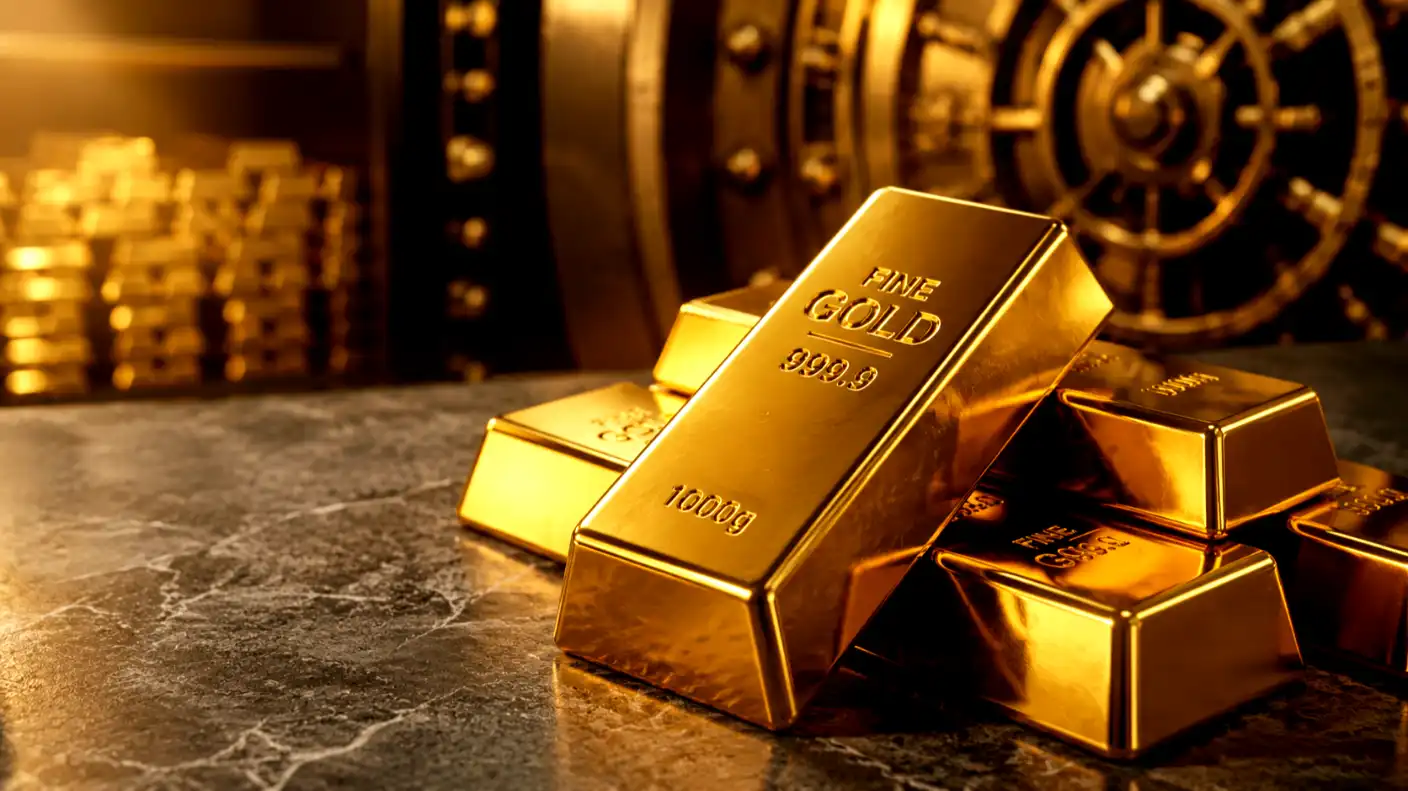
Precious metals experienced a downward shift during recent trading sessions as the Federal Reserve’s newly aggressive monetary policy projections overshadowed brief diplomatic breakthroughs in the Middle East. Spot gold prices slid by 1.02% to trade at $4,202.7 per ounce, reversing earlier gains driven by optimism surrounding a tentative peace accord. While global markets enjoyed a temporary boost in risk appetite following successful diplomatic privileges in Switzerland, the prospect of higher-for-longer interest rates continued to dampen the appeal of non-yielding bullion.
The selling pressure extended across the entire metals sector, highlighting a broad-based retreat from commodities. Silver prices fell by 1.11% to settle at $65.585 per ounce, while platinum registered a steep 2.06% decline to trade at $1,672.2 per ounce. Palladium also suffered significant losses, dropping 1.41% to $1,271.0 per ounce, and copper edged down by 0.31% to $6.3655 per pound. This coordinated decline reflects growing concern among investors that the era of loose monetary policy is definitively over, forcing traders to reallocate capital toward traditional, yield-bearing financial assets.
Market participants are still processing the long-term implications of the Federal Reserve’s unexpectedly hawkish policy update. The central bank recently revealed a revamped Summary of Economic Projections, commonly known as the dot plot, which took Wall Street completely by surprise. At least half of the Federal Open Market Committee (FOMC) members now expect the central bank to hike interest rates later this year. This aggressive shift is designed to combat the severe inflationary shock triggered by surging global oil prices earlier this year, which rose rapidly due to the military conflict with Iran.
This hawkish pivot represents a massive departure from previous policy expectations. Earlier this year, financial markets had widely priced in at least two quarter-point interest rate cuts for the year. However, the newly updated dot plot indicates that the central bank will likely implement at least one 25 basis point rate hike instead. Adding to this hawkish sentiment, analysts at Bank of America released a highly conservative research note on Monday, stating that they no longer expect the Federal Reserve to implement any interest rate cuts until 2028. Because physical gold does not generate any yield, a prolonged high-rate environment is a major structural headwind for the metal.
Market specialists are warning that precious metals could face a much deeper technical correction if current macroeconomic trends persist. Technical analysts noted that investors have fully priced in a high probability of a 25-basis-point rate hike before the end of the year, which is keeping a heavy lid on any upward price momentum. While short-term geopolitical headlines can trigger temporary price spikes, speculators remain highly defensive. Industry analysts warn that if the current support levels fail to hold, gold could face a deeper pullback, potentially testing its long-term psychological support floor around the $4,000 per ounce mark.
While monetary policy remains highly bearish for gold, geopolitical developments in the Middle East have provided some temporary risk relief. International oil prices continued their multi-week slide after representatives from the United States and Iran met for emergency peace talks at Lake Lucerne in Switzerland. Mediated by diplomatic representatives from Qatar and Pakistan, the high-level summit aimed to salvage a fragile, 60-day interim peace memorandum of understanding that had been signed during the G7 summit in France. U.S. Vice President JD Vance announced that the Swiss negotiations successfully established a secure bilateral mechanism to keep the strategic Strait of Hormuz open to commercial shipping.
The emergency Swiss meeting was organized after the fragile peace agreement suffered a severe setback over the weekend. Fresh fighting erupted in southern Lebanon between Israeli forces and Iran-backed Hezbollah militants, with both sides accusing each other of violating the newly implemented ceasefire. The military escalation prompted Tehran to temporarily close the Strait of Hormuz, reversing the temporary free transit agreement established under the memorandum. The situation deteriorated further after public warnings were issued on Sunday, threatening heavy military retaliation against Iran if its regional proxy forces did not immediately cease hostilities in Lebanon.
Under the initial terms of the G7 memorandum of understanding, all military operations on all active regional fronts were supposed to cease immediately to allow for a 60-day negotiation window to arrive at a permanent peace treaty. The agreement also mandated that the critical Strait of Hormuz remain completely open with no transit charges or cargo tolls for the duration of the talks. In return, Iran agreed to suspend its nuclear development programs and dispose of its enriched nuclear materials through a mutually verified mechanism. While the weekend’s fighting has exposed the extreme fragility of the truce, the successful conclusion of the Swiss summit has temporarily restored diplomatic channels.
Moving forward, the path of precious metals will remain heavily caught between these competing macroeconomic and geopolitical forces. If the newly established transit mechanism successfully keeps the Strait of Hormuz open, falling oil prices will continue to lower global inflation expectations, giving central banks less reason to hike rates aggressively. However, if the ceasefire in Lebanon collapses entirely and triggers renewed military operations, a fresh energy shock could force the Federal Reserve to follow through on its hawkish rate-hike threats. For gold investors, navigating this highly complex landscape requires a highly cautious, data-dependent trading strategy.