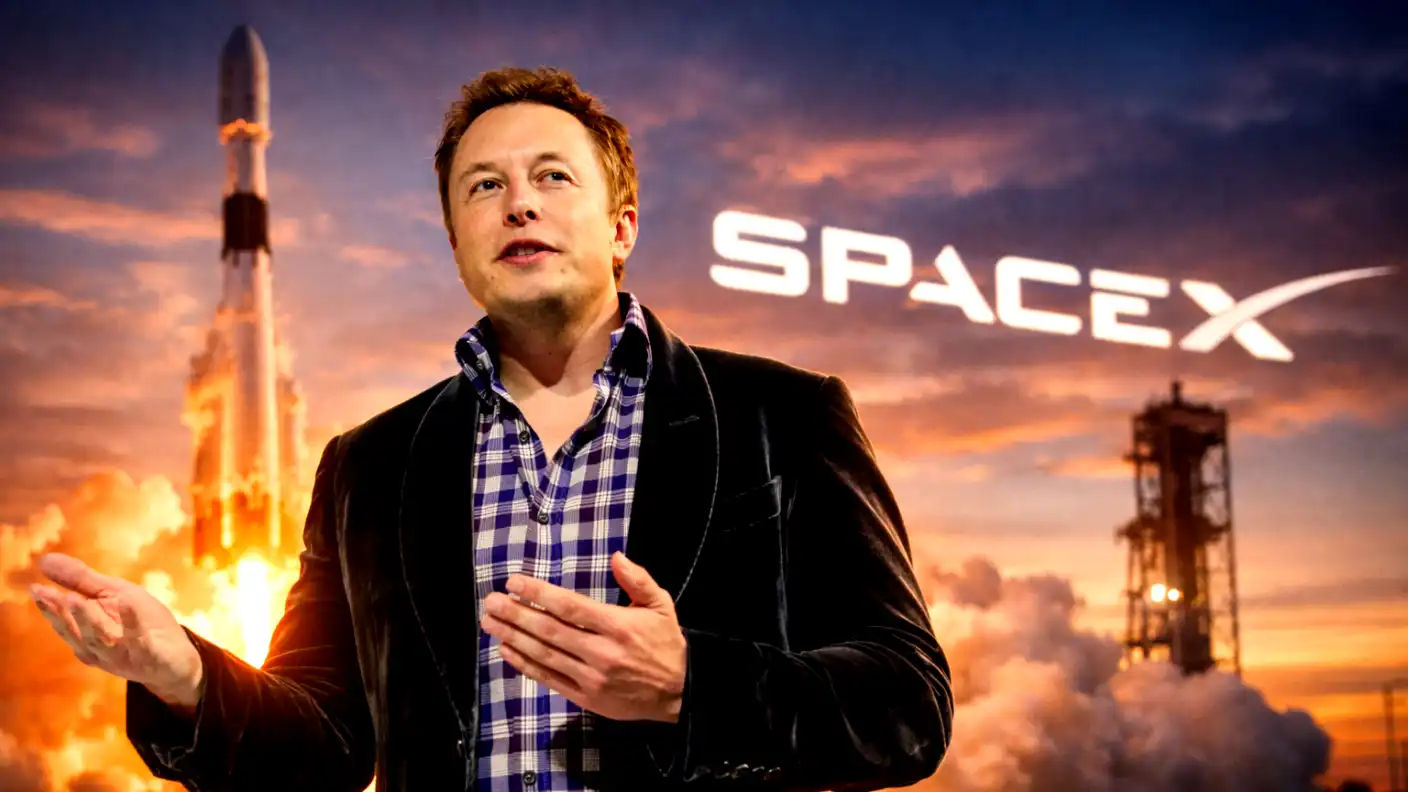
Key Points:
- SpaceX is launching its first-ever investment-grade bond offering, targeting at least $20 billion to $25 billion in debt financing.
- A primary goal of the bond sale is to repay existing bridge loans, replacing short-term, expensive debt with longer-dated, more stable financial instruments.
- Proceeds are earmarked for critical expansion, specifically for data centers and AI computing infrastructure to support projects linked to xAI and other advanced initiatives.
- Despite market volatility and a recent slide in share price, the bond offering attracted roughly $90 billion in orders, signaling significant institutional confidence in the company’s long-term vision.
SpaceX is making waves in the financial world once again, just weeks after completing the largest initial public offering in history. The aerospace and artificial intelligence powerhouse is now entering the public debt market to raise $25 billion, a strategic move designed to restructure its balance sheet and fuel aggressive expansion. This latest financial maneuver highlights the company’s massive scale and its relentless pursuit of leadership in the competitive AI and space sectors.
Following its record-breaking IPO on June 12, which raised $85.7 billion and initially valued the company at nearly $2 trillion, SpaceX has faced a roller coaster of market reactions. While the IPO solidified Elon Musk’s status as the world’s first trillionaire, share prices have experienced notable fluctuations as investors weigh the company’s rapid spending against its explosive growth potential. Analysts suggest that the shift to the bond market is a calculated effort to preserve shareholder value by avoiding further equity dilution.
The decision to issue bonds comes at a time when the company is heavily investing in next-generation technology. Beyond its signature Starship rockets and Starlink satellite internet, SpaceX is positioning itself as a central player in the AI revolution. By securing investment-grade ratings from agencies like Moody’s, Fitch, and S&P, the company has effectively paved the way for more efficient, lower-cost borrowing to sustain its capital-intensive projects.
Bankers representing five major financial institutions have been coordinating with institutional investors to manage the sale. The demand for the debt has been robust, even with yields priced well above standard corporate offerings. This premium reflects the unique nature of SpaceX—a company that consistently operates at the edge of technological possibility while carrying a debt profile that demands close attention from risk-focused bondholders.
For observers of the tech industry, this move underscores a broader trend: the convergence of aerospace, satellite connectivity, and artificial intelligence into a single, massive economic engine. With over $100 billion in cash on hand, SpaceX is not merely surviving; it is actively shaping the infrastructure of the future. The company’s ability to draw nearly $90 billion in orders for its debt proves that despite the short-term volatility of its stock, major players see SpaceX as a cornerstone of the modern technological landscape.
As the company moves forward, the focus remains on execution. The transition from private, high-growth startup to a publicly traded, multi-asset titan has brought new scrutiny to its spending habits and profitability. However, by tapping the bond market now, SpaceX is demonstrating a clear preference for long-term structural stability. It is a bold move for a company that has already spent two decades rewriting the rules of space flight and now intends to do the same for the future of global AI infrastructure.