Key Points:
- Estimates for China’s humanoid robot shipments in 2026 have jumped to 50,000 units, nearly doubling previous expectations and showing rapid commercial acceleration.
- The Chinese humanoid robotics market is projected to generate $2 billion in revenue this year, with potential growth to $15 billion annually by 2030.
- Forecasts suggest that China could lead a global humanoid market reaching an annual shipment rate of 446,000 units by 2030, supported by deep industrial supply chains.
- Beyond simple automation, these robots are being deployed into real-world settings like automotive assembly lines, electronics manufacturing, and logistics to address labor costs and productivity needs.
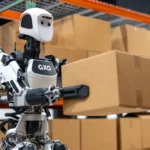
China is rapidly accelerating its humanoid robotics sector, signaling a transition from experimental lab projects to large-scale industrial deployment. Recent data indicates a sharp uptick in market expectations, with analysts now projecting that annual shipments of these advanced machines will reach 50,000 units this year. This surge represents a major leap from earlier estimates and underscores the country’s intent to integrate autonomous systems into its manufacturing backbone.
The speed at which Chinese firms are scaling production is largely driven by a unique “hardware-first” strategy. By leveraging the existing infrastructure of the nation’s world-leading electric vehicle and electronics industries, manufacturers are cutting costs and refining designs through active deployment rather than relying solely on simulations. This iterative approach allows companies to adjust mechanical and software components in real-time, effectively creating a “learning flywheel” that accelerates product maturity.
Support from the central government remains a pillar of this growth. Through various national initiatives and policy incentives, manufacturers are receiving support in the form of land subsidies, office space, and funding for research and development. This state-backed environment enables startups and established robotics firms to focus on long-term scaling, creating an ecosystem where components—ranging from high-end actuators to specialized sensors—are often produced within a short logistical radius.
While the current deployment focuses primarily on controlled industrial environments, the scope is expanding. Factories are currently serving as the proving ground for these machines, handling tasks such as material sorting, quality inspection, and repetitive logistics duties. As battery life, dexterity, and autonomous decision-making capabilities improve, the roadmap anticipates a shift toward broader business-facing services and, eventually, domestic assistance.
Despite the rapid progress, technical bottlenecks remain. Many current units still face constraints regarding battery duration and fine motor control for handling irregular objects in unpredictable environments. However, the pace at which these hurdles are being addressed is visible. Developers are already pushing out hardware revisions and software updates in months rather than years, mirroring the rapid innovation cycles previously seen in the smartphone and drone industries.
The economic implications of this transition are significant. As labor shortages become a more pressing concern across many sectors in Asia, the adoption of humanoid robots offers a potential solution to maintain manufacturing competitiveness. By reducing dependence on traditional manual labor and enhancing precision in production, China is positioning its robotics industry as a critical component of its future economic strategy. The ongoing evolution of this sector suggests that the coming years will be defined not just by digital AI, but by its physical manifestation in the form of intelligent, autonomous machines.