Key Points:
- Nvidia CEO Jensen Huang warned that building AI data centers with smuggled, black-market hardware is a technical “dead end.”
- The company explicitly refuses to provide service, repairs, or software support for hardware acquired through unauthorized channels.
- Crackdowns on illicit pipelines have caused banned chip prices to more than double on the Chinese black market over the past six months.
- The company reported record revenue of $81.6 billion, proving global demand from U.S. hyperscalers has offset the loss of Chinese market share.
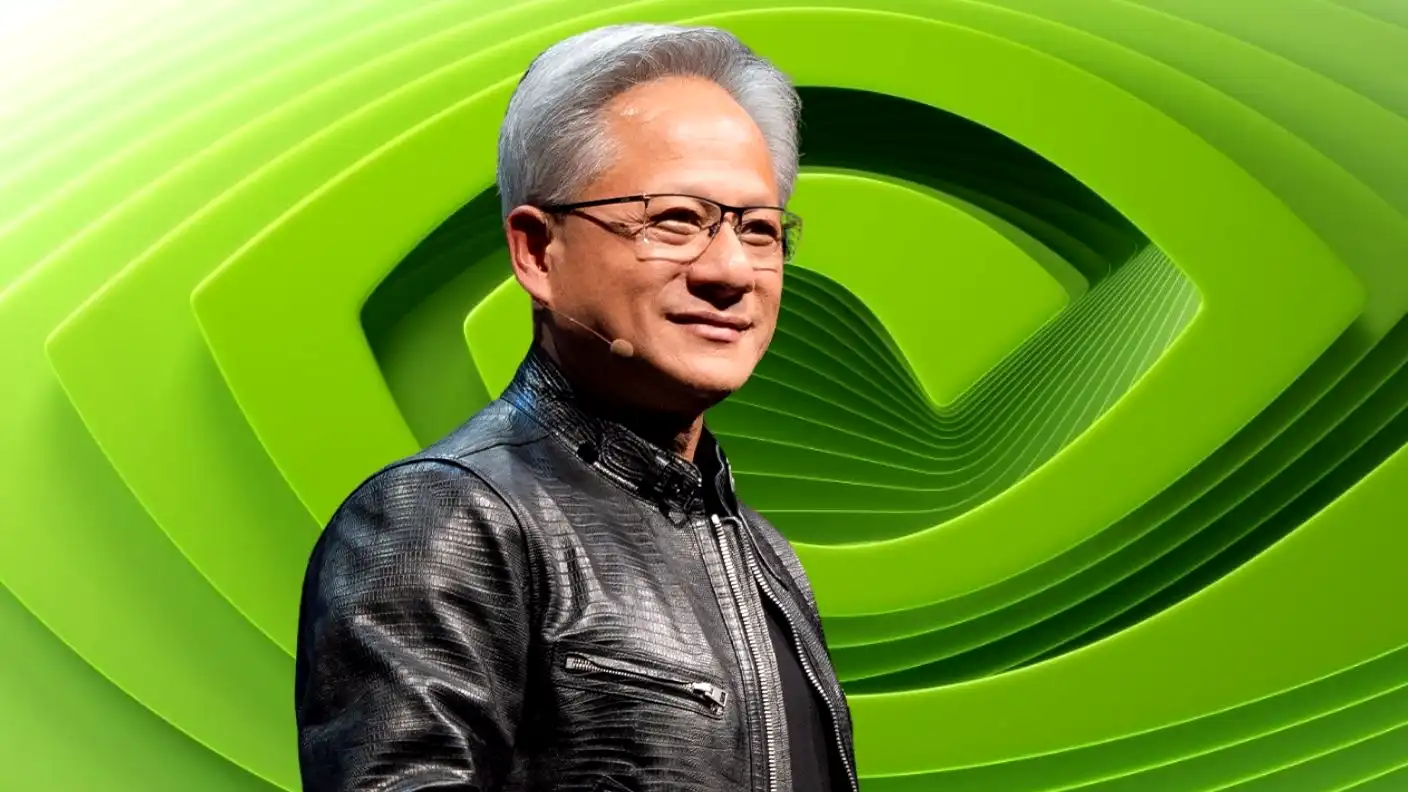
The high-stakes global trade war over artificial intelligence technology reached a new milestone. Nvidia Chief Executive Officer Jensen Huang addressed shareholders directly during the company’s annual meeting, delivering a blunt warning about the underground supply chains fueling forbidden computing infrastructure. Huang declared that attempting to build massive AI data centers using smuggled, black-market hardware is a technical and economic “dead end.” The executive emphasized that the chip giant will always prioritize U.S. national security over commercial opportunities, highlighting the company’s strict alignment with Washington’s tightening export controls.
Huang’s comments target a growing shadow industry that has cropped up to bypass strict export bans. According to the CEO, modern AI data centers are highly complex, multi-million-dollar facilities that require continuous software updates, direct technical support, and constant physical maintenance. Because the company completely restricts repair services, replacement parts, and official software updates for products moving through unauthorized channels, any facility built out of smuggled hardware remains highly vulnerable to systemic failures. Trying to cobble together high-performance systems from contraband is a losing proposition, as a single component failure can render an entire multi-million-dollar computing cluster useless.
This stark warning comes at a time when the price of smuggled hardware has skyrocketed to unprecedented heights. Financial media reports indicate that the cost of restricted graphics processing units has more than doubled on the Chinese black market over the past six months. For instance, the company’s advanced DGX B300 server, which typically carries an official U.S. retail price of around $400,000, is now selling for more than 8 million yuan, or approximately $1.1 million, through unauthorized brokers in mainland China. Similarly, the popular RTX 6000 Pro workstation chip, widely utilized by early-stage startups to train large language models, has seen its price surge from 50,000 yuan at the start of the year to as much as 130,000 yuan.
The massive price surge is a direct result of aggressive global enforcement actions that have successfully choked off illegal shipping routes. In a major legal development, federal prosecutors in the United States recently charged a co-founder of Supermicro, along with an overseas employee and a third-party contractor, for orchestrating a massive scheme to smuggle $2.5 billion worth of advanced servers to restricted buyers. Investigators revealed that the smuggling network routed the U.S.-designed servers through Taiwan and Japan, where brokers falsified export documents before repackaging the high-end hardware into unmarked boxes for final shipment.
To counter these illicit networks, trade officials are rapidly closing regulatory loopholes that previously allowed foreign subsidiaries to access restricted technology. Regulators recently closed a prominent loophole that enabled foreign branches of Chinese firms to rent high-end computing power hosted in overseas data centers across Southeast Asia and Japan. Under the updated guidance, the Department of Commerce has extended export controls to prevent these foreign entities from accessing the company’s highly advanced Blackwell and Hopper architectures, further constricting the illegal flow of top-tier computing power.
While the black-market premium proves that Chinese demand for high-end computing remains incredibly strong, the high prices and technical risks of using smuggled hardware are pushing local tech firms toward domestic alternatives. Local systems builders and cloud providers are increasingly looking to homegrown tech giants like Huawei, which is rapidly expanding its Ascend processor lineup to fill the void left by American restrictions. Tech analysts note that while domestic hardware still trails the company’s flagship systems in raw processing efficiency, local builders have little choice but to accept these performance trade-offs to avoid supply disruptions or potential prosecution.
This structural shift has dramatically reshaped the company’s global revenue distribution. Historically, mainland China represented approximately 20% to 25% of the company’s total data center compute revenue. However, successive waves of trade restrictions have successfully reduced that market share to nearly zero. Despite losing this massive revenue stream, the company recently reported record-breaking quarterly revenue of $81.6 billion, marking an astonishing 85% year-over-year surge. This explosive growth proves that massive demand from U.S. hyperscalers and international sovereign AI initiatives has successfully offset the loss of the Chinese market.
To protect its intellectual property and maintain its dominant global position, the chip designer is working closely with international governments to scrutinize shipping lanes. Law enforcement agencies in Taiwan and Malaysia have launched extensive crackdowns on local tech distributors suspected of acting as intermediaries for shell companies. Huang confirmed that the chipmaker is implementing exceptionally rigorous compliance audits across its entire downstream supply chain, forcing server integrators and distributors to implement strict end-user verification protocols to prove that their hardware is not being diverted.
Ultimately, the escalating technology cold war highlights how central regulatory compliance has become to the semiconductor sector. By calling out black-market data centers as a dead end, Huang is signaling that the company is fully prepared to enforce trade boundaries, even if it means permanently walking away from lucrative international markets. As enforcement tightens and black-market prices continue to soar, the era of relying on smuggled hardware to power cutting-edge artificial intelligence is rapidly coming to a close. The future of global AI supremacy will not be decided in the shadows, but through authorized, compliant, and sovereign technological innovation.