Key Points:
- The European Union formally joined “Pax Silica,” the United States-led multinational initiative designed to secure critical AI and semiconductor supply chains.
- The agreement includes a massive commercial commitment from the EU to purchase at least $40 billion worth of US-designed AI microchips.
- Brussels secured key legal assurances that the non-binding political statement will not compromise Europe’s internal regulatory autonomy or the enforcement of its strict AI Act.
- The rapid expansion of the alliance brings the total number of participant nations to 24, including the United Kingdom, Japan, South Korea, and the Netherlands.
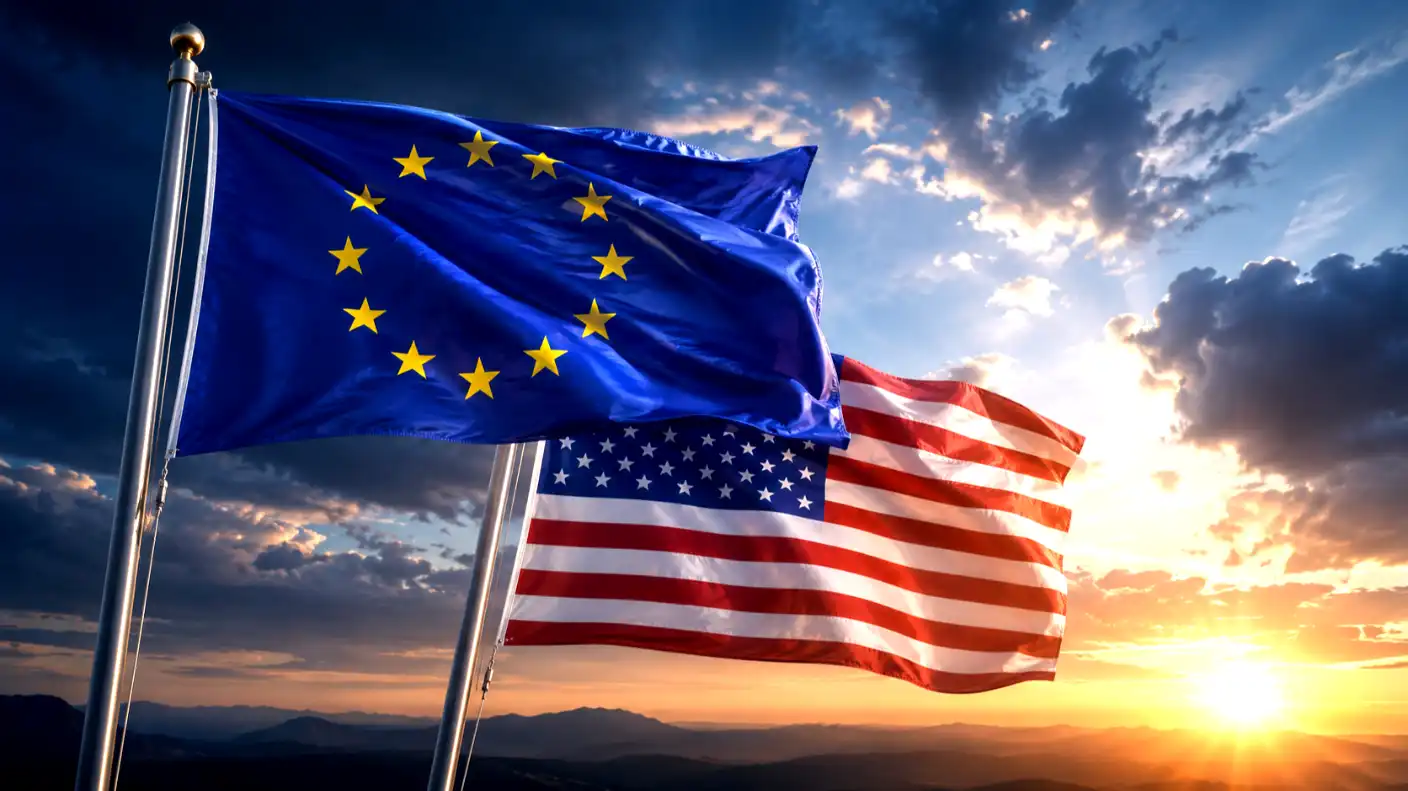
Diplomats in Washington have officially finalized a major shift in global technology diplomacy. The European Union has formally joined “Pax Silica,” the United States-led multinational alliance designed to secure and coordinate global supply chains for artificial intelligence and high-end semiconductors. The major diplomatic move represents a massive effort by Western allies to reduce their structural reliance on Chinese-dominated supply chains and build a highly resilient technological network. By binding Brussels to this security pact, the coalition has successfully brought one of the world’s largest consumer markets into a unified regulatory and manufacturing defensive alignment.
The United States initially launched the Pax Silica framework in December 2025 to create a dedicated, agile network of allied nations capable of managing the rapidly evolving AI economy. Historically, global political forums like the G7 and G20 have struggled to address complex technology security issues due to sluggish consensus processes. To bypass these limitations, Washington engineered Pax Silica as a streamlined mechanism to protect critical minerals, secure energy grids, control sensitive technology exports, and coordinate semiconductor manufacturing. By organizing a specialized coalition, the alliance aims to secure high-tech supply chains from the mine to the final cloud server.
Months of intense diplomatic friction and philosophical division marked the path to securing the European Union’s signature. Brussels had initially hesitated to join the Washington-led pact, with several EU officials expressing concerns that the alliance would undermine Europe’s technology sovereignty. French diplomats even publicly criticized the initiative, warning that it resembled a form of technological colonization that would bind European developers to American platforms. The main sticking point centered on regulatory philosophy, as the US heavily prioritizes rapid innovation while the EU is currently rolling out its sweeping, risk-based AI Act to strictly govern high-risk software systems.
To break the diplomatic logjam, the European Commission secured critical assurances that the joint declaration remains a non-binding political statement. This crucial legal compromise guarantees that the pact will not alter internal EU decision-making or override Brussels’ regulatory independence. European negotiators wanted to ensure they could enforce the strict transparency and safety standards of the EU AI Act without facing pushback from Washington. With these legal safeguards in place, the permanent representatives of the member states authorized the Commission to formally sign the agreement, presenting a united European front alongside individual signatories like Germany and the Netherlands.
While the agreement is technically non-binding, the alliance includes a massive commercial commitment designed to instantly boost the American semiconductor sector. Under the broader transatlantic trade framework tied to the deal, Europe has committed to purchasing at least $40 billion worth of advanced United States-designed AI microchips over the coming years. This massive purchasing guarantee provides long-term market certainty for American chip designers, ensuring they have the stable customer demand needed to justify the multi-billion-dollar fabrication plants currently being constructed under the US CHIPS Act.
The decision to join Pax Silica also marks a pragmatic shift in how European policymakers view tech independence. Although the European Commission had recently unveiled a tech-sovereignty agenda aimed at reducing Europe’s reliance on foreign tech, real-world supply chain dependencies made full isolation impossible. European technology leaders have increasingly acknowledged that because AI development relies on globally integrated hardware, talent, and energy networks, fully localized digital infrastructure is highly unrealistic. As Commission officials noted, competitive survival in the digital age requires collaborative, allied ecosystems rather than duplicative, national projects.
The chief architect of Pax Silica, US Under Secretary of State for Economic Affairs Jacob Helberg, has consistently advocated for a concept he calls “innovation sovereignty” over traditional digital sovereignty. Helberg argued that when countries focus solely on localizing data and tech infrastructure, they end up investing in highly duplicative, inefficient systems that lead to synchronized mediocrity. By contrast, Helberg pointed to countries like Israel, Singapore, and the United Arab Emirates, which have successfully utilized American technology to nurture and scale their own domestic tech industries. The alliance aims to replicate this highly successful cooperative model on a global scale.
The formal entry of the EU has triggered a rapid wave of expansions, bringing the total number of participant nations to 24. Before the EU’s collective signing, several individual member states—including Greece, Finland, and Sweden—had already joined the alliance independently to secure their local supply chains. This week, the coalition welcomed a diverse slate of new members, including Australia, Norway, the Philippines, Argentina, Chile, Costa Rica, Kazakhstan, and Panama. This rapidly growing global footprint proves that nations across South America, Central Asia, and Southeast Asia are eager to align their resource-rich mining operations with Western advanced manufacturing.
Ultimately, the formalization of this transatlantic partnership will likely accelerate the decoupling of Western technology ecosystems from Chinese influences. By coordinating export controls and securing critical mineral supply lines, the coalition is building a highly protected silicon wall around the most advanced machine learning capabilities. While this coordinated stance will undoubtedly increase geopolitical trade frictions, it provides the allied nations with the collective resilience needed to navigate a highly volatile geoeconomic era. The era of decentralized, friction-free global technology distribution is rapidly giving way to highly secure, values-based alliances that treat computing power as a matter of ultimate national survival.