Key Points:
- Samsung Electronics’ recent earnings report fell short of aggressive market expectations, triggering a massive sell-off in semiconductor and AI-related shares.
- The market correction is driven by fears that the “AI super-cycle” is hitting a short-term plateau in terms of actual hardware sales volume.
- Investors are rotating capital out of high-valuation tech plays, causing ripple effects that have dragged down both the KOSPI and Nasdaq indices.
- Market experts warn that software profitability is not yet keeping pace with the multi-billion dollar infrastructure costs currently being absorbed by the sector.
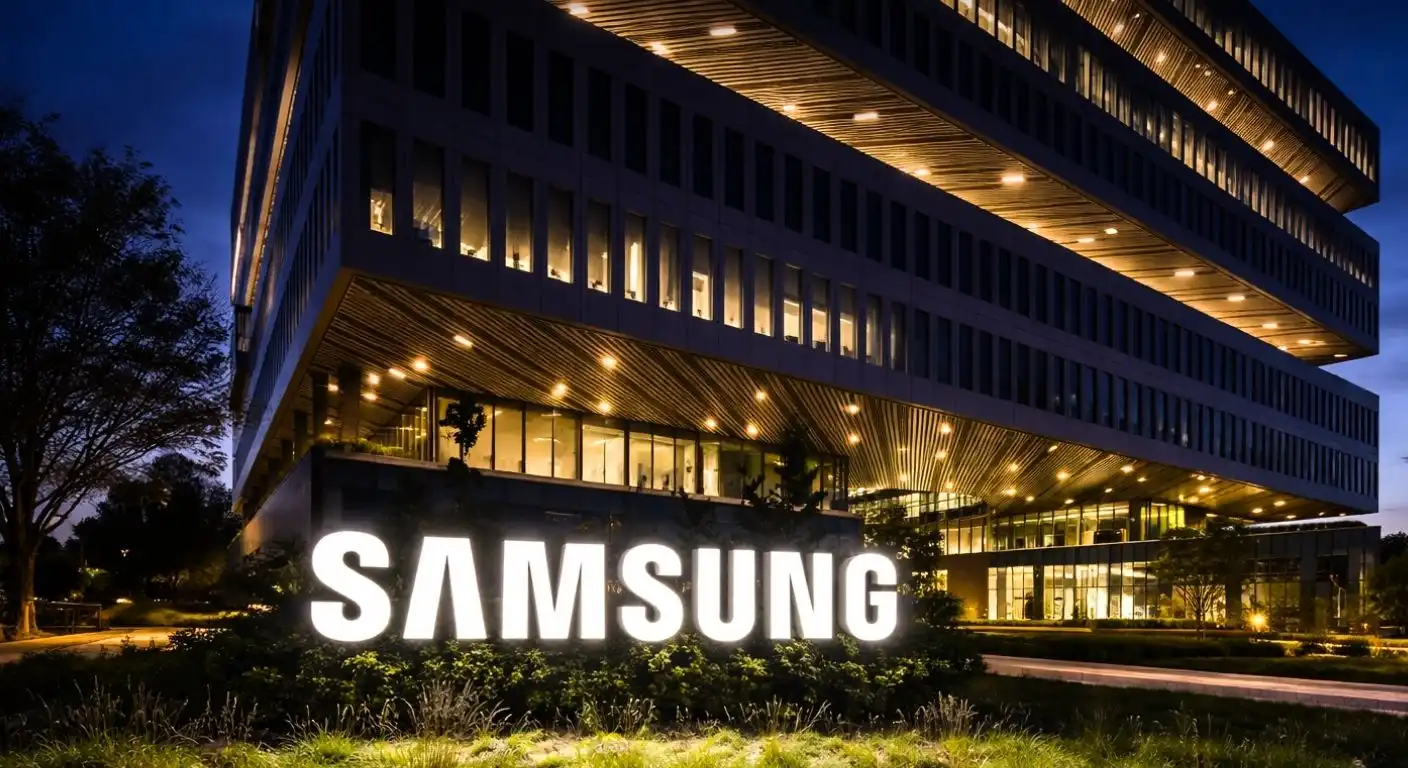
Global technology stocks are retreating sharply as a major earnings miss from Samsung Electronics has shaken investor confidence in the sustainability of the artificial intelligence boom. After months of speculative growth that pushed valuations to record highs, the market is currently experiencing a difficult “reality check.” Investors, who previously viewed AI-linked hardware as an invincible growth engine, are now scrutinizing the gap between sky-high expectations and actual financial performance. This volatility has wiped out billions in market value, signaling that the era of blind optimism in AI stocks is giving way to a more disciplined, metrics-driven investment strategy.
The disappointment surrounding Samsung’s latest financial results highlights a critical misunderstanding in the broader market. For many months, the consensus was that AI demand was effectively infinite, and that every semiconductor manufacturer would see endless, linear growth. However, the semiconductor industry is notoriously cyclical and sensitive to inventory levels. When a major player misses its target, it suggests that the massive, early-stage build-out of data centers might be facing a temporary slowdown. Institutional investors, who are constantly scanning for signs of exhaustion in the “AI trade,” have used this earnings miss as an excuse to lock in profits and reduce their exposure to tech-heavy portfolios.
The core of the issue is the “expectation gap.” Institutional funds had baked in growth rates that assumed constant, 100% capacity utilization across all advanced fabrication plants. While the demand for high-end, AI-optimized chips remains strong, the market for standard memory and legacy processors has not rebounded as quickly as hoped. This creates a “bifurcated market” where top-tier AI hardware remains profitable, but the rest of the semiconductor business is struggling to sustain the margins needed to justify these record-high stock prices. When the consolidated results are tallied, the overall profit figure feels underwhelming to a market that was primed for nothing less than perfection.
The sell-off has also highlighted the extreme sensitivity of the global supply chain. Because Samsung is such a central hub for everything from smartphone storage to enterprise-grade server memory, its performance is often viewed as a proxy for the health of the entire digital economy. If the world’s leading manufacturer is finding it difficult to hit growth targets, investors are naturally concluding that other players in the ecosystem—including U.S.-based chip designers and cloud infrastructure firms—might be facing similar headwinds. This is causing a “contagion effect” where investors sell across the entire sector rather than waiting for individual company results.
This market correction comes at a time when the tech industry is under immense pressure to prove that AI is a tool for profit rather than just a massive, expensive experiment. The cost of running the latest generation of large language models is significantly higher than previous software iterations. As companies spend well over $1 billion on singular infrastructure deployments, the pressure for those costs to be offset by productivity gains has become the number one priority for corporate management. If the software giants fail to show improved margins, the demand for the hardware that supports them will inevitably cool, creating a downward feedback loop for chipmakers.
Strategic discipline is now the order of the day. Companies that were previously rewarded for aggressive, rapid-fire expansion are now being asked to show fiscal restraint. We are seeing a shift where investors prefer firms that can demonstrate high inventory turnover and a clear line of sight to positive cash flow. This is a difficult transition for the semiconductor sector, which requires constant, heavy investment just to keep pace with the latest manufacturing nodes. The challenge for leadership teams in Seoul, Silicon Valley, and beyond is to demonstrate that they can balance this long-term need for innovation with the short-term necessity of meeting shareholder return expectations.
Despite the current gloom, many long-term investors argue that this is a healthy, albeit painful, reset. Markets rarely move in a straight line, and the speculative froth that builds during a major technological revolution must eventually be cleared away. A lower valuation for semiconductor firms does not mean the end of the AI era; it means that the sector is entering a more mature, predictable phase of its growth. For the firms that can navigate this correction, the long-term outlook remains strong, provided they can continue to innovate at a scale that the global digital economy requires.
Looking forward, the tech sector should prepare for more of these “reality check” moments. Earnings calls in the coming months will be critical, as they will provide a more detailed look at whether the hardware slowdown is a broad systemic issue or a localized inventory problem. If companies can show that their order books for 2027 and 2028 remain full, the current stock market dip could prove to be an excellent buying opportunity for those who believe in the long-term potential of AI. However, until that data emerges, caution remains the preferred strategy for traders across the globe.
In the final analysis, the sell-off is a reminder that in the world of high-tech manufacturing, performance is everything. The market is no longer content to trade on rumors, AI-buzzwords, or the potential of future models. It wants real, audited, quarterly results that reflect the true state of global demand. Samsung’s miss has acted as a catalyst for this change, forcing the entire industry to confront the reality that for all the potential of artificial intelligence, the laws of supply, demand, and industrial cycles still very much apply.