Key Points:
- Beijing is reportedly drafting new regulations that would restrict foreign access to China’s leading generative AI models.
- The initiative is intended to secure national intellectual property and prevent foreign adversaries from leveraging Chinese AI breakthroughs for strategic or military advantages.
- The proposed restrictions follow a trend of “tech sovereignty,” where the nation seeks to build a self-contained ecosystem for high-end computing.
- Industry experts warn that these curbs could impact international research collaborations and force global tech firms to rethink their AI integration strategies in Asia.
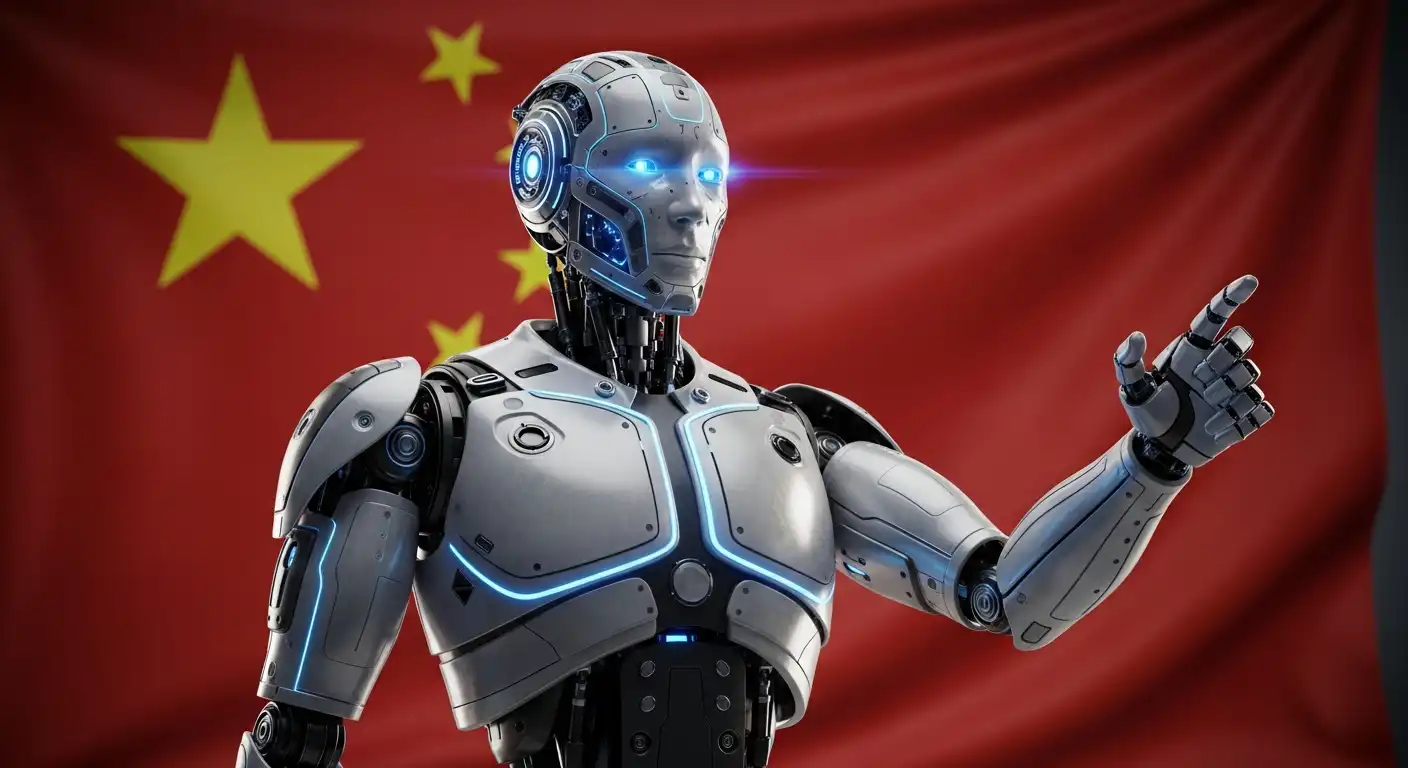
China is reportedly preparing to impose strict new limitations on the overseas availability of its most powerful artificial intelligence models. As the global race for machine learning supremacy accelerates, Beijing is increasingly viewing its domestic AI breakthroughs as strategic national assets that require careful oversight. By potentially curbing access to these tools, the government aims to prevent the unauthorized transfer of advanced algorithms and the sensitive data patterns used to train them. This move represents a significant escalation in the digital “decoupling” process, as both Eastern and Western powers treat artificial intelligence as a cornerstone of their long-term national security.
The core motivation behind these potential curbs is a shift in how Beijing categorizes digital intelligence. For years, the Chinese AI sector was characterized by open innovation and rapid, cross-border research collaboration. Now, that era is being replaced by a more protective, state-managed approach. The government argues that just as it protects its physical manufacturing capabilities and semiconductor secrets, it must also safeguard the proprietary “weights and biases” that power its large language models. These models are now viewed as being as critical to the country’s future as its aerospace or energy infrastructure, necessitating a level of protection that was previously reserved for more traditional military assets.
For international developers and foreign enterprises, these potential restrictions could create a new “digital wall.” Many global companies have utilized Chinese-developed models for localized tasks, such as translating complex regional documents, navigating local market regulations, or providing specific cultural context in customer-facing apps. If these models are suddenly pulled behind a firewall, businesses that have built their workflows around them will face significant disruption. The loss of access could force these companies to rush their own internal training projects or seek out less-specialized alternatives, potentially slowing down their own AI deployment timelines by months.
The financial scope of this development is vast. The domestic AI market in China has attracted over $1 billion in venture capital and government investment this year alone, all centered on building models that can compete with the best in the world. If these assets are suddenly restricted, the global AI marketplace will lose one of its most dynamic engines. Investors who have backed these startups are now forced to factor in a new “geopolitical risk premium,” as the value of these models depends entirely on their continued ability to operate in an open, globalized internet.
Technologically, the restriction focuses on the “foundation models” themselves. These are the large-scale architectures that require thousands of hours of training and massive datasets to create. By limiting the ability of foreign entities to “call” or utilize these models via API, the government is essentially creating a technical barrier that prevents knowledge transfer. The policy is expected to focus on high-reasoning, high-parameter models, leaving smaller, less sensitive tools largely untouched. This “selective restriction” allows the government to maintain its control over the most powerful systems while preventing a total collapse of international digital trade.
Security concerns are also cited as a primary driver. Chinese regulators worry that foreign researchers could perform “reverse engineering” on their models to uncover the specific datasets used in training. If these datasets contain sensitive cultural, political, or economic information, their exposure to the international community could be seen as a strategic failure. By limiting model availability, the government aims to keep its datasets and the logic they produce safely inside the domestic digital border, preventing the leakage of any information that might be used to disadvantage the nation in the global economic arena.
The timing of this proposal coincides with a broader global trend of AI protectionism. In both the United States and Europe, discussions are already underway regarding how to restrict access to their own “frontier” models by foreign competitors. China’s move is essentially a defensive mirror of these global trends. It demonstrates that we are moving toward an era of “sovereign AI,” where every major nation-state will have its own, walled-off ecosystem of digital intelligence. For the global user, this means the end of a single, unified internet, replaced by an AI landscape defined by national borders and restricted access.
For domestic Chinese tech companies, this presents a challenging balancing act. They need international recognition to maintain their status as global tech leaders, but they must also satisfy the safety and security demands of their regulators to keep their licenses to operate. Many are already beginning to split their operations: one version of their model for the domestic market, built on local infrastructure and governed by strict state policies, and another, less powerful version for international use. This “two-model strategy” is likely to become the new standard for any company that wants to maintain a global presence while operating within the increasingly restrictive Chinese regulatory environment.
Ultimately, the proposed curbs are a signal that the AI revolution has left the “experimental” phase and entered the “strategic” phase. Intelligence is no longer just a commodity; it is a source of national power. As Beijing prepares to finalize these restrictions, the rest of the world must grapple with the reality that the most powerful digital tools of the future may soon be unavailable across national borders. The digital divide is being rebuilt, not with physical barriers, but with code, proprietary data, and state-enforced access restrictions. For the innovators of today, the challenge is no longer just how to build the smartest AI—it is how to build a model that can thrive in a world that is becoming increasingly divided.