Key Points:
- OpenAI has received official federal approval to move forward with the broad release of its upcoming GPT-5 and GPT-6 AI models.
- The approval follows extensive government oversight and the successful implementation of new safety protocols to mitigate risks like cyber-weaponization.
- This release strategy is expected to trigger a wave of enterprise adoption, with the company projecting more than $1 billion in new corporate contracts within the first year.
- The agreement establishes a new framework for “phased AI deployment,” where models undergo continuous federal auditing even after they are commercially available.
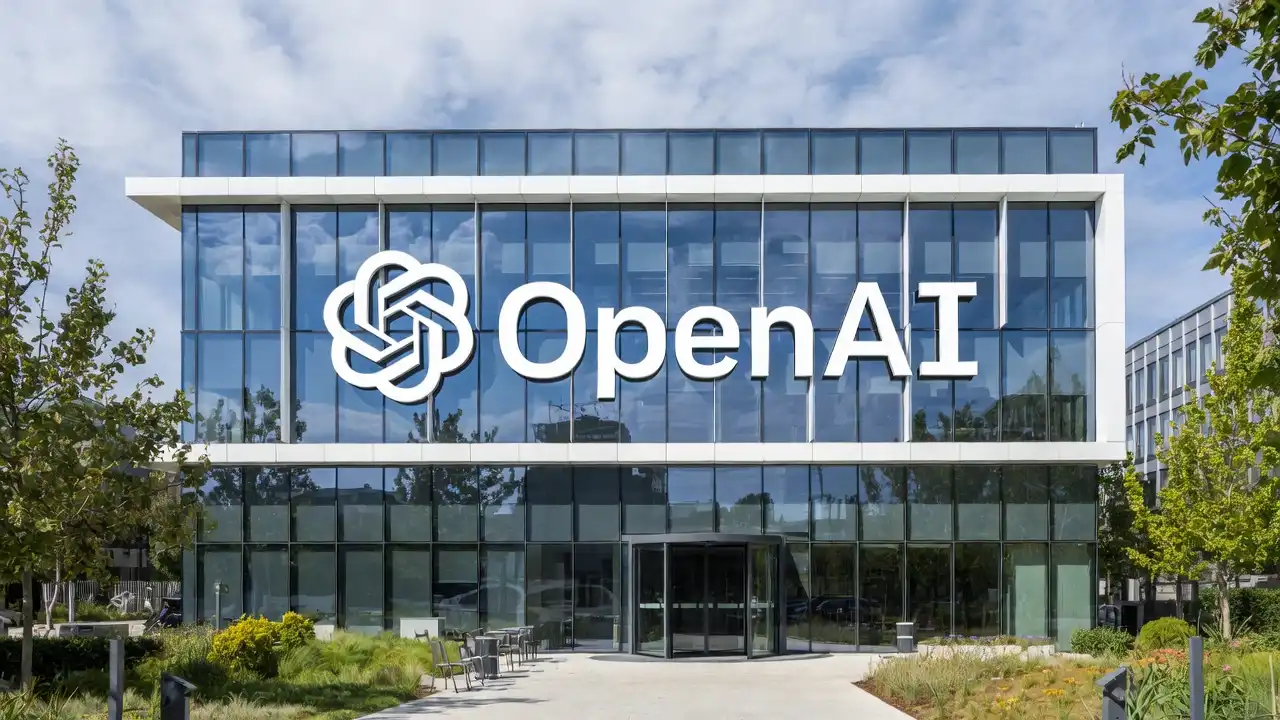
OpenAI has reached a landmark agreement with U.S. federal regulators, clearing the path for the widespread commercial release of its next-generation artificial intelligence models, GPT-5 and GPT-6. This breakthrough follows months of rigorous safety testing and high-stakes negotiations regarding the potential national security implications of highly autonomous systems. By securing this government approval, the research lab is now positioned to initiate a global rollout, promising a level of reasoning and problem-solving capability that industry experts say will redefine the boundaries of human-AI collaboration.
The federal authorization marks a turning point in the AI arms race. For the past year, the company worked closely with cybersecurity agencies to prove that its future models would not inadvertently assist in the development of malicious code or dangerous biological agents. This “safety-first” certification process required the firm to expose its training data, model weights, and safety guardrails to federal auditors. By passing these benchmarks, the company has effectively transformed its AI systems from experimental research tools into government-approved digital infrastructure, paving the way for deep integration into critical sectors like finance, healthcare, and national logistics.
The leap from GPT-4 to the GPT-5 and GPT-6 architecture is not just an incremental upgrade; it represents a fundamental change in how AI reasons. Early testing suggests that these models can perform complex multi-step tasks, such as managing a multi-departmental corporate project or synthesizing massive, fragmented datasets into actionable strategic plans. Industry leaders are already calling this the “Agentic Era,” where AI stops being a simple chatbot that answers questions and starts acting as a proactive partner that executes entire workflows on behalf of the user.
For enterprise clients, the approval is a massive relief. Until now, many firms were hesitant to build long-term business processes on AI models that could be restricted by sudden regulatory shifts. With this federal green light, companies can finally commit to deep, platform-wide integrations. We expect to see a rapid surge in adoption, with estimates suggesting that large corporations could increase their AI-related budget allocations by 1.5% to 3% as they move to adopt these new, highly capable models. The ability to deploy these systems with the confidence of government-approved safety standards is the key to unlocking this massive wave of corporate investment.
However, the road ahead is still paved with significant oversight. As part of the deal, OpenAI has agreed to a “continuous monitoring” regime. This means that even after GPT-5 and GPT-6 are released, federal agencies will maintain a real-time dashboard to monitor for emergent, unexpected behaviors. If the models begin to show signs of unauthorized autonomous activity or exhibit patterns consistent with cyber-threat generation, regulators have the power to force a temporary “kill-switch” or mandate immediate patching. This creates a new, symbiotic relationship between the AI lab and the state, where safety is no longer a one-time check but a daily requirement.
The competitive landscape is also bracing for the impact. Rivals like Anthropic, Google, and Meta now face the challenge of matching this federal stamp of approval. If OpenAI can prove that its models are both the most powerful and the most “officially safe,” it will create a massive barrier to entry for smaller players. This “regulatory moat” may lead to a consolidation of the market, where only a handful of AI labs have the resources and the political standing to meet the government’s rigorous audit requirements. For the consumer, this could mean faster, smarter AI, but it also raises concerns about whether a few massive labs will eventually control the entire intellectual foundation of the digital world.
Technological progress is also accelerating on the hardware front. To run GPT-5 and GPT-6 at scale, the company has partnered with chip manufacturers to utilize a new generation of high-efficiency processors. This hardware-software optimization is what makes the models feel so fast and responsive. We are no longer limited by “chat latency”; we are moving toward near-instantaneous processing that mimics human-speed collaboration. This capability is expected to be a game-changer for software engineering, where AI agents will soon write, test, and deploy code in real-time, reducing development cycles by several months.
As we look toward the next chapter, the question is how society will adapt to a level of artificial intelligence that can perform professional-grade work. The government’s role in this transition is vital. By providing a clear framework for deployment, they are helping to move the conversation from “fear of the unknown” to “managed innovation.” The successful authorization of these models is proof that we can build AI that is both exponentially more powerful and fundamentally aligned with human safety requirements.
For the developer community, the release will be a watershed moment. OpenAI has announced that it will open up new “agentic” APIs that allow these models to control external tools, browse the web, and interact with operating systems directly. This turns the AI into a literal worker that can move from your calendar to your email and onto your project management software without human intervention. The potential for productivity is staggering, and with the official government blessing now in place, the path is clear for these tools to become as common as the spreadsheet.
The world is witnessing the arrival of the most capable computing system ever created. While the risks are undoubtedly real, the potential benefits—ranging from personalized education to the optimization of global supply chains—are far greater. With this approval, the company has cleared the most significant hurdle in its history. The rollout begins now, and the landscape of work, research, and daily interaction will never be the same.