Key Points:
- Investment banks have secured significant fee revenue from the $28 billion SK Hynix U.S. listing, following intense institutional demand.
- The payout serves as a major financial recovery for advisory firms after they earned only modest fees from recent, smaller SpaceX capital rounds.
- The massive oversubscription of the chipmaker’s shares underscores a fundamental shift in market appetite, with investors aggressively backing AI-linked hardware.
- Advisory firms are now aggressively competing for “AI infrastructure” mandates, as companies race to build the data centers and memory plants required for the next decade.
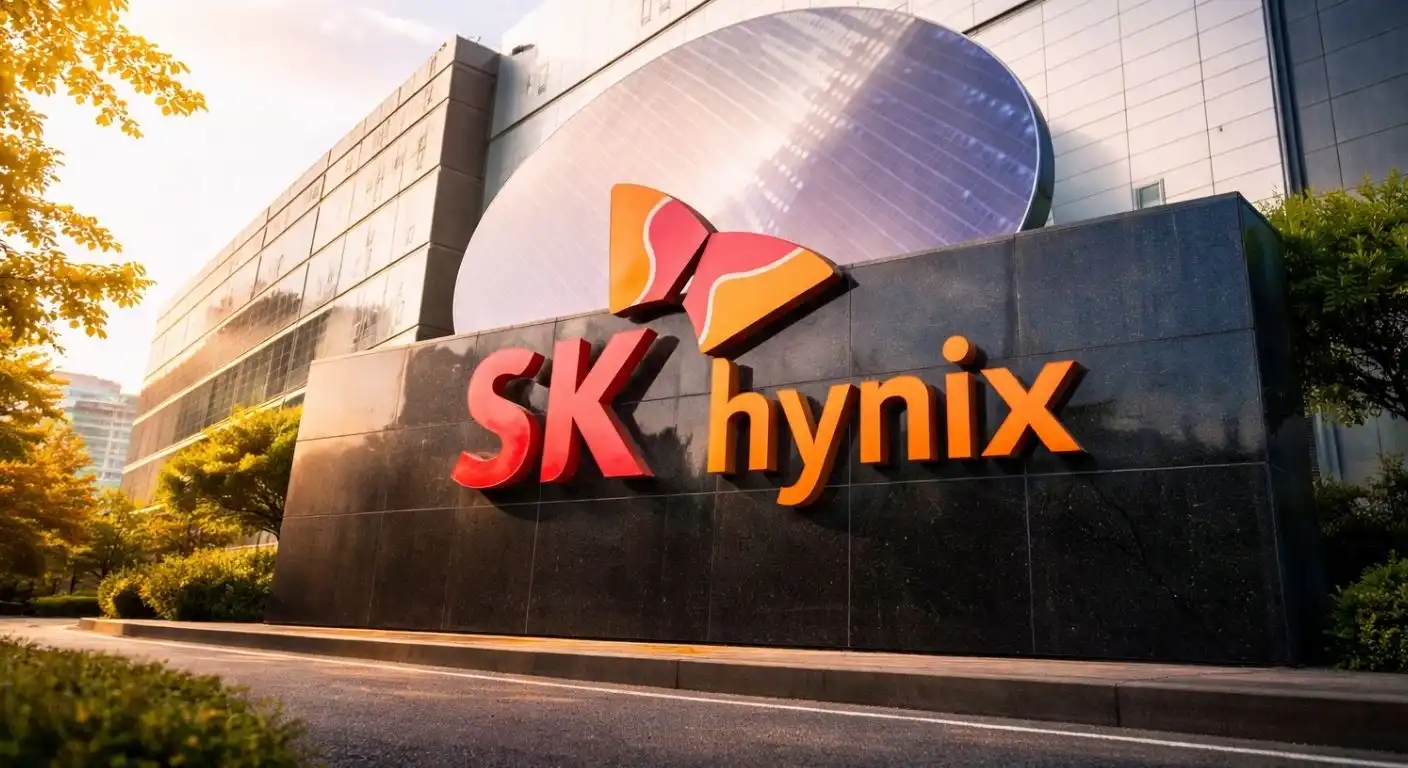
The successful U.S. listing of South Korean semiconductor titan SK Hynix has generated a massive windfall for the investment banks and financial advisors tasked with managing the $28 billion transaction. This IPO, which was oversubscribed by more than seven times, stands as one of the most lucrative deals for Wall Street in recent years. While these advisory firms previously managed a more modest, lower-fee payday for SpaceX’s recent private capital activities, the sheer scale of the SK Hynix offering has restored the confidence of dealmakers who have been waiting for a rebound in the global tech-listing market.
The success of the SK Hynix offering provides a vital spark for the global IPO market, which has struggled with volatility for much of the past eighteen months. When banks manage a deal of this magnitude, the fee structures—typically ranging from 1% to 2% of the total raised capital—can result in hundreds of millions of dollars in total payouts to be split among the lead underwriters and legal consultants. After months of “dry” deal flows, this transaction represents the kind of “whale” deal that can define the annual performance metrics for major global financial institutions.
This financial windfall contrasts sharply with the recent, quieter work performed on the SpaceX account. While SpaceX is undeniably the most valuable private aerospace company on the planet, its financial structure remains tightly controlled and conservative. The advisory work surrounding its recent private rounds was essential but did not offer the same explosive, broad-market fee potential as a multi-billion dollar public ADR offering. For the bankers involved, the SK Hynix deal is a return to form, proving that the tech hardware sector still has the capacity to generate the massive “super-deals” that sustain the high-end investment banking business model.
The intense institutional interest behind this IPO is a direct reflection of the “AI hardware super-cycle.” Investors are no longer merely interested in software-based AI service providers; they have pivoted toward the physical assets that make AI possible. SK Hynix, as a dominant provider of high-bandwidth memory (HBM), sits at the very center of this ecosystem. Because the supply of these chips is currently constrained, the company’s ability to grow its top line is virtually guaranteed for the next several years, making it an incredibly attractive asset for the long-term pension funds and sovereign wealth managers who fueled the IPO’s success.
For the advisory teams, the challenge was to position a South Korean manufacturer as a “must-have” asset for U.S.-based institutional investors. This involved hundreds of hours of roadshows, detailed financial modeling, and extensive regulatory coordination between Tokyo, Seoul, and New York. The process was a logistical marvel, requiring a deep understanding of the global semiconductor supply chain. Bankers had to convince U.S. investors that despite the cyclical nature of memory chips, the firm’s unique position in the AI market warranted a “tech-growth” valuation rather than a “commodity-manufacturer” valuation.
The success of this bookbuild has immediate implications for the broader market. Other semiconductor startups, particularly those specializing in AI accelerators or quantum computing hardware, are now scrambling to secure their own high-profile advisory teams. The “SK Hynix effect” is driving a fresh wave of IPO interest, as startups realize that the current market window is wide open. If a massive, $28 billion deal can be successfully executed without damaging the stock’s post-listing performance, it gives other firms the courage to move forward with their own public market entries.
However, the industry remains cautious about the sustainability of these mega-fee payouts. Market conditions can shift rapidly, and one bad earnings quarter or a sudden move by central banks could freeze the IPO window once again. The banks are well aware that the AI boom is not a permanent state of affairs. They are currently focusing on “quality over quantity,” picking their future clients based on which firms have the most robust order books and the best protection against potential supply chain disruptions. The competition for the next major AI-hardware mandate is now fiercer than it has been at any point in the current decade.
The regulatory environment also plays a role in how these deals are structured. Because the offering involved a complex ADR structure for a South Korean firm in the U.S. market, the legal and accounting fees associated with the deal were particularly high. Lawyers, forensic accountants, and tax advisors all walked away with their own slice of the pie. This creates an entire “ecosystem” of professional services that survives on the health of the tech IPO market. When firms like SK Hynix succeed, it ripples outward, benefiting thousands of professionals who handle the plumbing of global finance.
Looking forward, the focus for these advisory firms will be to replicate this model for other international players. There is a massive pipeline of AI-related hardware firms, particularly in the semiconductor testing and assembly segments, that are waiting for the right moment to go public. The banks that successfully managed this offering have now proven their ability to handle the “AI narrative” for institutional investors. This gives them a significant advantage in the bidding process for future deals. The $28 billion deal was not just a one-time score; it was a demonstration of expertise that will likely secure the lead role in the next five major tech IPOs.
Ultimately, the record demand for this offering is a sign of a market that is maturing. Investors have moved past the initial hype of AI and are now performing the deep, institutional-grade due diligence that is required for multi-billion dollar commitments. The banks have facilitated this transition, acting as the bridge between Asian manufacturing strength and American financial appetite. As the AI sector continues its expansion, the bankers will remain the quiet but essential engine that drives the capital into the factories, labs, and data centers of the future. The fee is the price of that transition, and in the case of this historic listing, it is a price the market was more than happy to pay.