Key Points:
- Bitcoin slid to around $62,800 as renewed military strikes between the United States and Iran dampened global risk appetite.
- The geopolitical escalation led to the liquidation of $252.9 million in leveraged long crypto positions within a 24-hour window.
- Spiking oil prices, with Brent crude climbing past $79, have revived fears of energy-driven inflation and persistent high interest rates.
- Despite the market drop, Spot Bitcoin ETFs recorded $197 million in weekly net inflows, ending an eight-week streak of investor withdrawals.
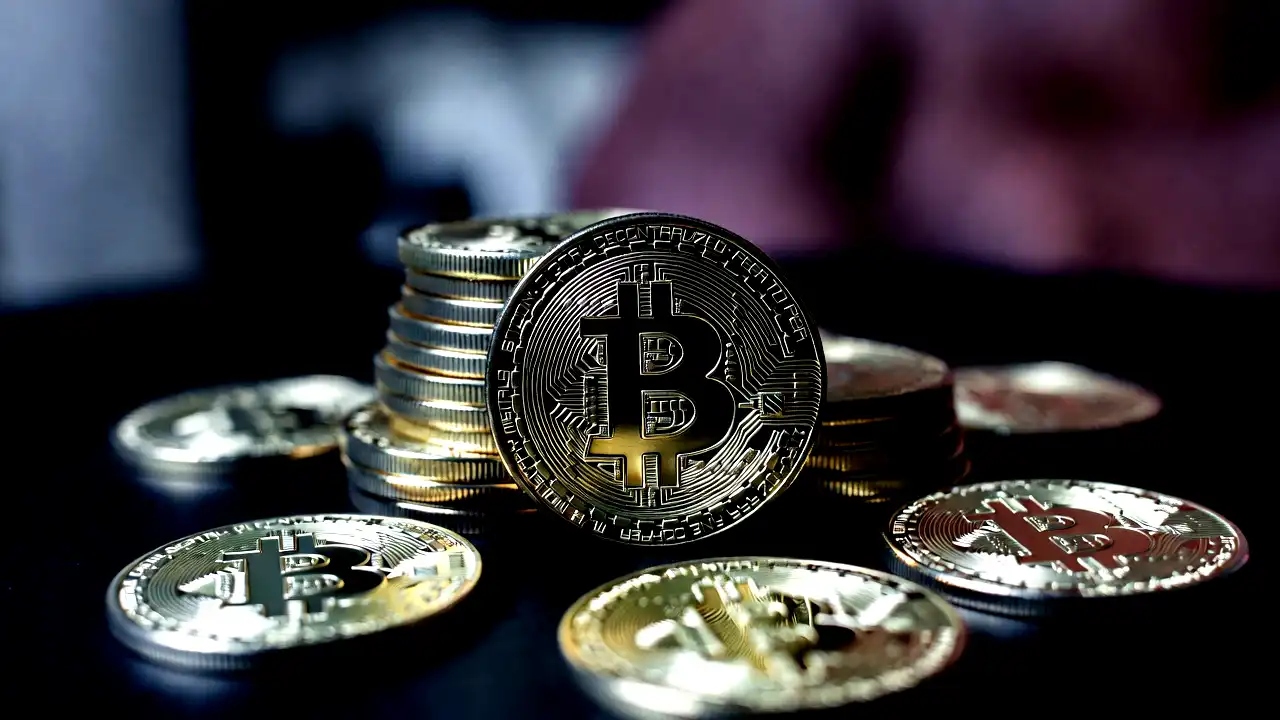
The global cryptocurrency market faced a significant setback as escalating military conflict in the Middle East drove investors out of high-risk assets. The latest wave of hostilities between the United States and Iran has hammered investor confidence, forcing the world’s largest cryptocurrency to give up its recent gains. Bitcoin dropped roughly 1.8% in a sudden downturn, sliding to around $62,800 and struggling to maintain its position above key technical thresholds. This geopolitical shock fractured global risk sentiment, prompting traders to retreat toward safer cash reserves.
The sudden downward price movement quickly triggered a wave of liquidations across major digital asset exchanges, amplifying the market’s pain. Ethereum slipped 2.6% to trade near $1,780, while other prominent altcoins like Solana and XRP fell to $76.40 and $1.08, respectively. According to data from on-chain tracking platforms, these rapid price drops wiped out $252.9 million in leveraged cryptocurrency trading positions over a single day. Most of these liquidations involved optimistic traders holding leveraged long positions, who suffered heavy financial damage as exchanges automatically closed undercollateralized trades.
Geopolitical developments over the weekend served as the direct catalyst for this widespread sell-off. Tension reached a boiling point after U.S. forces executed a fresh series of military strikes against Iranian targets in response to persistent maritime skirmishes. Following the strikes, the two nations offered conflicting statements regarding the status of the Strait of Hormuz, one of the world’s most critical shipping lanes. While Iranian authorities claimed they had effectively closed the crossing, U.S. military officials quickly disputed those statements, insisting that the critical waterway remained open to international commercial traffic.
Despite the conflicting claims, energy markets reacted immediately to the threat of physical trade disruptions, sending global crude oil prices climbing. Brent crude surged past $79 per barrel, while West Texas Intermediate crude rose over 3% to trade above $73 per barrel. Because the Strait of Hormuz serves as the transit point for nearly 20% of the entire global seaborne oil supply, any potential blockade raises serious fears of supply constraints. Financial analysts worry that rising energy costs will trigger a secondary wave of consumer inflation, complicating efforts by major central banks to lower interest rates.
These renewed inflation fears present a direct obstacle to cryptocurrency prices. Under the current macroeconomic environment, higher energy prices increase the likelihood that the Federal Reserve will maintain elevated benchmark interest rates for a longer period. Higher interest rates naturally reduce the appeal of speculative, non-yielding assets like Bitcoin, which do not pay dividends or yield interest. When investors can capture high, risk-free returns on short-term government bonds, they typically pull their capital out of volatile digital assets.
This flight from risk also impacted traditional asset classes on Monday. While gold typically serves as a primary hedge against geopolitical uncertainty, the precious metal actually fell 1.5% to $4,060 per ounce, as rising government bond yields reduced the appeal of non-yielding bullion. Major global stock indices similarly faced intense downward pressure, with Japan’s benchmark Nikkei index dropping 2.2%. Bitcoin’s relatively modest 1.8% decline on the day actually represented a stronger performance compared to these traditional safe havens and international equity markets.
Amid the geopolitical turbulence, a major silver lining emerged in the form of institutional demand. Spot Bitcoin exchange-traded funds recorded $197 million in weekly net inflows, ending a grueling eight-week streak of net withdrawals. Institutional investors had previously pulled $2.43 billion out of these funds in May and another $4.5 billion in June, marking the largest redemption period since the products launched. The sudden return of net positive inflows in July suggests that institutional buyers are taking advantage of price dips to accumulate assets, providing a sturdy floor for the market.
On-chain data reveals that large-scale holders, commonly known as whales, have actively stepped in to buy Bitcoin whenever prices slide below the $59,000 mark. This persistent buying behavior indicates that long-term investors still view the low $60,000 range as an attractive entry point, despite the volatile geopolitical backdrop. While retail sentiment remains firmly in the “fear” zone, this steady accumulation by institutional players and major entities helps prevent the market from experiencing a catastrophic downward spiral.
Technical analysts are closely monitoring several key chart formations to determine where Bitcoin will head next. The digital asset currently remains locked in a well-defined consolidation channel between $59,000 and $66,000, with neither buyers nor sellers managing to establish a dominant trend. To shift the short-term market structure back to a bullish bias, buyers need to drive a sustained daily close above the $63,000 to $64,000 resistance zone. Conversely, a failure to defend the $60,000 price floor could quickly expose the market to a deeper correction toward $57,000.
Looking ahead, the cryptocurrency market faces a highly dense macroeconomic schedule that will likely dictate its path for the rest of the summer. Traders are closely watching the upcoming release of the U.S. consumer price index and Federal Reserve Chair Kevin Warsh’s upcoming congressional testimony. These high-profile events will provide crucial guidance on whether the central bank will move forward with interest rate cuts later this year. Until the geopolitical situation in the Middle East stabilizes, digital assets will likely continue to experience sharp, news-driven price fluctuations.