Key Points:
- Nvidia is exploring a partnership with Mitsubishi Heavy Industries to develop cooling and power systems for next-generation data centers.
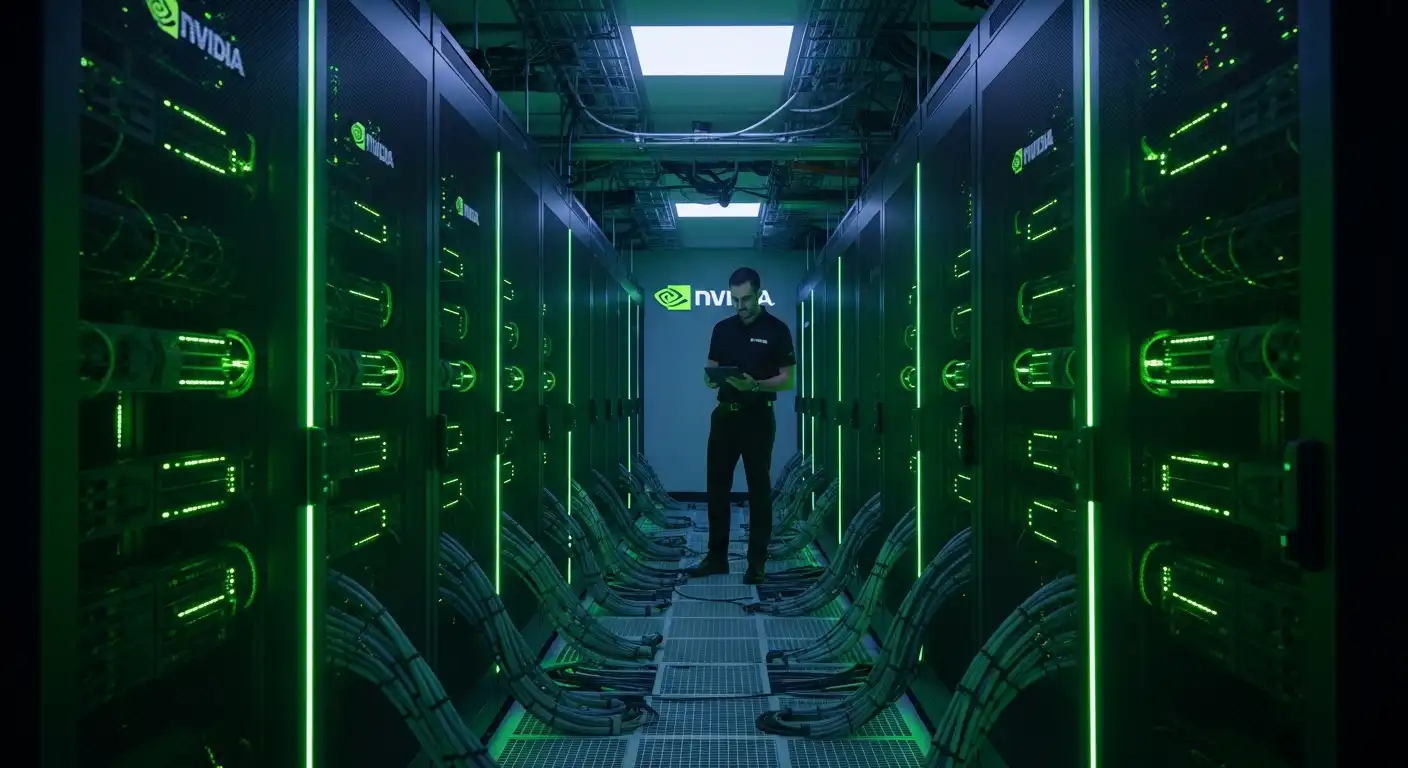
- Next-generation “AI Factories” generate massive thermal energy, requiring industrial-scale liquid cooling instead of traditional air conditioning.
- Mitsubishi Heavy offers advanced 10MW-class centrifugal chillers and emergency power technologies to resolve utility grid constraints.
- The collaboration addresses a critical bottleneck, as cooling historically represents up to 40% of a data center’s total electricity use.
The rapid expansion of artificial intelligence computing infrastructure has created an unprecedented cooling and energy bottleneck, forcing tech giants to seek industrial-scale solutions. Nvidia is exploring a strategic partnership with Japanese industrial conglomerate Mitsubishi Heavy Industries to develop advanced cooling and energy management systems. This potential alliance targets the massive electricity consumption and extreme heat generation of next-generation graphics processing units (GPUs). By leveraging industrial engineering expertise, the semiconductor giant aims to build out its vision of highly efficient “AI Factories” across the globe.
Modern artificial intelligence models require immense computational workloads, pushing server farms to operate more like industrial manufacturing plants than traditional data centers. Traditional air conditioning systems are completely inadequate for cooling high-density GPU clusters, which generate unprecedented thermal energy. Maximizing GPU performance requires highly specialized, stable power supplies and high-performance cooling systems. As hardware demands climb, energy management has officially emerged as the ultimate constraint in the global AI hardware arms race.
This thermal challenge is particularly acute for the company’s next-generation architectures. The newly unveiled Rubin platform achieves 100% liquid cooling, eliminating mechanical fans from the system. Within this closed-loop design, every single chip and networking component requires direct contact with flowing liquid. Furthermore, the system runs its cooling liquid at temperatures reaching up to 45 degrees Celsius. While this high-temperature threshold significantly reduces total energy consumption, it demands highly sophisticated industrial cooling infrastructure to maintain safe operational limits.
Mitsubishi Heavy Industries brings a deep portfolio of industrial power and thermal management technologies to address this infrastructure crisis. The conglomerate manufactures high-efficiency cooling systems, centrifugal chillers, and emergency power supply systems designed specifically for high-capacity environments. In North America, the industrial group is introducing 10MW-class centrifugal chillers tailored for gigawatt-scale computing campuses. These massive industrial systems can manage the extreme heat loads of dense GPU racks while drastically reducing overall water and electricity consumption.
The industrial group’s cooling portfolio also includes cutting-edge direct-on-chip thermal management. Through a strategic investment and white-label agreement with liquid-cooling specialist ZutaCore, the conglomerate has built extensive expertise in two-phase liquid cooling. This highly efficient technology exploits the physical phase change from liquid to gas to extract heat directly from the silicon. Integrating this direct-on-chip technology with large-scale industrial chillers offers a comprehensive thermal solution capable of supporting the most demanding computational workloads.
Beyond cooling, the potential collaboration focuses on establishing robust, uninterrupted power networks. High-density data centers require dedicated, highly reliable power generation to prevent costly downtime. The Japanese industrial group plans to supply advanced gas turbine technologies and emergency power generators alongside its cooling systems to create fully integrated energy management loops. These on-site power plants will help alleviate the strain that massive computing campuses place on public electrical grids, ensuring stable operations for hyperscale facilities.
The focus on building out this physical infrastructure aligns with a broader strategy to establish specialized computing hubs worldwide. The company is actively branding these next-generation sites as “AI Factories,” positioning them as the backbone of future software development. This initiative requires securing local partners in key international markets to construct the heavy physical infrastructure needed to house and power massive GPU clusters, turning physical hardware footprint into a primary competitive advantage.
East Asia has emerged as a critical battleground for this infrastructure rollout. In Japan, South Korea’s SK Group is collaborating to establish an AI Factory slated for completion between 2028 and 2029. Meanwhile, the Japanese conglomerate is also expanding its regional footprint, having recently initiated a data center development project with telecommunications major SoftBank Corp. Securing reliable manufacturing partners in the region allows tech firms to establish localized, highly efficient supply chains close to critical semiconductor manufacturing hubs.
This infrastructure push carries massive financial weight for the global technology sector. Cooling alone historically represents up to 40% of a data center’s total electricity consumption, directly impacting corporate profit margins. Transitioning to full liquid cooling and high-efficiency energy management can save hyperscale facilities millions of dollars annually in utility bills. As the market capitalization of the leading chipmaker hovers around $5.02 trillion, investing in industrial partnerships to secure the physical limits of computing represents a vital defensive strategy to sustain long-term growth.
Ultimately, the ongoing discussions highlight the reality that the future of artificial intelligence is bound by the physical limits of electricity and thermodynamics. By pairing advanced chip design with industrial-scale cooling and on-site power generation, the technology industry is building the necessary foundation to support the next era of supercomputing. As the race to deploy massive AI Factories accelerates, the ability to successfully keep these massive machines cool and powered will ultimately determine which platforms dominate the next phase of the global digital economy.