Key Points:
- Lucid Group denied bankruptcy and take-private rumors, calling them “completely false” after shares plunged as much as 55% in a single day.
- The luxury EV maker confirmed for the first time its partnership with AlixPartners, asserting the firm is assisting with operational execution, not insolvency.
- The sell-off follows a massive first-quarter net loss exceeding $1 billion and a sweeping 18% U.S. workforce reduction in June.
- Majority owner Saudi Arabia’s Public Investment Fund holds a 60% stake and recently extended an $800 million term loan.
A dramatic wave of panic has swept through the electric vehicle market, triggering the steepest single-day sell-off in the history of a prominent luxury EV manufacturer. Shares of Lucid Group plunged by as much as 55% in highly volatile trading, prompting multiple exchange halts as investors reacted to rumors of a potential bankruptcy or a take-private transaction. Although executive leadership quickly issued a firm denial to stabilize the stock, the massive drop highlights the fragile state of investor confidence in early-stage electric vehicle makers during a period of slowing global consumer demand.
The sudden market slide began after reports surfaced that the California-based automaker had retained AlixPartners, a consulting firm widely known for managing corporate turnarounds. Speculative industry accounts quickly suggested that the adviser had recommended either taking the company private or filing for Chapter 11 bankruptcy protection. In response to the growing panic, the company confirmed its relationship with AlixPartners for the first time, clarifying that the consulting firm is solely assisting with improving manufacturing execution and operational efficiency, rather than preparing for insolvency proceedings.
The automaker’s communications team issued a direct statement, calling the bankruptcy and take-private reports completely false. Corporate officers maintained that the company possesses sufficient liquidity to fund operations well into next year, pointing to cash-flow figures published in the most recent quarterly filings. Additionally, the company denied establishing any special board committee to evaluate restructuring scenarios or explore bankruptcy protections, helping the stock recover roughly half of its intraday losses by the close of the trading session.
Despite the company’s firm denials, the underlying financial strains on the business remain highly severe. In the first quarter of the year, the luxury EV maker reported disappointing revenue of $282.5 million against a net loss exceeding $1 billion. This quarterly loss built upon a highly challenging previous year, where the firm sustained a total net loss of $3.8 billion, representing a significant increase from the $3 billion loss recorded in the year prior. This continuous cash burn has steadily eroded the cash reserves built up during the company’s public debut.
A major stabilizing factor for the struggling automaker is the unwavering financial backing of its majority owner. Saudi Arabia’s Public Investment Fund (PIF) holds an approximate 60% equity stake in the company and has poured more than $9 billion into the business since 2018. Just recently, on July 6, the company drew down an additional $800 million from a term loan facility provided by a PIF affiliate. While the sovereign wealth fund’s deep pockets provide a vital safety net, the automaker’s market value has shrunk to roughly $2.3 billion, less than a third of the total capital Saudi Arabia has invested.
The current operational changes follow a series of aggressive restructuring moves implemented over the past few weeks to preserve cash. In late June, the company executed a sweeping 18% U.S. workforce reduction, eliminating roughly 1,400 jobs across corporate and manufacturing segments. In addition to the layoffs, the firm permanently eliminated the second production shift at its AMP-1 assembly plant in Arizona to align its production with slower consumer demand. These cost-cutting measures aim to deliver approximately $158 million in annualized savings.
The financial and operational difficulties coincided with a total overhaul of the corporate leadership team. Silvio Napoli, who took the reins as Chief Executive Officer on June 1, has initiated a sweeping C-suite restructuring. The reorganization eliminated the Chief Operating Officer role and replaced almost the entire executive team. New leadership hires include Chief Financial Officer Alexander De Bock, who brings experience in cost-focused manufacturing turnarounds, and Chief Technology Officer Raja Ramana Macha, charged with streamlining engineering execution.
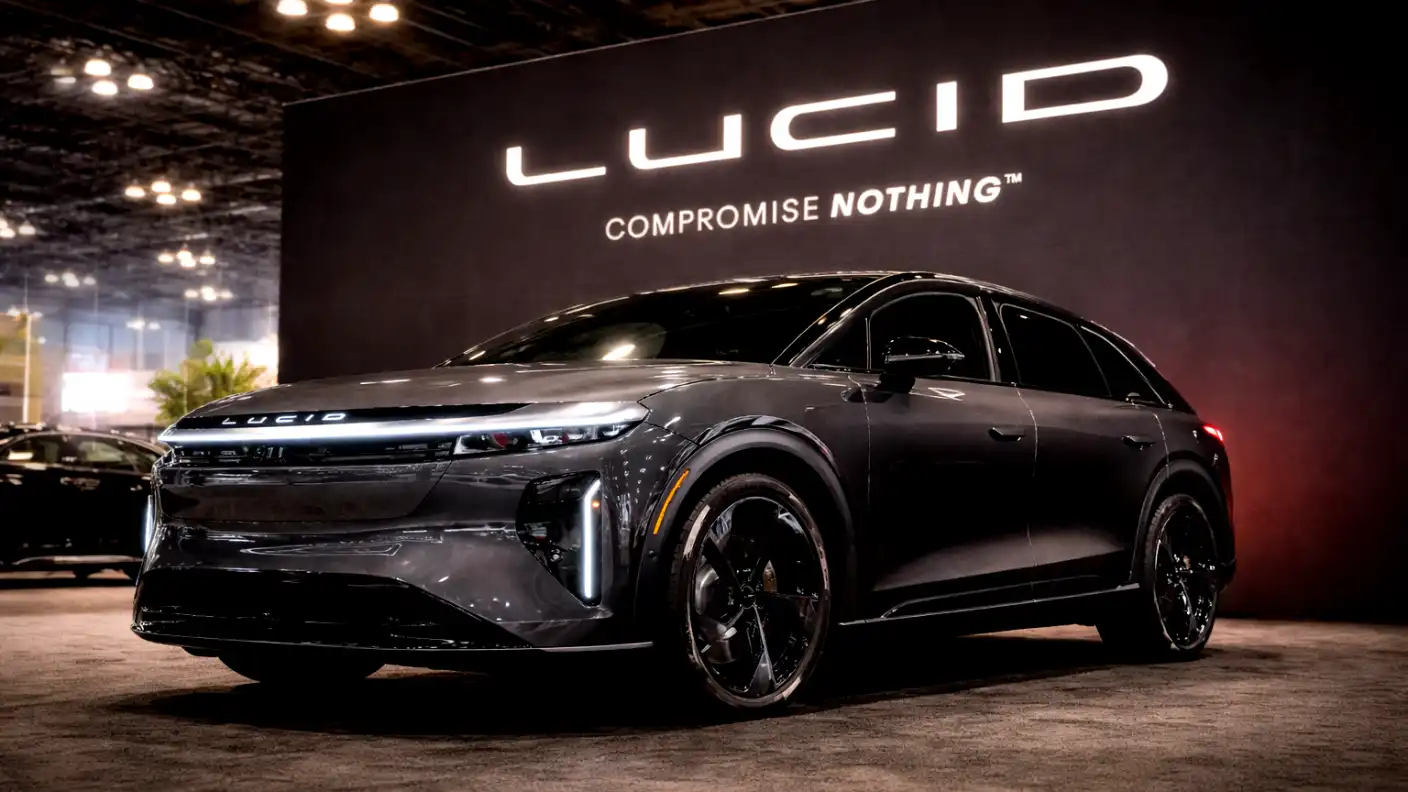
To resolve its execution bottlenecks, the consulting firm reportedly advised the board to adjust its long-term product roadmap. The strategic recommendations include focusing the company’s limited capital on the upcoming Gravity SUV, the firm’s highly anticipated second electric vehicle. The Gravity has encountered several quality control and production issues since small-scale assembly began late last year. By prioritizing the SUV, the company can address the fast-growing utility vehicle segment while managing the technical hurdles that have delayed its commercial rollout.
Conversely, the operational adjustments require putting several other key initiatives on hold. The company is temporarily scaling back the production of its signature Lucid Air sedan, which has defined the brand since its launch but continues to face sluggish demand and steep depreciation rates. Additionally, the firm is pausing its planned European expansion into markets like Austria, Spain, and the United Kingdom, allowing the engineering team to focus entirely on its premium robotaxi partnership with Uber and the construction of its AMP-2 manufacturing plant in Saudi Arabia.
The massive stock collapse serves as a stark reminder of the immense capital requirements and execution risks of the transition to electric mobility. While majority backing from the Saudi sovereign wealth fund shields the premium brand from immediate insolvency, the company must quickly convert its high-tech potential into sustainable sales. As the newly installed executive team works with AlixPartners to improve operational quality, the successful launch of the Gravity SUV over the next few months will ultimately decide whether the automaker can achieve long-term financial viability.