Key Points:
- SpaceX officially rescheduled the highly anticipated Starship Flight 13 test launch to Thursday, July 23.
- The delay follows a last-second automated abort on July 16, caused by the failure of four Raptor engines to ignite.
- The scrubbed launch wiped roughly $100 billion off the newly public company’s market value, sending shares down 6% to $124.30.
- Technicians are replacing two of the booster’s 33 Raptor engines at Starbase, Texas, to guarantee a successful flight.
A highly publicized attempt to execute the first-ever commercial launch of the world’s largest rocket has run into a costly technical delay. SpaceX has officially pushed back its 13th Starship test flight, setting a new target launch window for Thursday, July 23. This SpaceX Starship Flight 13 Rescheduled decision follows a dramatic last-second automated abort during the engine ignition sequence last week, which has temporarily stalled the aerospace giant’s momentum and highlighted the immense risks of running a capital-intensive rocket program under the strict, daily scrutiny of public stock markets.
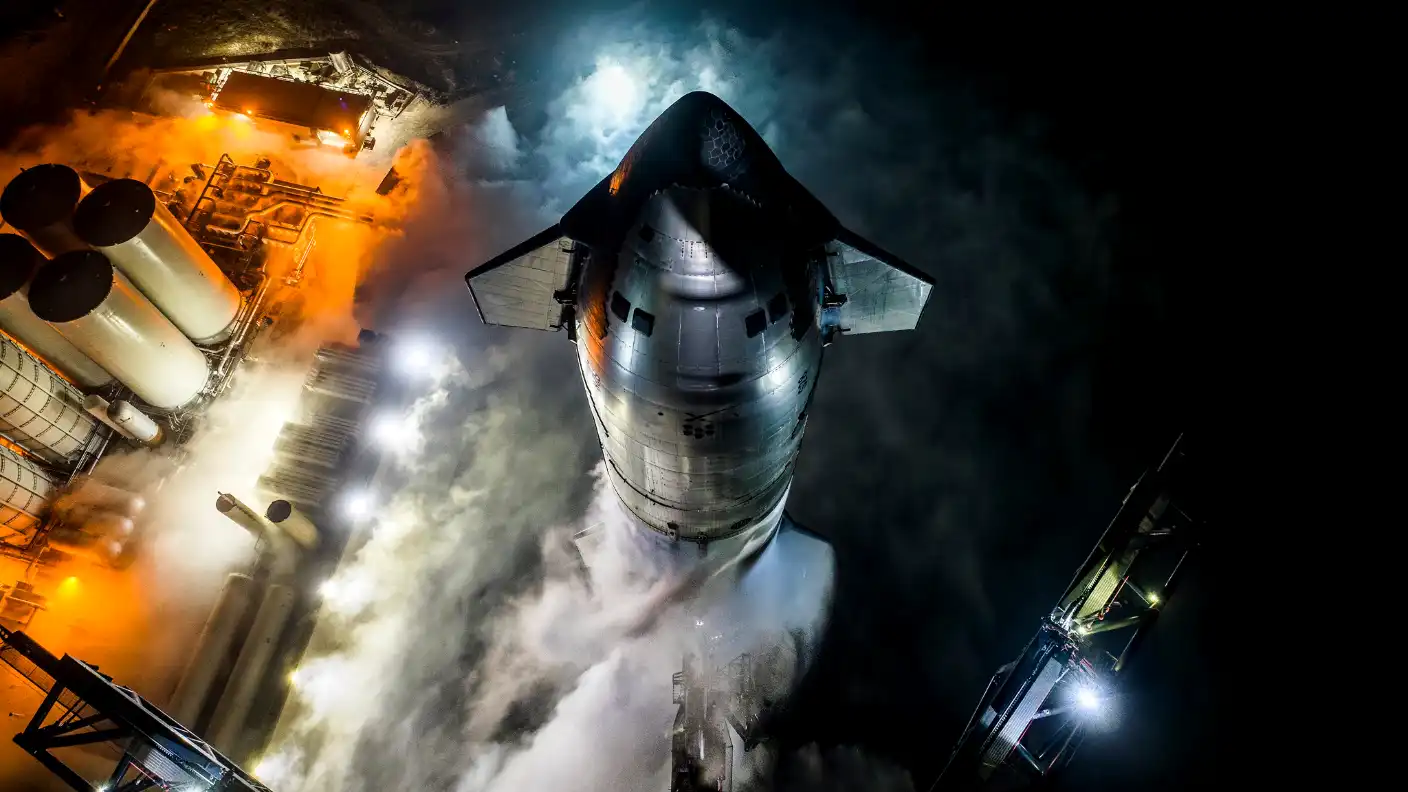
The sudden delay stems from a technical failure that scuttled the initial launch attempt. The countdown proceeded smoothly all day at the company’s Starbase facility in Boca Chica, Texas, with teams successfully loading more than 11.5 million pounds of liquid methane and liquid oxygen into the massive 400-foot-tall vehicle. However, during the final ignition sequence, the launch computer triggered an automated abort command, halting the liftoff. Visual depictions of the booster’s engines revealed that four of the Super Heavy booster’s 33 newly designed Raptor 3 engines failed to ignite as planned.
This last-second automated scrub delivered a major psychological and financial blow to the newly public company. Because this was scheduled as the first major flight test since the company’s historic initial public offering (IPO) on June 12, the sudden postponement triggered a sharp wave of investor panic. The brief setback wiped out approximately $100 billion in corporate market value, with shares of the company falling by roughly 6% to trade near $124.30. The stock had already been sliding from a post-IPO peak of $225.64, slipping below the initial offering price of $135, and the high-profile abort severely accelerated the downward trend.
To address the ignition failures and ensure a successful flight, the engineering team has launched a comprehensive maintenance operation on the launchpad. Technicians hoisted the Starship upper stage off its massive Super Heavy booster to gain access to the propulsion bay. Corporate leadership, including chief executive Elon Musk, confirmed that engineers will remove and replace two of the booster’s flawed Raptor engines to guarantee a successful flight. While a launch delay is not uncommon for a developmental rocket program, the physical engine replacement requires several days of intense labor on the pad, forcing the company to abandon its tentative plans to retry the launch earlier in the week.
The upcoming Flight 13 represents a fundamental transition for the Starship program, moving the vehicle from an expensive experimental prototype into a functional cargo carrier. For the first time, the massive rocket will carry an active, commercial payload consisting of 20 third-generation (V3) Starlink satellites instead of standard dummy weights. This initial batch of upgraded satellites features advanced high-capacity solar arrays, improved antennas, and next-generation laser communication systems designed to greatly expand the capacity and user speeds of the company’s global satellite internet network.
Because this is a developmental test flight, these initial V3 satellites will not remain in permanent orbit. After launching from the Texas pad, the spacecraft will follow a suborbital trajectory, deploying the 20 satellites during its coast phase in space. Approximately 20 minutes after deployment, the satellites will re-enter the atmosphere alongside the Starship upper stage, burning up harmlessly over the Indian Ocean. This controlled atmospheric destruction ensures that the commercial deployment test does not generate long-term space debris or create safety risks in orbit.
The mission also includes a series of highly sophisticated engineering experiments to evaluate the durability of the spacecraft’s thermal protection system. Six of the 20 Starlink satellites on board have been modified with high-resolution cameras and thermal sensors. These specialized cameras will actively scan Starship’s heat shield during the intense friction of atmospheric re-entry, transmitting live imagery directly to ground operators. To assist the imaging systems, technicians have painted several of the spacecraft’s black heat-shield tiles white to serve as clear visual targets during the descent.
While the upper stage targets the Indian Ocean, the Super Heavy first-stage booster will execute its own critical flight profile. After separating from the ship roughly two minutes into the flight, the booster will attempt a controlled boostback and landing burn. However, the company will not attempt to catch the returning booster using the massive “chopstick” arms at Pad 2, because of the significant design changes on the upgraded Version 3 (V3) vehicle. Instead, the booster will attempt a soft, vertical splashdown at an offshore landing point in the Gulf of Mexico, which has been renamed the Gulf of America in recent U.S. regulatory filings.
This operational progress comes at a critical time as international competitors make significant strides. China’s successful sea-based recovery of a reusable rocket booster in early July proved that global rivals are rapidly closing the technological gap. Furthermore, the broader tech market is experiencing a significant deflation, putting pressure on private AI and space startups that are preparing for their own public listings. Successfully executing the Flight 13 mission is vital to proving to public investors that the company’s actual operational capabilities remain decades ahead of any potential global rivals.
Ultimately, the rescheduling of Starship Flight 13 to Thursday, July 23, illustrates the delicate balance between rapid engineering iteration and market accountability. By choosing to swap out flawed engines on the pad rather than risking a catastrophic in-flight failure, the company has prioritized safety and data collection over public relations. As the newly installed engines undergo final checks and the launch window approaches, the success of this multi-million-dollar suborbital flight will demonstrate whether the aerospace giant can stabilize its stock price and maintain its lead in the global commercial space race.