Key Points:
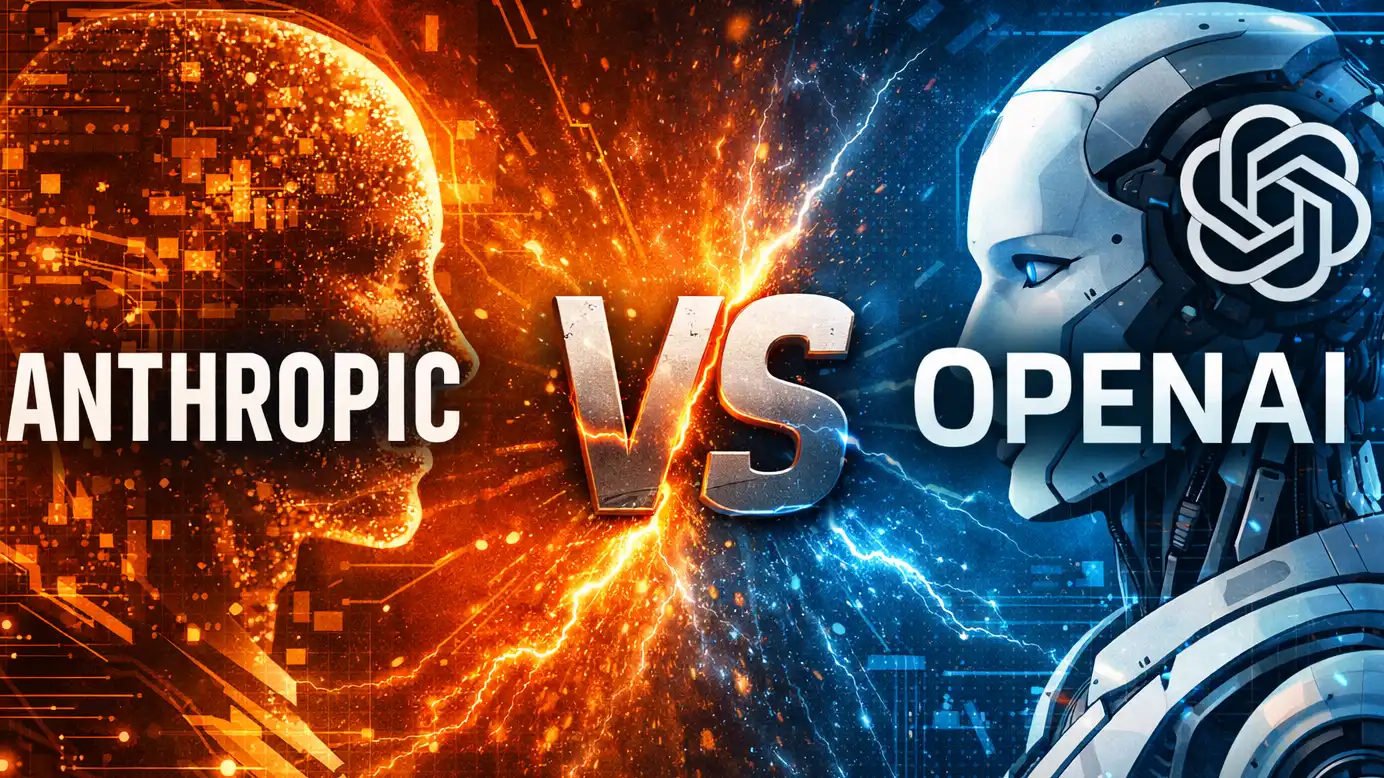
- OpenAI and Anthropic broke their own federal lobbying records, spending a combined $3.17 million in the second quarter of 2026.
- Anthropic outspent its larger rival, shelling out $1.97 million (surpassing Nvidia’s entire lobbying budget) while OpenAI spent $1.2 million.
- The lobbying push focused heavily on critical issues, including cybersecurity, copyright protection, cloud computing, and defense procurement.
- The unprecedented spending surge comes as both companies prepare for confidential initial public offerings expected by late 2026.
A high-stakes political influence battle has erupted in Washington as the world’s leading artificial intelligence developers pour historic amounts of capital into federal lobbying. The combined OpenAI and Anthropic lobbying spend in 2026 reached a record-shattering $3.17 million during the second quarter, representing a substantial 23% increase compared to the previous quarter. This unprecedented surge in political spending highlights how tightly the future of the artificial intelligence industry has become tethered to federal policymaking, as both companies race to shape national security, copyright, and cloud infrastructure rules.
The detailed financial disclosures show that the younger, venture-backed startup is aggressively outspending its larger competitor to secure political influence. Anthropic spent a record-breaking $1.97 million on federal lobbying during the three months from April through June, representing a solid increase from its previous first-quarter record of $1.6 million. This massive budget allowed the company to surpass the entire federal lobbying expenditure of semiconductor giant Nvidia, demonstrating the startup’s fierce determination to protect its high-margin enterprise products from restrictive government regulations.
While Anthropic led the spending blitz, OpenAI also recorded its most expensive lobbying quarter to date, narrowing the gap with its chief rival. The creator of ChatGPT spent $1.2 million on direct federal lobbying during the second quarter, representing a significant increase from the $1 million it spent in the first quarter of the year. Together, the two leading labs have rapidly transformed from political outsiders with virtual zero Washington footprint into some of the most dominant and active corporate lobbyists in the capital, matching the political expenditures of legacy software giants.
The massive escalation in political spending is occurring as both companies prepare to transition from private startups to publicly traded giants. Both OpenAI and Anthropic have recently finalized and submitted confidential regulatory paperwork to the U.S. Securities and Exchange Commission (SEC) for their highly anticipated initial public offerings, which are expected to launch by late 2026 or early 2027. Because these upcoming IPOs target historic valuations of up to $852 billion and $965 billion, respectively, securing a stable and friendly regulatory environment is vital to guarantee investor confidence and protect their projected profit margins.
The public lobbying disclosures indicate that the companies focused their combined $3.17 million budget on a highly critical suite of legislative and regulatory issues. The primary areas of corporate concern included cybersecurity standards, digital copyright protections, federal cloud-computing subsidies, and defense procurement. The startups are actively lobbying to ensure that upcoming national security regulations do not restrict their ability to sell advanced models to international commercial clients or impose crippling liability burdens on developers for third-party copyright infractions.
The intense lobbying push also represents a direct attempt to navigate and influence the Trump administration’s highly active regulatory agenda. Since taking office, the administration has placed heavy pressure on advanced AI developers, signing several executive orders to restrict the domestic and international deployment of advanced models. This includes a newly established, highly coercive 30-day pre-release review framework designed to scan frontier models for national security vulnerabilities before they can be released to the general public. To protect their product roadmaps, both firms are spending millions to secure favorable compliance standards.
An unprecedented wave of personal political donations from their own employees heavily amplifies the political influence of these AI labs beyond corporate lobbying budgets. An independent analysis of federal campaign filings reveals that employees at OpenAI and Anthropic are out-donating their peers at legacy tech giants like Google and Meta by a wide margin. For instance, roughly 59 out of every 1,000 Anthropic employees have personally donated to a federal campaign during this election cycle, a rate that nearly triples the post-IPO employee donation rates of companies like Airbnb.
This massive, highly concentrated pool of employee donations has successfully created a permanent, hard-money donor base for candidates running on explicit “AI safety” platforms. In several key congressional primary races across geographically concentrated blue districts, these employee contributions have grown large enough to influence the outcomes of competitive primaries. This direct political funding represents a highly consequential development, potentially allowing the AI safety lobby to push strict regulatory legislation onto the House floor faster than any corporate lobbying budget alone could achieve.
The rapid increase in lobbying also reflects growing corporate anxiety over the rise of powerful, free open-source models coming out of international rival labs. While U.S. proprietary developers have spent billions of dollars to build their closed models, domestic Chinese firms like Moonshot AI and Alibaba have recently released highly advanced, open-weight models that offer comparable reasoning at a fraction of the cost. Lobbyists representing the closed-source giants are aggressively urging Washington to treat these free, open-model systems as a major national security threat, aiming to convince the government to restrict open-source AI through federal licensing laws.
Ultimately, the record-breaking federal lobbying expenditures of OpenAI and Anthropic demonstrate that the future of advanced artificial intelligence is being fought in the halls of Congress as much as in the research laboratories. By spending a combined $3.17 million in a single quarter to influence cybersecurity, defense, and copyright policies, the two startup rivals have officially joined the ranks of the tech industry’s most powerful political heavyweights. As the November midterm elections approach and both companies move toward their historic public debuts, their ability to successfully buy and secure favorable regulatory standards will continue to dictate the future of the global technology economy.