Key Points:
- Tesla short sellers pocketed $4 billion in paper profits as the stock fell over 12% following Q2 financial results.
- Tesla beat revenue expectations with a record $28.24 billion but missed profit estimates with $0.33 earnings per share.
- Operating margin collapsed to 1.4% as aggressive vehicle price cuts and customer incentives eroded profitability.
- Free cash flow turned negative at minus $1.09 billion due to a 142% surge in capital expenditures and AI research.
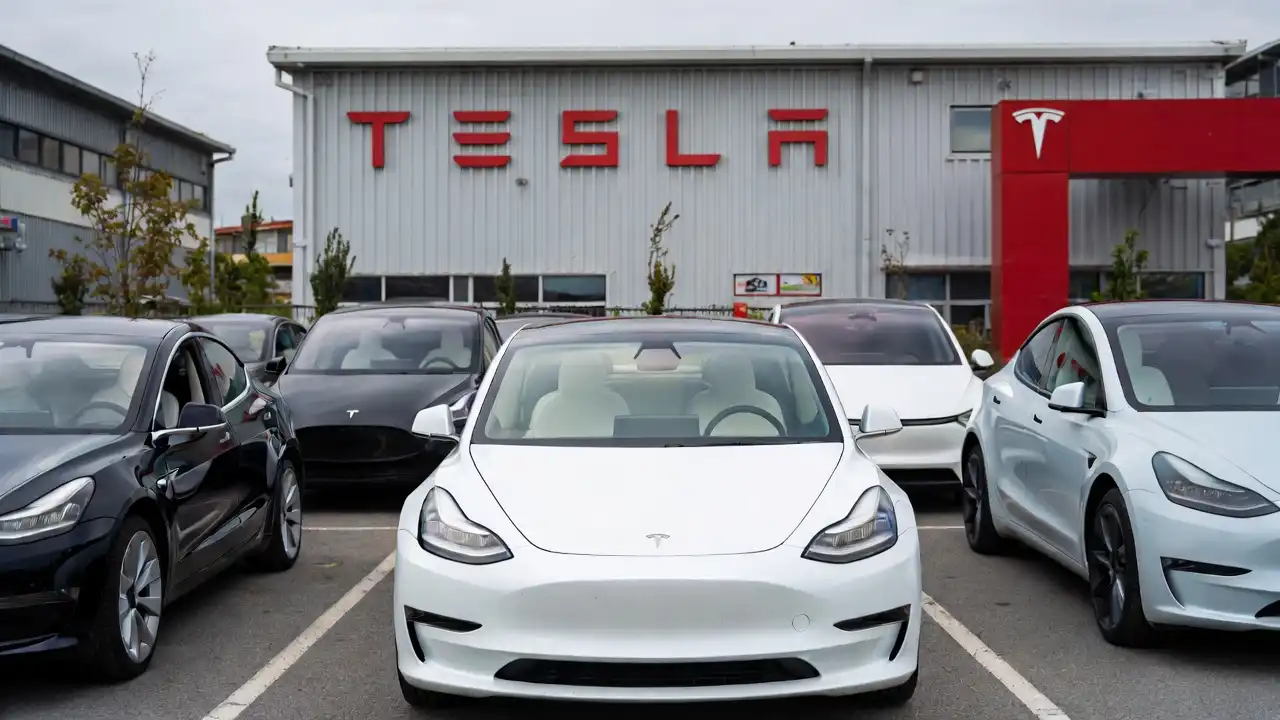
Short sellers betting against Tesla Inc. pocketed an estimated $4 billion in profits as the electric vehicle maker’s stock suffered a massive selloff following its second-quarter 2026 financial report. Despite achieving record vehicle delivery volumes and beating revenue expectations, Tesla’s shares plummeted over 12% in a single trading session, wiping out more than $140 billion in corporate market capitalization. Bearish traders capitalized on a severe earnings shortfall, deteriorating operating margins, and negative free cash flow.
Tesla’s second-quarter earnings presentation revealed a stark divergence between top-line revenue growth and bottom-line profitability. The company generated a record $28.24 billion in total revenue—a 26% year-over-year increase that comfortably topped Wall Street consensus estimates of $26.4 billion. However, adjusted earnings per share dropped to $0.33, missing the $0.53 benchmark that financial analysts anticipated. The profit miss confirmed investor fears that Tesla sacrificed profit margins to move higher vehicle volumes across global markets.
The top-line revenue surge stemmed from a historic quarter of vehicle sales. Tesla delivered 480,126 vehicles during the three months, marking a 25% year-over-year increase and setting a new record for second-quarter deliveries. However, achieving those record delivery numbers required aggressive price cuts and promotional financing offers across key markets in North America, Europe, and China. These extensive customer incentives directly eroded automotive gross margins, turning an operational sales win into a bottom-line drag.
Operational profitability metrics suffered severe compression during the quarter. Tesla reported GAAP operating income of $398 million, representing a steep 57% drop compared to $922 million in the same period last year. Consequently, Tesla’s operating margin collapsed to 1.4%, down sharply from 4.1% a year earlier. Furthermore, revenue from high-margin regulatory credits—historically a primary source of free profit for the automaker—plummeted 67% to $146 million as competing legacy carmakers produced more of their own electric vehicles.
Adding to investor alarm, Tesla recorded its first quarter of negative free cash flow in over two years, burning through $1.09 billion in cash. The cash burn resulted from an aggressive expansion in capital spending, which surged 142% year-over-year to $5.79 billion. Chief Financial Officer Vaibhav Taneja reiterated during the conference call that Tesla plans to spend over $25 billion in capital expenditures in 2026. The company is funding massive manufacturing expansions for Cybercabs, Optimus humanoid robots, and Megafactory battery storage plants.
Research and development expenditures played a major role in depressing quarterly profits. Tesla poured $2.37 billion into R&D during the quarter—a 49% increase from the prior year. The company is directing significant capital toward building out its Cortex supercomputing cluster in Texas, procuring advanced Nvidia and custom AI chips, and developing Full Self-Driving neural networks. While management views AI infrastructure as vital for long-term dominance, Wall Street expressed concern over the immediate financial drag created by unproven AI products.
Despite overall margin pressure, Tesla’s Energy Storage and Services divisions provided rare financial highlights during the quarter. The Energy Storage unit deployed 13.5 gigawatt-hours of battery capacity—a 41% year-over-year increase that generated record quarterly gross profit for the division. Concurrently, Services and Other revenue jumped 50%, driven by expanding Supercharger network utilization, paid Full Self-Driving subscriptions, and growing fleet maintenance contracts across global urban hubs.
The stock slide accelerated during the evening conference call as Chief Executive Officer Elon Musk addressed institutional investors. Musk reiterated long-term promises regarding autonomous Robotaxis and Optimus humanoid robots, asserting that Optimus will perform generalized physical tasks without prior programming. However, analysts expressed frustration over the lack of concrete commercial timelines, regulatory milestones, or unit economics for the Cybercab network. Investors signaled that long-term technological vision can no longer shield the stock from short-term financial deterioration.
The $4 billion windfall for short sellers marks one of the most profitable single-day trading events for Tesla bears in recent history. While Tesla maintains over $30 billion in total cash reserves and continues to lead global EV sales volume, the company faces an extended period of margin compression as it transitions from a traditional automaker into an AI and robotics firm. As Wall Street evaluates upcoming Robotaxi commercial trials and Nevada factory ramp-ups, short sellers remain positioned to exploit future volatility in Tesla stock.