Key Points:
- Samsung and SK Hynix are finalizing multi-billion-dollar long-term memory supply agreements with top U.S. tech giants.
- South Korean officials announced the mega-deals during President Lee Jae-myung’s AI summit visit to San Francisco.
- AI data centers are projected to consume 70% of global memory output by late 2026, creating severe supply shortages.
- DRAM contract prices surged over 90% in Q1 and 60% in Q2 as manufacturers prioritized high-margin HBM production.
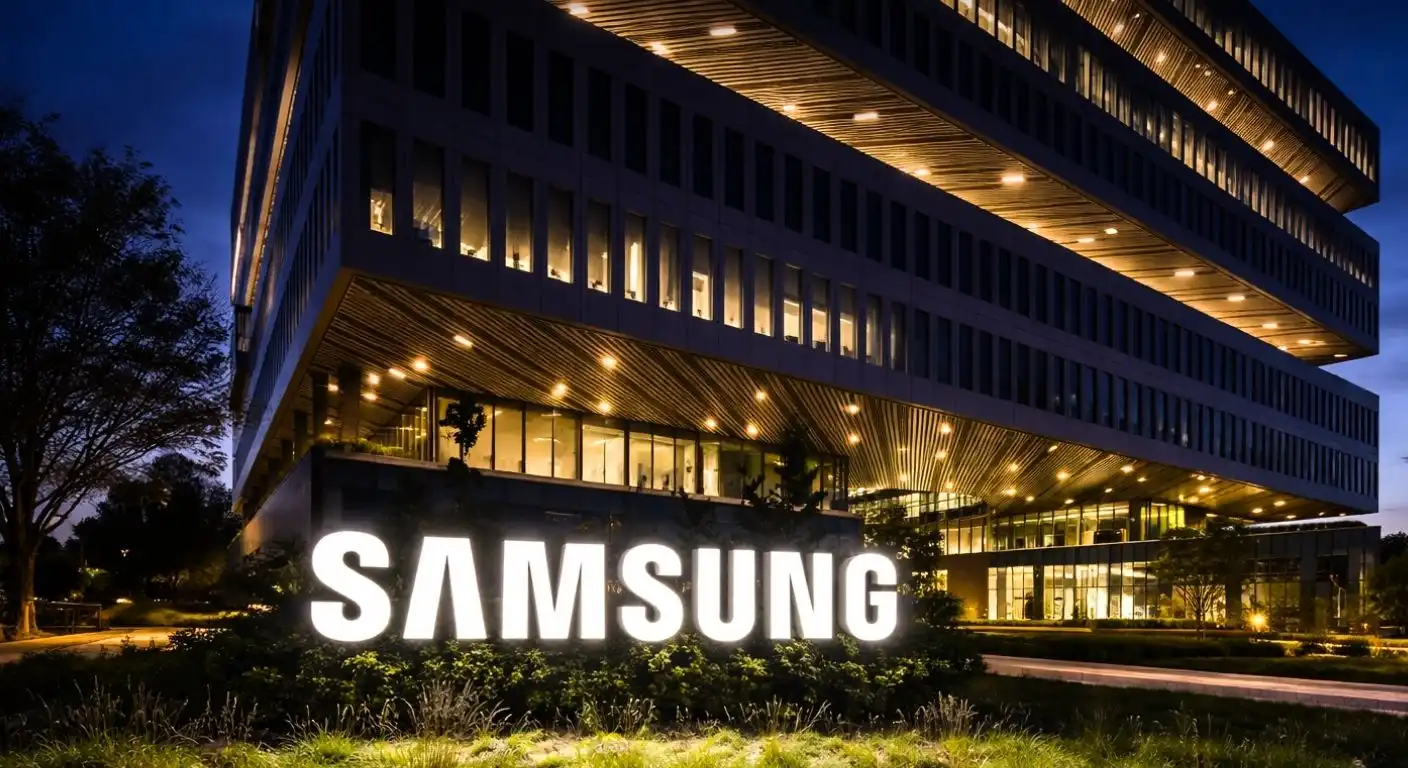
South Korean semiconductor powerhouses Samsung Electronics and SK Hynix are finalizing multi-billion-dollar long-term memory supply agreements with leading American technology giants. Announced by South Korean presidential policy chief Kim Yong-beom during an artificial intelligence summit in San Francisco, the mega-deals lock in massive allocations of High Bandwidth Memory (HBM) and specialized server DRAM for U.S. hyperscale data center operators. The supply pacts aim to relieve a severe global memory bottleneck that threatens to stall major artificial intelligence infrastructure projects.
The landmark supply announcements coincided with South Korean President Lee Jae-myung’s high-profile visit to Silicon Valley to meet with American technology chief executives. Kim Yong-beom confirmed that Samsung and SK Hynix negotiated definitive long-term contracts directly with AI infrastructure providers and cloud operators seeking guaranteed chip allocations. South Korean officials emphasized that while the domestic manufacturing investments of both chipmakers exceed hundreds of billions of dollars, securing multi-year purchasing commitments from American tech leaders provides essential revenue predictability.
The rush to sign multi-year contracts highlights the extreme supply-demand imbalance gripping the global semiconductor industry. Artificial intelligence training clusters and inference data centers are projected to consume roughly 70% of total global memory chip production by the end of 2026. Because high-density HBM modules require significantly more silicon wafers than standard consumer DRAM, memory manufacturers are running factories at maximum capacity. Industry analysts report that HBM production capacity across both Korean manufacturers is completely sold out through 2026, with American tech clients scrambling to lock in 2027 production tranches.
Hyperscaler demand for artificial intelligence memory has driven an unprecedented surge in memory pricing across global markets. Conventional DRAM contract prices jumped over 90% in the first quarter, followed by an additional 60% price increase in the second quarter. Concurrently, NAND flash storage prices rose over 70% as chipmakers prioritized high-margin enterprise solid-state drives for data centers. SK Group Chairman Chey Tae-won recently warned that AI chip demand could surge another 60% to 100% next year, creating severe “chipflation” that squeezes consumer hardware manufacturers while boosting memory profit margins.
Samsung Electronics and SK Hynix hold a dominant duopoly over the global high-bandwidth memory market, making their factory output indispensable to American tech firms. SK Hynix controls approximately 61% of the global HBM market share, driven by its supply deals for Nvidia’s AI accelerators, while Samsung is rapidly scaling its 12-layer HBM3E and next-generation HBM4 production lines. Fueled by insatiable AI demand, the combined market capitalization of global memory leaders Samsung, SK Hynix, and Micron crossed $4.1 trillion earlier this year, matching the total market value of major sovereign economies.
The mega supply deals land amid intense political and regulatory pressure from Washington to establish domestic memory packaging capabilities. United States Commerce Secretary Howard Lutnick recently urged foreign memory suppliers to expand manufacturing footprints on American soil or face steep import tariffs. In response, SK Hynix is investing $4 billion to construct an advanced packaging and HBM R&D facility in West Lafayette, Indiana, set to open in 2028. Meanwhile, Samsung is expanding its multi-billion-dollar foundry and advanced packaging complex in Taylor, Texas, ensuring localized chip supply for American defense and commercial clients.
While Big Tech firms are willing to pay premium prices for artificial intelligence memory, the prioritization of HBM is choking off supply for traditional consumer industries. Automotive manufacturers, smartphone makers, and personal computer OEMs face acute shortages of standard DDR5 and LPDDR5X memory chips. Automotive industry groups recently warned lawmakers that memory shortages could force vehicle assembly line halts, prompting some consumer electronics firms to seek alternative memory supply arrangements with emerging regional producers.
To satisfy next-generation computing requirements, both South Korean suppliers are accelerating their technical roadmaps toward custom memory architectures. Samsung and SK Hynix are preparing mass production of 16-layer HBM4 chips and CXL 3.2 (Compute Express Link) memory modules designed to break throughput barriers in supercomputing clusters. By integrating logic dies directly onto memory stacks, the upcoming HBM4 architecture will allow customized memory configurations tailored to specific algorithmic needs of clients like Microsoft, Meta, and Alphabet.
The multi-billion-dollar supply agreements signed in San Francisco solidify a strategic technological alliance between South Korean hardware manufacturing and American software innovation. As artificial intelligence models expand toward multi-trillion-parameter architectures, memory bandwidth has replaced raw processing speed as the primary bottleneck in computing. By locking in multi-year supply commitments with Samsung and SK Hynix, American technology giants have secured the physical foundation necessary to power the global AI revolution through the end of the decade.