Key Points:
- Chinese memory chipmakers YMTC and CXMT are expanding rapidly to supply domestic AI server manufacturers.
- Global memory shortages and soaring DRAM prices created new market opportunities for Chinese semiconductor fabs.
- U.S. officials are weighing stricter export controls on equipment to stall Chinese High Bandwidth Memory (HBM) progress.
- China’s Big Fund Phase III injected over $40 billion to build domestic semiconductor supply chain resilience.
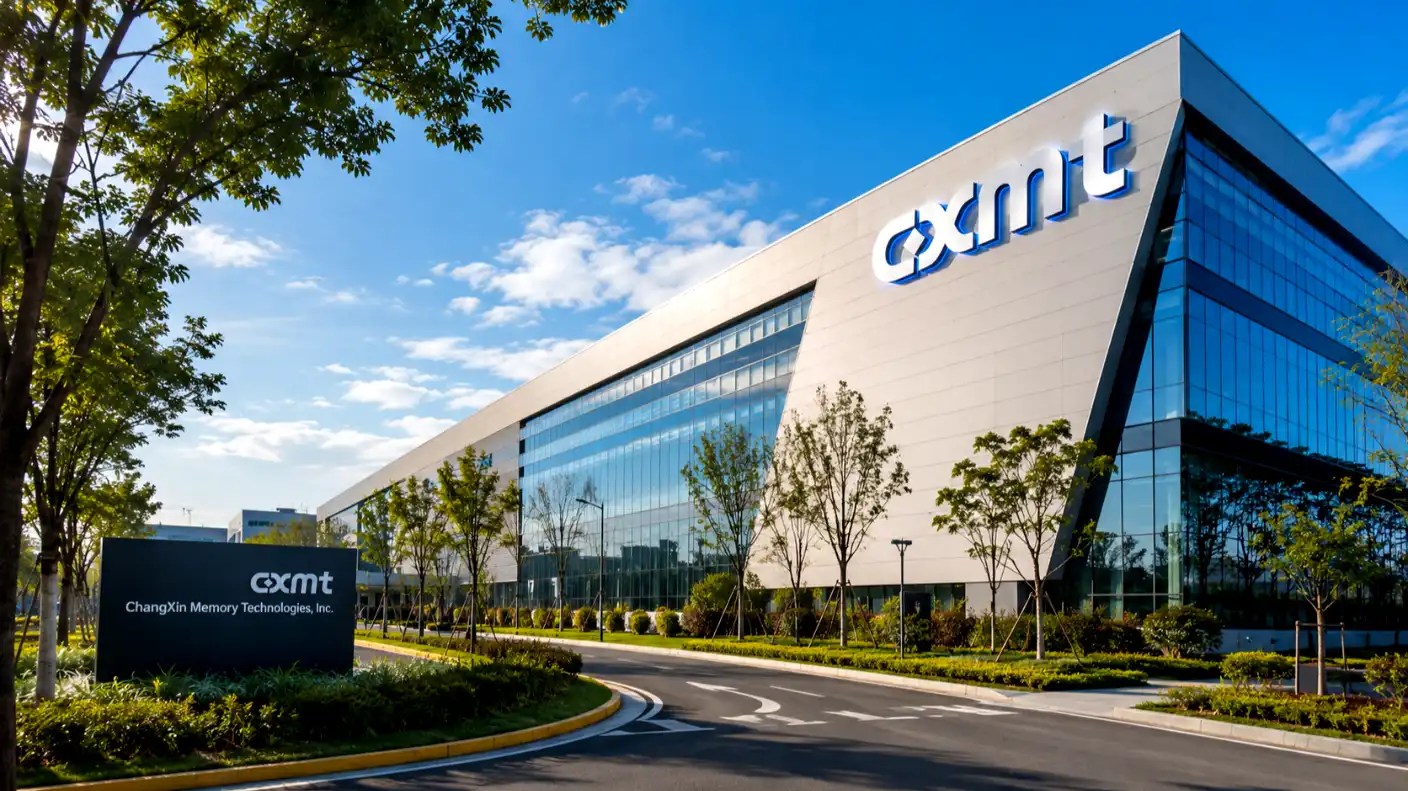
Chinese memory semiconductor manufacturers are leveraging a massive global artificial intelligence boom to expand production capacity, gaining unprecedented influence over the digital supply chain. Leading domestic chipmakers, including Yangtze Memory Technologies Corp (YMTC) and ChangXin Memory Technologies (CXMT), are filling critical supply gaps as global AI data centers consume record volumes of memory. However, their rapid rise to power is triggering a fresh wave of national security scrutiny from trade regulators in Washington, who fear Chinese memory producers could bypass technological sanctions and achieve self-sufficiency.
The emergence of YMTC and CXMT represents a cornerstone of China’s strategy to construct an independent semiconductor ecosystem. YMTC pioneered advanced 232-layer 3D NAND flash memory using its proprietary Xstacking architecture, producing high-density storage drives suitable for enterprise servers and consumer devices. Concurrently, CXMT expanded its dynamic random-access memory (DRAM) fabrication lines, mass-producing LPDDR5X and DDR5 modules to power domestic personal computers, smartphones, and cloud computing infrastructure across Asian markets.
A severe global memory shortage provided the ideal economic backdrop for Chinese chipmakers to gain market share. As top global suppliers dedicated up to 70% of their production lines to high-margin artificial intelligence memory, conventional memory prices exploded worldwide. Standard DRAM contract prices surged over 90% in the first quarter, followed by an additional 60% increase in the second quarter. Because global tech giants locked up nearly all available supply from traditional Korean and American memory makers, Chinese server manufacturers turned directly to CXMT and YMTC to fulfill urgent hardware orders.
The central battleground between Washington and Beijing has shifted decisively toward High Bandwidth Memory (HBM)—a critical component that stacks DRAM dies vertically to feed massive data streams to AI accelerators. Chinese memory engineers are accelerating production of domestic HBM2E and HBM3 modules to supply homegrown AI processors, such as Huawei’s Ascend series and Moore Threads graphics cards. By pairing locally produced HBM with domestic advanced packaging operations, Chinese technology conglomerates are building functional AI server clusters capable of operating without Western component imports.
The rapid technical progress of Chinese memory fabs has raised immediate red flags among trade officials in the United States. The Bureau of Industry and Security inside the Department of Commerce is evaluating expanded trade restrictions to limit Chinese access to advanced memory manufacturing equipment. Federal officials are considering lowering threshold limits for etching, deposition, and chemical mechanical planarization tools, aiming to stop foreign equipment vendors from servicing machines inside YMTC and CXMT wafer fabrication plants.
To insulate domestic chipmakers from external trade actions, the Chinese government orchestrated an unprecedented financial injection. China launched the third phase of its National Integrated Circuit Industry Investment Fund, commonly known as Big Fund Phase III, with a massive registered capital of $47.5 billion (344 billion yuan). A substantial portion of this sovereign capital directly funds cleanroom expansion at YMTC and CXMT, allowing both manufacturers to purchase equipment, build new fabrication lines, and fund multi-year research and development programs.
Heavy government subsidies have catalyzed a rapid push toward tool localization inside Chinese semiconductor foundries. Domestic toolmakers like Naura Technology Group, Piotech, and Shanghai Micro Electronics Equipment are installing Chinese-made etching, cleaning, and thin-film deposition systems directly into memory production lines. While high-end extreme ultraviolet (EUV) lithography remains a bottleneck, Chinese memory engineers are mastering advanced multi-patterning techniques on deep ultraviolet (DUV) machines to produce competitive DRAM and NAND chips without relying on Dutch or American machinery.
The expansion of Chinese memory capacity is fundamentally altering global market dynamics for established industry leaders in South Korea and the United States. As CXMT and YMTC supply a larger percentage of China’s internal tech market, foreign memory vendors are losing lucrative market share in the world’s largest importer of semiconductors. Financial analysts warn that if Chinese firms achieve mass production of HBM and advanced 3D NAND, global memory pricing could face long-term downward pressure, eroding profit margins for international competitors.
The battle over memory supremacy highlights how deeply artificial intelligence hardware has become intertwined with global geopolitics. Chinese memory makers have proven that trade sanctions cannot easily stall technical progress when backed by state capital and immense domestic market demand. As artificial intelligence models grow larger and require exponentially more storage and bandwidth, YMTC and CXMT are cementing their status as permanent, powerful players in the global semiconductor landscape, ensuring that the technology race between Washington and Beijing remains intense.