Key Points:
- SpaceX stopped accepting dedicated Falcon 9 bookings beyond 2028 and froze new rideshare program reservations.
- The company halted production of expendable Falcon hardware, including upper-stage components, to focus on Starship.
- Starship Flight 13 prepares to launch 20 operational Starlink V3 satellites to test thermal heat shield performance.
- Commercial satellite operators are seeking alternative launch providers like Rocket Lab to secure post-2028 orbital access.
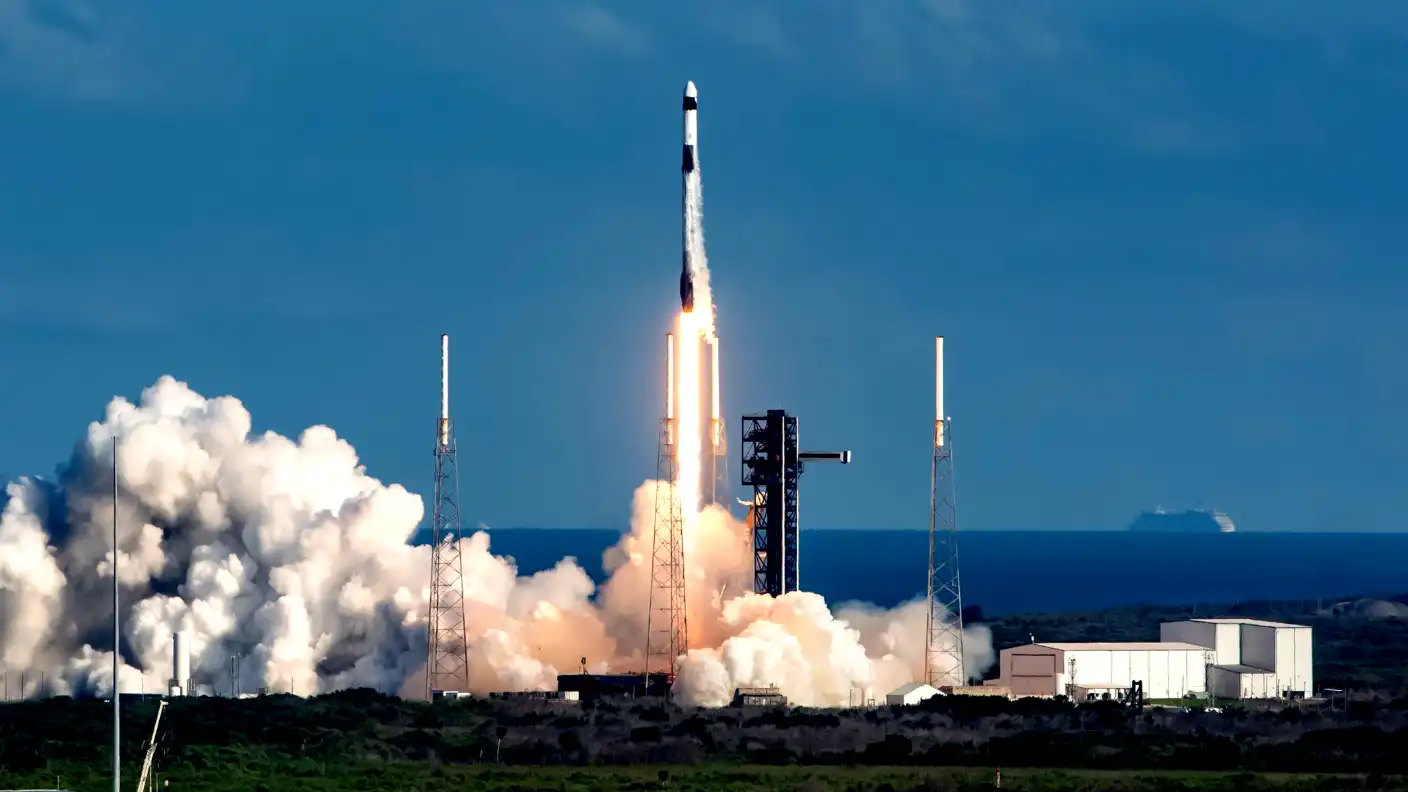
Space exploration powerhouse SpaceX is executing a dramatic commercial pivot, turning away commercial satellite customers seeking dedicated launch slots on its workhorse Falcon 9 rocket beyond 2028. The policy shift comes as Chief Executive Officer Elon Musk doubles down on the fully reusable Starship vehicle as the sole future backbone for global space transportation. By freezing future Falcon 9 rideshare reservations and halting production of select expendable hardware components, SpaceX is forcing the global satellite industry to transition to Starship or seek alternative launch providers.
Industry insiders confirm that SpaceX informed satellite operators that it will not accept new commercial bookings for dedicated Falcon 9 missions past 2028. Additionally, SpaceX suspended new client enrollments for its popular SmallSat Rideshare program, which previously allowed dozens of small satellite companies to share launch costs on a single booster. While SpaceX plans to maintain a dedicated fleet of Falcon 9 rockets to fulfill existing contracts with NASA and the United States Department of Defense, commercial satellite operators must prepare to migrate their payloads to Starship.
To reallocate engineering talent and manufacturing capacity toward Starship, SpaceX began winding down production of non-reusable Falcon hardware. Specifically, manufacturing teams halted production lines for Falcon 9’s expendable upper-stage structures. Because Falcon 9 relies on an expendable second stage that burns up upon atmospheric re-entry during every mission, stopping second-stage manufacturing signals an irreversible timeline for phasing out the world’s most active commercial launch vehicle.
The commercial shift coincides with final pre-flight preparations for Starship Flight 13 at SpaceX’s Starbase facility in South Texas. Standing 400 feet (122 meters) tall, the massive Starship V3 stack features a Super Heavy booster powered by 33 Raptor engines. Flight 13 marks a historic operational milestone, carrying 20 functional, next-generation Starlink V3 satellites rather than dummy mass simulators. The mission aims to test heat shield tile durability under intense aerodynamic forces while deploying operational internet hardware into low Earth orbit.
During ascent and orbital reentry, engineers will test load-sensing thermal protection tiles fitted with advanced internal sensors. Six of the 20 onboard Starlink V3 satellites carry specialized high-resolution cameras pointed backward toward Starship’s stainless-steel hull, providing ground controllers with real-time imagery of thermal tile behavior during maximum dynamic pressure. Achieving reliable thermal tile retention remains the single greatest engineering hurdle standing between Starship and routine, rapid reusability.
SpaceX’s decision to offramp Falcon 9 highlights the immense financial and technical commitments riding on Starship. SpaceX has poured over $15 billion into developing Starship hardware, launch towers, and orbital refueling protocols. Starship is designed to carry up to 100 metric tons into orbit at a fraction of Falcon 9’s cost per kilogram. Furthermore, Starship serves as the cornerstone for Musk’s broader vision of orbiting AI supercomputing clusters, lunar landing missions for NASA’s Artemis program, and eventual Mars colonization fleets.
The high-stakes transition arrives amid recent public market volatility for SpaceX stock. Following a record-breaking initial public offering at $135 per share, SpaceX stock experienced downward price pressure, sliding roughly 24% over the past month to trade near $118.24. Wall Street short sellers accumulated an estimated $15.5 billion in paper profits during the pullback, citing development delays with Starship’s fully reusable upper stage. However, SpaceX leadership maintains that transitioning commercial customers to Starship will ultimately unlock unprecedented profit margins.
SpaceX’s Falcon 9 booking freeze is creating immediate ripple effects across the commercial space industry. Satellite constellations operated by communications firms and earth-imaging startups depend on predictable, low-cost launch schedules. With SpaceX closing Falcon 9’s commercial pipeline beyond 2028, satellite developers are exploring alternative heavy-lift rockets, including Rocket Lab’s upcoming reusable Neutron launcher, United Launch Alliance’s Vulcan Centaur, and Blue Origin’s New Glenn rocket.
SpaceX’s decision to phase out Falcon 9 in favor of Starship marks one of the boldest strategic bets in aerospace history. For over a decade, Falcon 9 established a near-monopoly on commercial space transportation through rapid booster reusability. By forcing global satellite operators to embrace Starship’s massive 100-metric-ton payload capacity, SpaceX is setting the stage for a new era of space infrastructure, where massive satellite constellations and orbital data centers replace lightweight smallsats.