Key Points:
- Wall Street analysts confirm the AI trade is thriving as Big Tech capex crosses $700 billion in 2026.
- Short-term stock dips for Alphabet and Tesla mask massive revenue transfers to semiconductor suppliers.
- Chipmakers Intel, Micron, AMD, and Amkor reported surging orders and multi-billion-dollar deals.
- High Bandwidth Memory shortages and server CPU demand reflect a permanent structural shift toward AI compute.
Despite recent market volatility and sharp stock price pullbacks among major technology giants, Wall Street analysts emphasize that the broader artificial intelligence trade remains firmly intact. While investors briefly penalized cloud hyperscalers like Alphabet and Tesla over shrinking free cash flows and margin compression, technology conglomerates are pouring record amounts of capital into hardware infrastructure. Financial analysts view Big Tech’s multi-hundred-billion-dollar capital expenditure budgets as an unyielding bullish catalyst for semiconductor manufacturers, memory producers, and chip packaging specialists.
The core argument supporting Wall Street’s optimistic semiconductor outlook rests on the sheer scale of corporate capital deployment. Combined capital expenditures among the four major American technology hyperscalers—Amazon, Alphabet, Meta Platforms, and Microsoft—will cross $700 billion in 2026 alone, representing a 50% year-over-year surge. Amazon leads the spending wave with a $200 billion capital budget, while Alphabet projects up to $205 billion in capital outlays. Wall Street strategists note that every dollar spent by cloud giants on data centers flows directly onto the top-line revenue of hardware supply chain partners.
Semiconductor pioneer Intel Corporation provided immediate validation for the hardware thesis, surging nearly 10% following an outstanding second-quarter earnings report. Intel generated $16.13 billion in quarterly revenue—a 25.4% year-over-year jump that marked its fastest top-line growth in 15 years. Intel’s Data Center and AI division saw sales surge 59% to $6.3 billion as cloud computing operators bought record volumes of Xeon server processors. The rapid adoption of “agentic AI,” where autonomous software bots execute complex reasoning tasks, created an acute shortage of general-purpose server CPUs, forcing Intel to raise its 2026 capital spending plan to $20 billion to expand factory capacity.
Advanced Micro Devices is similarly capitalizing on the infrastructure boom, projecting that the broader AI and data center computing market will reach $2 trillion by 2030. At its annual flagship conference in San Francisco, AMD Chief Executive Officer Dr. Lisa Su unveiled “Helios,” an integrated server rack combining EPYC Venice CPUs and Instinct MI455X GPUs engineered with 320 billion transistors and 432 gigabytes of HBM4 memory. AMD backed its hardware rollout by securing multi-gigawatt supply deals with Anthropic, Meta Platforms, and OpenAI, alongside cloud deployment across Microsoft Azure.
Memory chipmakers are capturing a substantial share of Big Tech’s hardware spending as AI data centers consume 70% of global memory output. Shares of Micron Technology advanced 3.1% after Tesla Chief Executive Officer Elon Musk publicly thanked the chipmaker during Tesla’s earnings call for securing a critical memory chip allocation. Describing global memory prices as insane, Musk confirmed that Micron reserved high-density DRAM and High Bandwidth Memory capacity for Tesla on reasonable terms. Micron’s multi-year Strategic Customer Agreements now lock in fixed pricing and volume for major clients including Ford, General Motors, and Anthropic.
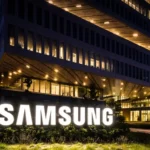
The shift toward custom artificial intelligence accelerators triggered historic cross-border supply agreements. Custom ASIC designer Broadcom Inc. finalized a landmark five-year partnership with Samsung Electronics valued at over $200 billion through 2030. Under the agreement, Samsung will supply Broadcom with 16-layer HBM4 memory stacks while manufacturing Broadcom’s custom AI chips on Samsung’s advanced 2-nanometer process node in Pyeongtaek, South Korea. The multi-billion-dollar deal provides Broadcom with dedicated foundry capacity outside Taiwan while cementing Samsung’s position as a major contract chipmaker.
Advanced semiconductor packaging providers are experiencing similar financial windfalls as graphics chipmakers race to expand assembly lines. Shares of Amkor Technology jumped 16.6% after Nvidia Corporation signed a multi-year partnership featuring a $1.5 billion cash prepayment. Nvidia’s capital infusion directly funds cleanrooms and high-density substrate packaging tools at Amkor’s 171-acre manufacturing campus in Peoria, Arizona. The domestic packaging facility links with TSMC’s nearby Arizona wafer fabs, establishing an end-to-end U.S. semiconductor supply chain for Nvidia’s Blackwell and Rubin GPU platforms.
The hardware rally extended to emerging semiconductor innovators pioneering disaggregated computing. Shares of Cerebras Systems surged 11% after AMD CEO Lisa Su announced a joint technical partnership combining AMD Helios rack-scale infrastructure with Cerebras Wafer-Scale Engines. By using AMD Helios for prompt ingestion and Cerebras wafer-scale processors for token generation, the disaggregated system achieves up to five times higher energy efficiency compared to standard server setups. Cerebras confirmed it will deploy the joint solution across its cloud data centers in late 2026.
Wall Street’s ongoing commitment to the AI trade underscores a fundamental rebalancing in technology investing. While consumer-facing software platforms face market skepticism regarding immediate software monetization, hardware vendors are collecting billions of dollars in upfront cash orders. As Big Tech hyperscalers spend over $700 billion constructing next-generation computing infrastructure, semiconductor foundries, memory producers, and packaging specialists maintain unmatched pricing power and multi-year revenue visibility, ensuring that the hardware supply chain remains the most lucrative sector on Wall Street.