Key Points:
- Nvidia agreed to acquire $1 billion in newly issued shares of South Korean tech giant Naver.
- The partnership will focus on co-developing “Sovereign AI” models for non-English global markets.
- Naver will deploy Nvidia Blackwell graphics processors across its Gak Sejong AI data centers.
- The deal formed part of a broader $950 billion technology cooperation package with South Korea.
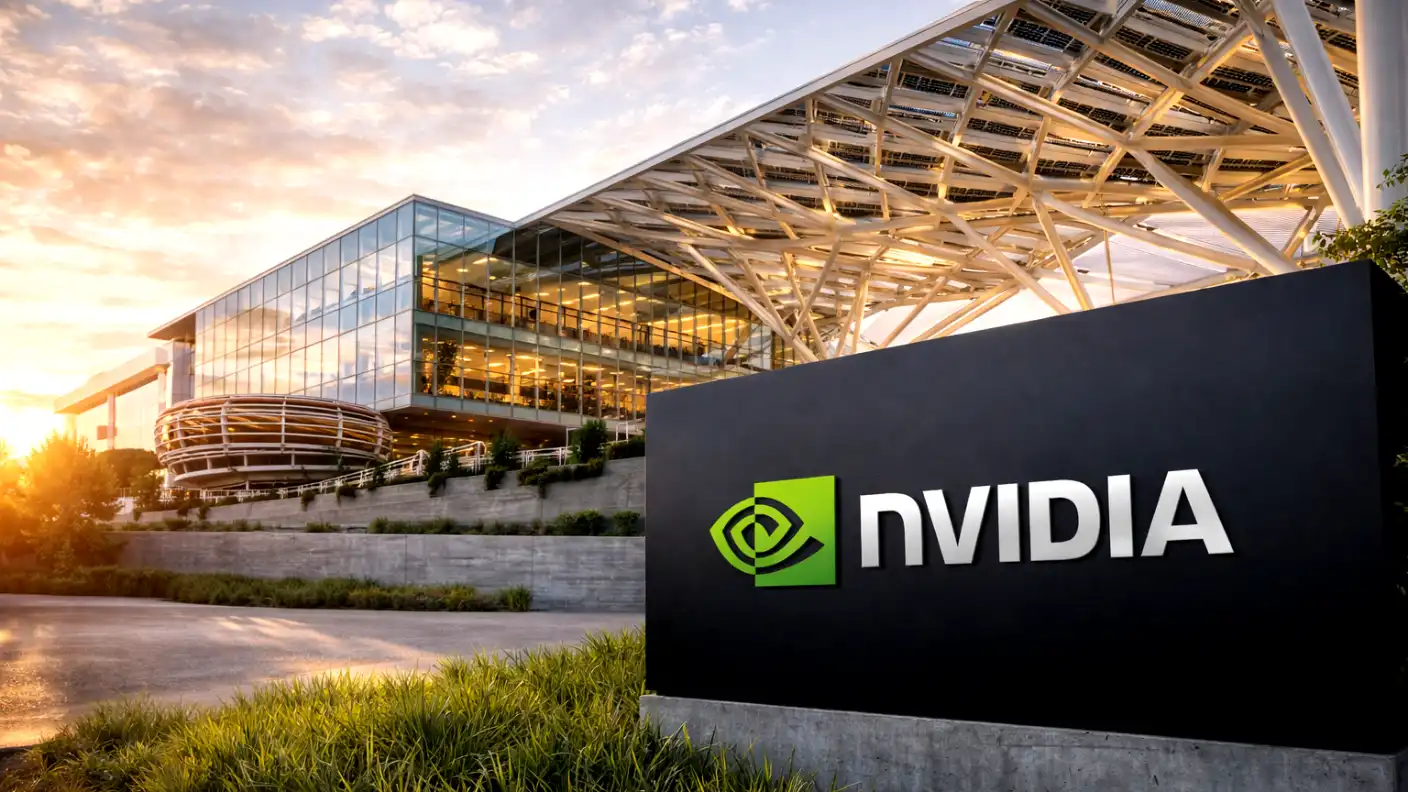
Global artificial intelligence hardware powerhouse Nvidia Corporation has agreed to acquire a $1 billion direct equity stake in South Korean internet and cloud giant Naver Corp. Under the landmark agreement, Nvidia will purchase $1 billion in newly issued primary shares of Naver, establishing a deep strategic alliance between Silicon Valley’s dominant chipmaker and East Asia’s premier digital platform. The investment aims to accelerate the co-development of localized “Sovereign AI” foundation models while locking in long-term hardware deployments across Naver’s expanding data center network.
The $1 billion transaction involves Naver issuing new common shares directly to Nvidia, giving the Santa Clara-based chipmaker a substantial equity footprint in the South Korean tech leader. Naver will direct the $1 billion capital infusion directly toward expanding its artificial intelligence research divisions, purchasing advanced graphics processing units, and constructing high-density server infrastructure. Executive leadership from both companies confirmed that the equity purchase establishes a multi-year commercial framework rather than a simple financial investment.
At the core of the partnership sits a joint strategy to develop and deploy “Sovereign AI” platforms worldwide. Sovereign AI refers to the ability of individual nations, regional enterprises, and sovereign governments to build artificial intelligence systems trained on local languages, native cultural nuances, and specific legal frameworks. Rather than relying exclusively on English-centric models developed in Silicon Valley, many governments in Asia, Europe, and the Middle East prefer localized models that safeguard national data sovereignty and respect local privacy regulations.
Naver operates as a pioneer in non-English foundation models, having developed HyperCLOVA X—a massive multi-modal AI platform designed specifically for Korean and East Asian languages. Under the new alliance, Naver’s research engineers will collaborate directly with Nvidia’s software teams to integrate Nvidia NeMo, NeMo Guardrails, and CUDA-accelerated computing tools directly into HyperCLOVA X. By optimizing Naver’s software algorithms on Nvidia’s specialized hardware stack, both companies aim to deliver high-speed, enterprise-grade AI applications for corporate clients and municipal governments.
To support the expanding computational demands of Sovereign AI workloads, Naver is using Nvidia’s capital and hardware allocations to scale its physical data center capacity. Naver will deploy thousands of next-generation Nvidia Blackwell GB300 graphics processors and liquid-cooled server racks inside its flagship Gak Sejong data center—one of the largest hyperscale server facilities in Asia. The hardware upgrade ensures Naver maintains the raw processing power necessary to host multi-trillion-parameter foundation models and process millions of concurrent enterprise queries.
The $1 billion equity agreement was finalized during an economic technology summit in San Francisco, which featured South Korean President Lee Jae-myung and top American technology chief executives. The deal forms a core component of a broader $950 billion technology cooperation package negotiated between South Korean chipmakers and American technology firms. By combining South Korea’s High Bandwidth Memory production leadership with Nvidia’s GPU architecture and Naver’s cloud software, the two nations are forging an integrated technology supply chain.
Nvidia and Naver plan to leverage their combined technological strengths to export sovereign cloud and AI services across international growth markets. The two firms are actively bidding on major digital infrastructure projects across Southeast Asia and the Middle East, targeting sovereign wealth funds and enterprise clients in Saudi Arabia, Thailand, Indonesia, and Vietnam. Naver brings proven experience in constructing localized search engines and cloud platforms, while Nvidia provides the hardware and global developer ecosystem required to win large-scale government contracts.
Financial markets responded with enthusiasm to the equity alliance, driving Naver shares higher on the Seoul stock exchange. Institutional equity analysts noted that the transaction benefits both companies strategically. For Naver, securing a $1 billion endorsement from Nvidia validates its proprietary AI technology and guarantees long-term GPU hardware allocations during a period of acute global chip shortages. For Nvidia, taking an equity stake in Naver secures a loyal cloud customer and ensures Nvidia’s software ecosystem powers the emerging Sovereign AI market across Asia.
Nvidia’s $1 billion investment in Naver marks a significant evolution in how technology leaders build global artificial intelligence ecosystems. As sovereign nations push to control their own digital infrastructure, hardware manufacturers must partner with regional software leaders to deliver culturally aligned AI tools. By uniting Nvidia’s hardware dominance with Naver’s localized software expertise, the multi-billion-dollar alliance establishes a powerful model for international AI deployment that will shape the digital economy for years to come.