Key Points:
- The U.S. government issued sweeping trade bans on new Chinese humanoid robots and embodied AI hardware.
- Federal trade officials cited national security risks, including unauthorized 3D mapping of AI data centers.
- Low-cost Chinese humanoids priced as low as $16,000 threatened domestic manufacturers like Tesla and Boston Dynamics.
- The ban requires American industrial operators to replace foreign robotic software with approved domestic hardware.
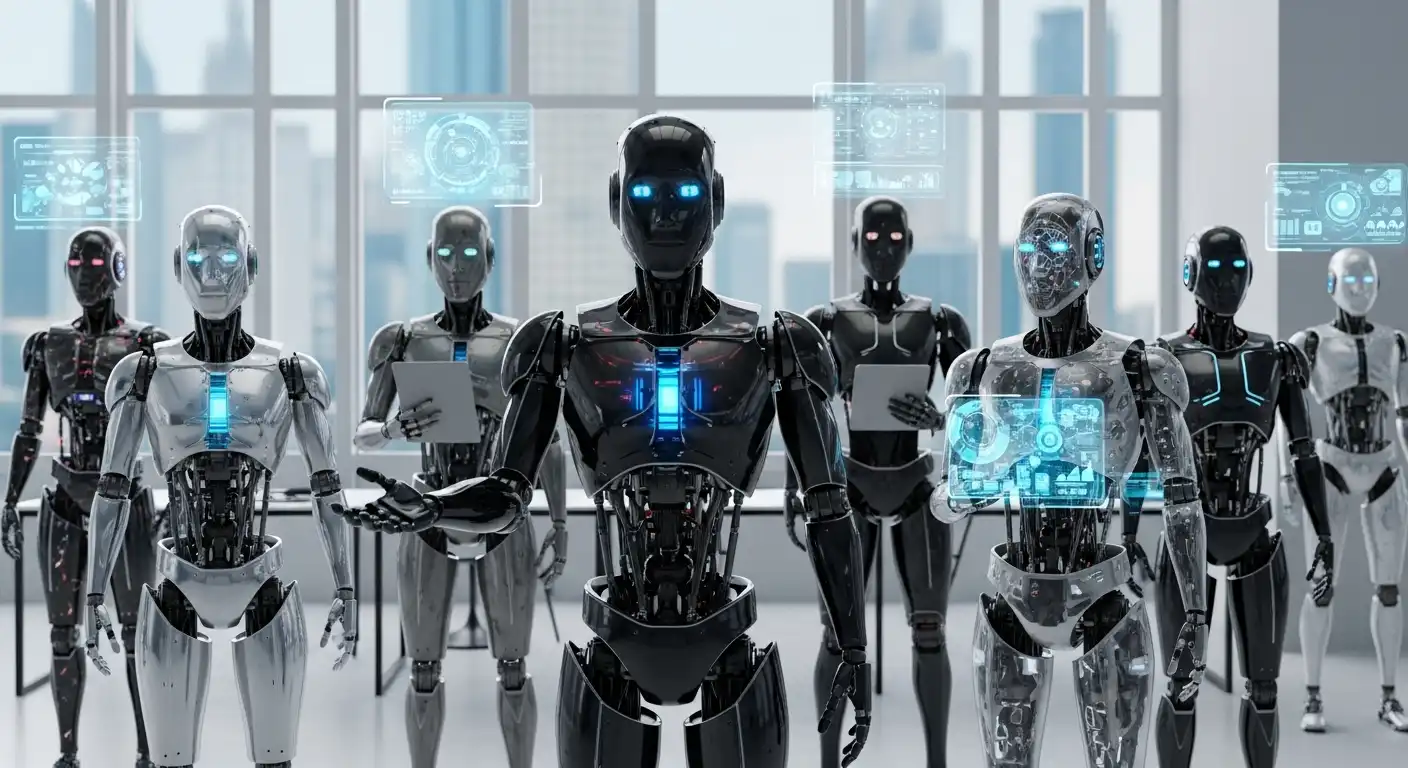
The United States government has enacted a comprehensive import ban targeting new Chinese-made humanoid robots and autonomous embodied artificial intelligence hardware. Issued by the White House and the Department of Commerce, the trade restrictions block Chinese robotics manufacturers from selling bipedal humanoids, quadruped robot dogs, and automated industrial bots inside American commercial markets. Federal officials cited severe national security risks, warning that internet-connected Chinese robots equipped with advanced sensors pose acute espionage risks to artificial intelligence data centers, semiconductor foundries, and critical defense infrastructure.
The federal trade mandate directly targets prominent Chinese robotics firms that recently launched aggressive global sales campaigns. Impacted manufacturers include Hangzhou-based Unitree Robotics, UBTECH Robotics, Agibot, and Fourier Intelligence. The trade ban blocks high-profile hardware releases, including Unitree’s compact G1 humanoid robot—which disrupted international markets with a $16,000 starting price—and its full-sized H1 humanoid robot. Federal trade negotiators argued that heavy state subsidies allow Chinese firms to dump hardware below cost, threatening the financial viability of domestic American robotics developers.
The central pillar supporting the federal import ban involves data security and 3D spatial mapping. Modern humanoid robots rely on high-resolution optical cameras, 3D LiDAR sensors, ultrasonic rangefinders, and tactile force sensors to navigate physical environments autonomously. Cybersecurity investigators at the Department of Commerce warned that Chinese-developed operating systems automatically upload detailed 3D spatial telemetry, indoor architectural layouts, and network access credentials back to cloud servers based in mainland China. If deployed inside American AI server farms or defense manufacturing plants, autonomous robots could secretly record sensitive intellectual property.
The regulatory action reflects an explicit strategy by Washington to defend America’s multi-hundred-billion-dollar artificial intelligence and robotics ecosystem. U.S. technology companies are investing over $700 billion in 2026 to construct high-density data centers and automated manufacturing hubs. By banning foreign robotic hardware, federal trade officials aim to shield domestic robotics pioneers—including Elon Musk’s Tesla Optimus project, Boston Dynamics, and Silicon Valley-backed Figure AI—from artificially low Chinese hardware prices during a critical commercial scaling phase.
The trade ban addresses severe price disparities that threatened to squeeze American manufacturers out of their home market. While American-built humanoid prototypes carry production costs ranging between $90,000 and $150,000 per unit, Chinese suppliers achieved mass-production economies of scale that enabled sub-$20,000 price tags. Without federal trade protections, cost-conscious American logistics facilities, automotive factories, and commercial warehouses would have imported thousands of low-cost Chinese humanoids, starving domestic robotics startups of early commercial revenue.
The Bureau of Industry and Security inside the Department of Commerce will enforce the ban through strict customs regulations and supply chain audits. Customs officers will block imports of complete humanoid assemblies, autonomous mobile robot chassis, robotic joint actuators, and specialized embodied AI control software originating from mainland China. Furthermore, federal rules prohibit domestic enterprise software developers from integrating Chinese robotic hardware into American cloud networks or defense procurement supply chains.
The federal import ban forces immediate operational adjustments across American manufacturing and logistics industries. Several major U.S. automotive assemblers, e-commerce fulfillment networks, and commercial warehouse operators were actively conducting pilot trials with Unitree G1 and UBTECH humanoids to automate material handling and machine tending. Following the trade directive, industrial operators must cancel pending Chinese hardware orders and redirect capital toward domestic or allied robotics suppliers in Japan, South Korea, and Western Europe.
The humanoid robot ban integrates directly into Washington’s broader trade policy overhaul. The White House recently implemented Section 301 customs duties ranging from 10% to 12.5% on 60 international trading partners, covering 99.4% of total U.S. import volume. By combining broad baseline tariffs with targeted product bans on autonomous hardware, advanced semiconductors, and AI models, the United States is constructing a high regulatory perimeter around its domestic artificial intelligence economy.
The U.S. ban on Chinese humanoid robots marks a permanent bifurcation in the global robotics industry, splitting the market into distinct Western and Chinese technological spheres. While Chinese manufacturers will continue expanding across domestic, Asian, and Latin American markets, Western economies will rely exclusively on domestic and allied robotics platforms. As physical AI transforms global industrial automation, strict trade guardrails will ensure that the autonomous robots operating inside Western factories, power grids, and data centers remain completely secure from foreign surveillance.