Key Points:
- Tim Cook approaches his final earnings call as Apple CEO during a historic milestone for the company.
- Apple recently touched a $5 trillion market valuation amid strong June-quarter sales projections.
- The upcoming earnings report highlights the rollout of Apple Intelligence and hardware upgrade cycles.
- CFO and successor expectations loom large as Wall Street evaluates Apple’s next long-term leadership chapter.
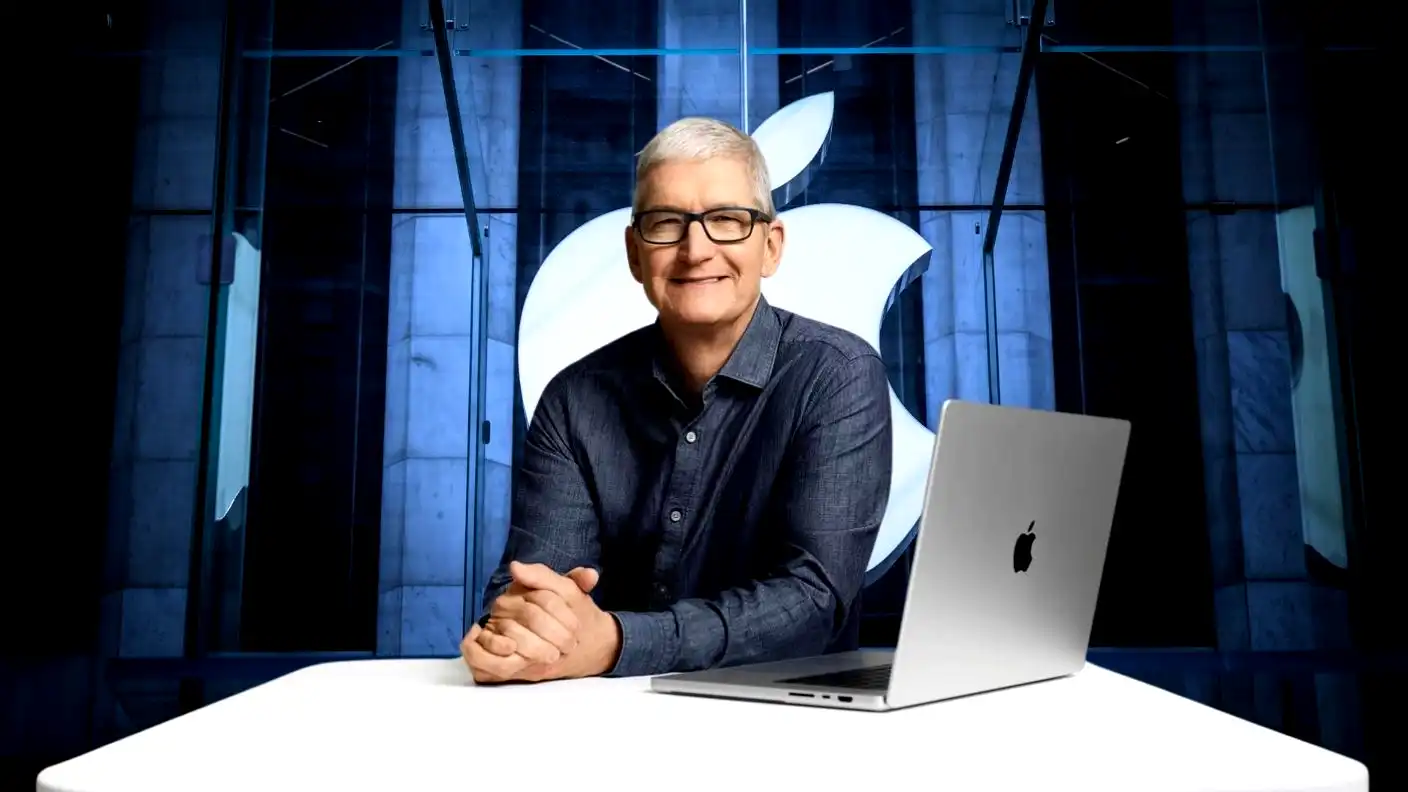
Chief Executive Officer Tim Cook is preparing for what marks his final quarterly earnings conference call at the helm of Apple Inc., bringing down the curtain on one of the most successful executive tenures in corporate history. The milestone financial call arrives at a momentous period for the Cupertino, California-based technology titan, following a historic market milestone where Apple briefly touched a $5 trillion valuation. As Wall Street analysts gather to review the company’s financial metrics, executive succession plans and the commercial rollout of Apple Intelligence will dominate the conversation.
Tim Cook assumed the chief executive role from co-founder Steve Jobs in August 2011, when Apple held a market capitalization of roughly $350 billion. Over the past fifteen years, Cook transformed Apple into a global powerhouse, expanding annual revenue past $380 billion, building a 2.2 billion active device ecosystem, and launching revolutionary product categories like the Apple Watch and AirPods. His final earnings call caps off a multi-decade run defined by exceptional supply chain mastery, aggressive capital return programs, and unmatched free cash flow generation.
The financial performance anchoring Cook’s departure reflects extraordinary operational strength. Wall Street equity analysts project Apple to report June-quarter revenue between $88.5 billion and $89.5 billion, representing its fastest summer sales growth rate in five years. This top-line re-acceleration stems from stabilizing international iPhone demand, robust M4 iPad hardware refreshes, and continuous double-digit expansion within Apple’s high-margin Services division, which generates over $24 billion quarterly with 74% gross profit margins.
Beyond quarterly numbers, the earnings call marks a crucial pivot point regarding Apple’s artificial intelligence strategy. Apple Intelligence—the company’s suite of system-level generative AI tools integrated across iOS, iPadOS, and macOS—is laying the foundation for a multi-year hardware replacement super-cycle. Because running high-density generative AI models locally requires advanced Neural Processing Units and high-density unified memory found only in recent flagship hardware, hundreds of millions of consumers holding older iPhones will need newer devices to access full AI capabilities.
The transition opens a brand-new chapter for Apple’s executive leadership team. While Apple has not formally announced an exact retirement date for Cook, Wall Street widely expects Chief Operating Officer Jeff Williams or Hardware Engineering chief John Ternus to succeed him in leading the multi-trillion-dollar enterprise. Whoever assumes the chief executive title inherits a remarkably resilient corporate balance sheet, bolstered by a record $110 billion share buyback program and more than $100 billion in annual free cash flow.
Institutional investors note that Cook leaves Apple positioned differently from its Big Tech peers. While cloud hyperscalers like Amazon, Alphabet, and Meta spend over $700 billion combined in 2026 to construct massive data centers, Apple maintains a capital-light artificial intelligence strategy. By partnering with external AI research leaders like OpenAI and Google Cloud to handle heavy server-side processing queries while focusing capital on consumer device engineering, Apple protects its industry-leading profit margins.
The historic nature of the financial report highlights the profound structural impact Cook has left on the global technology landscape. Under his guidance, Apple expanded from a hardware-dependent smartphone maker into a diversified digital services and luxury consumer brand. Services revenue—encompassing the App Store, iCloud, Apple Music, and Apple Pay—now accounts for nearly a quarter of total corporate sales, providing steady, high-margin cash flow that cushions corporate balance sheets during temporary hardware lulls.
Wall Street analysts and institutional fund managers expect an emotional, highly watched earnings conference call as analysts bid farewell to one of the defining business leaders of the modern era. While Apple’s brief ascension to a $5 trillion market valuation reflects past successes, the focus during the earnings presentation will quickly turn toward execution. As Apple prepares to launch its next-generation iPhone lineup in the autumn, the company remains uniquely positioned to capture expanding global consumer technology spending under its next generation of executive leadership.