Key Points:
- Amazon’s autonomous vehicle subsidiary Zoox secured regulatory approval to operate paid robotaxis without human controls.
- The purpose-built autonomous vehicle features no steering wheels or traditional pedals for human drivers.
- Zoox will launch commercial passenger rides in designated U.S. metropolitan test markets.
- The milestone intensifies competition against Alphabet’s Waymo and Tesla’s upcoming Cybercab network.
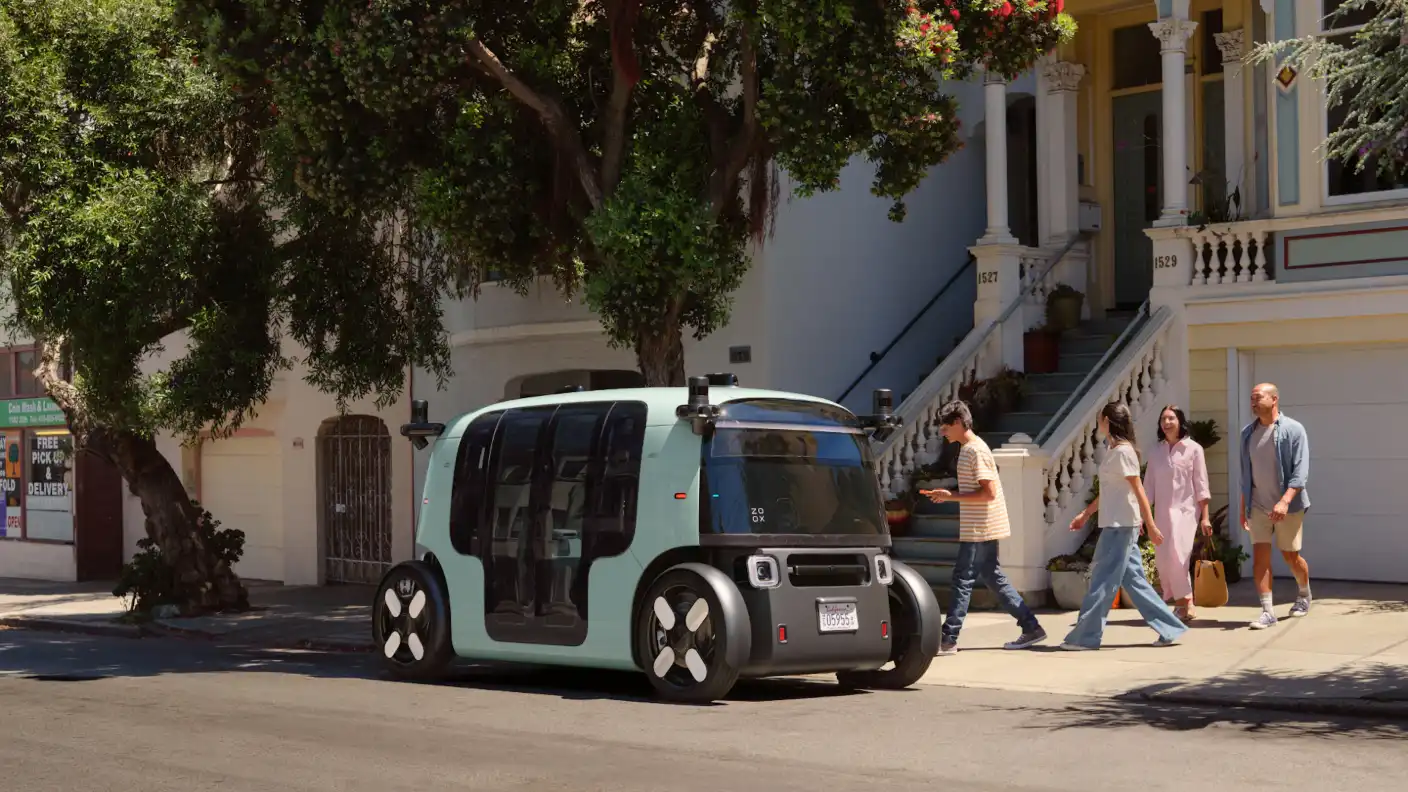
Amazon.com Inc. has achieved a major milestone in autonomous vehicle development, securing federal and state regulatory clearance for its Zoox subsidiary to operate commercial, paid robotaxis featuring absolutely no human control interfaces. Unlike competing autonomous vehicles that modify standard passenger cars with aftermarket sensor kits, the custom-built Zoox robotaxi is designed entirely from the ground up without steering wheels, gas pedals, or brake mirrors. The landmark approval gives Amazon a powerful commercial vehicle to expand its presence in the multi-billion-dollar autonomous ride-hailing industry.
The regulatory green light permits Zoox to charge members of the general public for autonomous rides in initial commercial deployment zones. Safety regulators conducted exhaustive evaluations of the vehicle’s redundant braking, steering, and electrical power systems before granting authorization. Because the vehicle lacks any manual backup controls, Zoox engineers rely entirely on a multi-layered sensor suite combining 360-degree cameras, radar, and LIDAR to navigate complex urban traffic environments safely at speeds up to its target operational limit.
The unique carriage-style interior of the Zoox robotaxi seats four passengers facing each other, creating a lounge-like environment optimized for urban ride-sharing rather than individual driving. Passenger safety features include bidirectional driving capabilities, meaning the vehicle moves forward or backward with identical mechanical performance, eliminating the need to execute multi-point U-turns on congested city streets. An advanced airbag system deploys uniquely around the perimeter of the cabin bench seating to protect occupants during unexpected collision scenarios.
Zoox plans an incremental commercial rollout, launching paid passenger services in select dense metropolitan test markets where the company spent years mapping streets and testing autonomous software. Initial operations will focus on specific geo-fenced commercial zones before expanding to broader urban coverage areas. Riders will summon the autonomous shuttle using a dedicated smartphone application, mirroring the consumer experience popularized by established ride-sharing networks.
The commercial authorization intensifies a high-stakes race for dominance in the autonomous transportation sector. Alphabet Inc.’s Waymo currently operates commercial robotaxi services across several major American cities, completing hundreds of thousands of paid passenger trips weekly. Meanwhile, Tesla is developing its own autonomous Cybercab network. Amazon’s ability to deploy a custom-built, steering-wheel-free vehicle gives the e-commerce giant a differentiated physical product designed exclusively for shared fleet transport.
Amazon acquired Zoox for approximately $1.3 billion, viewing autonomous mobility as a crucial long-term logistics layer for both passenger transport and future urban package delivery. While early development required heavy capital expenditures and years of rigorous safety validation, securing commercial operating permits validates Amazon’s long-term hardware strategy. By combining high-density delivery infrastructure with autonomous passenger transport, Amazon is building a comprehensive urban mobility ecosystem.
As Zoox prepares to transport its first paying customers in vehicles devoid of human controls, the autonomous vehicle industry crosses a historic threshold from experimental testing into commercial scale. Public acceptance, regulatory compliance, and flawless technological execution will dictate how quickly Amazon can scale its robotaxi fleet nationwide. For urban commuters and technology enthusiasts alike, the sight of a steering-wheel-free carriage navigating public streets signals that the future of autonomous transit has officially arrived.