Key Points:
- Multilateral economic advisors urge Thailand to attract South Korean and Japanese EV parts makers to prevent over-reliance on China.
- Thailand’s automotive sector accounts for 12% of GDP and employs over 750,000 workers across more than 2,200 parts suppliers.
- Chinese automakers invested $1.44 billion in Thai assembly plants with 400,000 to 600,000 vehicle capacity but rely heavily on imported Chinese parts.
- Thailand aims for zero-emission vehicles to reach 30% of total automotive production by 2030 under its national 30@30 policy roadmap.
International economic development advisors are urging Thailand to aggressively court South Korean and Japanese electric vehicle parts suppliers to diversify its automotive supply chain and avoid over-reliance on Chinese manufacturers. A comprehensive industrial analysis released ahead of major global economic summits highlights that while Chinese electric vehicle makers have invested billions of dollars into domestic assembly plants, Thailand risks becoming a mere low-margin assembly hub if it fails to attract high-tech component producers from other advanced industrial nations.
Thailand has long earned the title of Southeast Asia’s premier automotive manufacturing powerhouse, often called the Detroit of Asia. The domestic automotive industry accounts for roughly 12% of the country’s gross domestic product and employs more than 750,000 skilled industrial workers across 21 vehicle assembly facilities and over 2,200 local auto parts suppliers. For more than six decades, Japanese automotive giants like Toyota, Honda, and Isuzu anchored this industrial ecosystem, sourcing up to 80% of vehicle components from local factories.
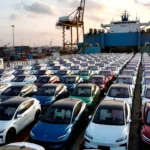
The rapid transition to zero-emission mobility has disrupted this long-standing manufacturing network. Chinese electric vehicle leaders, including BYD, Great Wall Motor, and Changan, poured over $1.44 billion into Thailand, constructing state-of-the-art electric car plants with a combined annual capacity of 400,000 to 600,000 vehicles. However, economic policy analysts point out that Chinese automakers frequently import core electric components—such as battery cells, power electronics, and intelligent software systems—directly from their domestic supply chains in China, leaving local Thai suppliers sidelined.
To protect domestic manufacturing jobs and elevate technical expertise, economic analysts recommend that Thailand build strategic partnerships with component manufacturers in South Korea and Japan. South Korean technology leaders excel in advanced battery chemistry, integrated power electric drive units, and automotive semiconductors, while Japanese suppliers possess world-class expertise in precision engineering and high-efficiency hybrid systems. Courting these tier-one suppliers would create a competitive, multi-source component ecosystem within Thai borders.
The policy recommendations arrive as Thailand works to escape a prolonged middle-income economic trap. National economic growth has slowed to between 1.6% and 2.0%, trailing regional peers due to high household debt, an aging population, and slowing industrial productivity. Development economists emphasize that transitioning from low-value vehicle assembly to high-value green manufacturing—including electric drivetrains, energy-efficient cooling units, and solar components—offers the most reliable pathway to boost national economic growth toward 5% annually.
Thailand’s government has already established ambitious national electrification targets under its comprehensive 30@30 policy framework. The national initiative mandates that zero-emission vehicles must represent at least 30% of total domestic automotive production by 2030. To support this target, Thai authorities offer generous consumer subsidies and import duty reductions. However, analysts caution that fiscal incentives should pivot toward rewarding deep domestic component localization and joint research ventures rather than simple vehicle assembly.
The Board of Investment of Thailand is adjusting its incentive packages to attract advanced foreign parts makers into the Eastern Economic Corridor. The government offers corporate income tax exemptions of up to 13 years, machinery import tariff waivers, and specialized land ownership privileges for international corporations establishing battery gigafactories, motor fabrication plants, and software engineering centers. Thai officials are actively pitching these investment packages to electronics conglomerates in Seoul and automotive component groups in Tokyo.
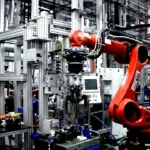
Workforce upskilling represents an urgent priority to support advanced manufacturing investments. While Thai factory technicians possess extensive experience assembling conventional internal combustion engines and transmissions, high-voltage battery architecture and autonomous software require specialized electrical engineering skill sets. Multilateral economic institutions are partnering with Thai vocational academies and universities to launch accelerated certification programs in power electronics, digital diagnostics, and automated robotics.
Geopolitical and trade considerations also favor supply chain diversification across Southeast Asia. As Western markets in the United States and the European Union enact higher tariffs on Chinese clean energy technologies, international automakers are searching for neutral manufacturing hubs with open trade access. By maintaining balanced industrial partnerships with Japanese, South Korean, European, and Chinese firms, Thailand can position itself as a trusted global export base capable of shipping electric cars to both Western and emerging markets.
As global automakers reshape their supply networks, Thailand stands at a decisive industrial crossroads. Attracting diverse tier-one component suppliers from South Korea and Japan will ensure that the country preserves its automotive manufacturing leadership in the zero-emission era. By anchoring advanced green technology within its borders, Thailand can transform its industrial base, generate high-paying technical jobs, and secure long-term economic prosperity for decades to come.