Key Points:
- Nvidia agreed to acquire open-source AI platform Hugging Face for $12.93 billion in its largest acquisition to date.
- The transaction includes $11.9 billion for Hugging Face stockholders and up to $1 billion in employee retention awards.
- Hugging Face hosts over 3 million AI models, 500,000 datasets, and serves more than 18 million developers worldwide.
- Nvidia committed to keeping the platform compute-agnostic, allowing developers to use any hardware, cloud, or AI framework.
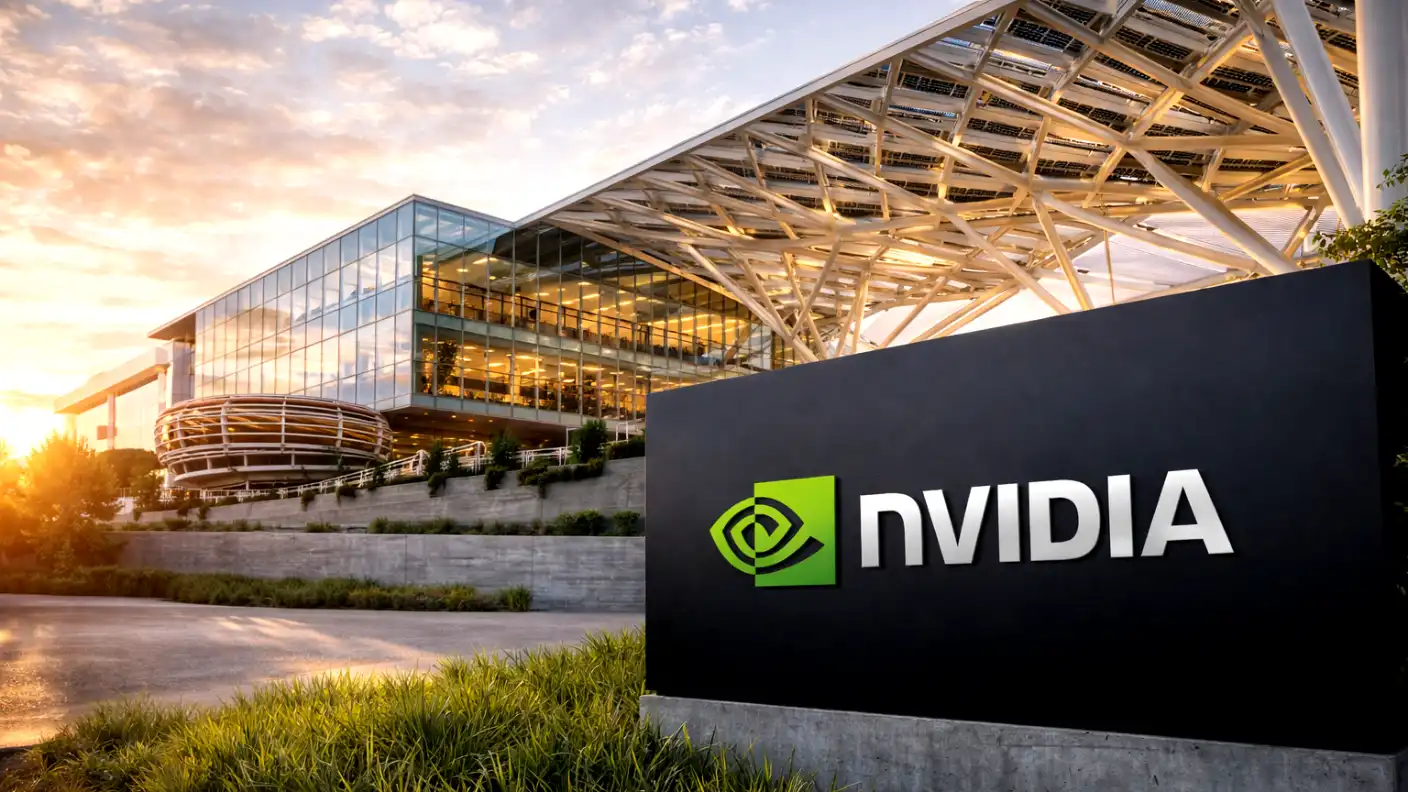
Semiconductor giant Nvidia entered into a definitive agreement to acquire open-source artificial intelligence developer platform Hugging Face for $12.93 billion. Under the terms of the acquisition, Nvidia will pay $11.9 billion to Hugging Face shareholders and provide up to $1 billion in equity-based employee retention packages. The mega-deal represents the largest corporate acquisition in Nvidia’s history, significantly expanding the $5.4 trillion chipmaker’s reach beyond physical hardware into the software layer of global artificial intelligence.
Founded in 2016 by Clément Delangue, Julien Chaumond, and Thomas Wolf, Hugging Face grew into the undisputed central hub for the open-source machine learning community. The platform hosts more than 3 million artificial intelligence models, 500,000 datasets, and 1 million software applications, serving over 18 million software developers, academic researchers, and enterprise engineers worldwide. More than 200,000 corporate enterprises utilize the repository daily to discover, benchmark, fine-tune, and deploy machine learning models.
The purchase price reflects a substantial premium over Hugging Face’s previous private valuation. The startup reached a $4.5 billion valuation in 2023 after raising $235 million in a Series D funding round backed by a syndicate of technology leaders, including Google, Amazon, Intel, and Salesforce. By paying nearly $13 billion, Nvidia is paying a high multiple to secure the digital town square where modern software developers collaborate on open-weight foundation models.
Strategic analysts view the multi-billion-dollar transaction as a masterstroke hedge against long-term threats to Nvidia’s core hardware monopoly. Hyperscale cloud customers—including Microsoft, Meta Platforms, Alphabet, and Amazon—are investing tens of billions of dollars to engineer proprietary in-house AI accelerator chips to reduce their dependence on expensive Nvidia GPUs. By taking ownership of the world’s most popular AI model repository, Nvidia embeds itself directly into developer workflows regardless of where customers rent server compute.
Owning Hugging Face provides Nvidia with unprecedented real-time visibility into the global artificial intelligence landscape. The platform gives Nvidia telemetry on which model architectures, training datasets, and fine-tuning libraries are gaining traction weeks before they reach mainstream enterprise adoption. This intelligence will allow Nvidia’s semiconductor architects and software engineers to optimize next-generation chip architectures and CUDA acceleration libraries for emerging open-source models well ahead of rival chip designers.
The transaction also aligns with Nvidia’s broader efforts to promote open-weight artificial intelligence models against closed, proprietary labs like OpenAI and Anthropic. Open models—such as DeepSeek, Mistral, Meta’s Llama series, and Nvidia’s proprietary Nemotron family—allow corporate enterprises and academic institutions to download model weights and run models on private infrastructure. Promoting open-weight models expands the universe of businesses buying on-premises AI servers and specialized enterprise hardware.
To ease antitrust concerns and preserve community goodwill, Nvidia Chief Executive Officer Jensen Huang pledged that Hugging Face will remain an independent, compute-agnostic platform. Developers will continue to build, upload, and deploy models using whatever cloud providers, inference services, and microprocessors they prefer, including competing hardware from Intel, Advanced Micro Devices, and custom cloud silicon. Nvidia affirmed that developers will not face mandatory requirements to run software on Nvidia graphics hardware.
The $12.93 billion acquisition eclipses Nvidia’s previous record purchase, its $6.9 billion takeover of high-speed networking supplier Mellanox in 2020. That earlier deal proved transformative, allowing Nvidia to integrate high-bandwidth InfiniBand networking directly with its GPU server racks to build modern AI supercomputing clusters. Industry observers expect the Hugging Face integration to deliver a comparable long-term boost to Nvidia’s enterprise software ecosystem and developer tools.
Regulatory authorities in the United States, the European Union, and the United Kingdom will scrutinize the transaction closely before its projected closing in the first half of 2027. Antitrust watchdogs have grown increasingly vigilant regarding Big Tech acquisitions that consolidate control over critical artificial intelligence infrastructure. However, legal experts note that because Hugging Face primarily functions as an open code repository rather than a direct commercial competitor to Nvidia hardware, the acquisition stands a strong chance of securing regulatory clearance.
As the artificial intelligence industry shifts from centralized frontier chatbots to millions of specialized open-weight models, Nvidia’s acquisition of Hugging Face cements its dominance over the entire technological stack. By uniting world-leading silicon hardware with the world’s largest developer community, Nvidia ensures that whatever models the world builds, the company will remain the foundational engine powering the future of global computing.