Key Points:
- Automakers asked Congress to pass legislation banning Chinese connected and autonomous vehicle hardware and software.
- The measure supports Commerce Department rules prohibiting Chinese software starting in model year 2027 and hardware in 2030.
- Industry leaders warn that smart vehicles collect sensitive geolocation, biometric, and video data that pose severe national security risks.
- The legislation aims to close trade loopholes that allow Chinese automakers to bypass 100% tariffs by routing production through Mexico.
Major global automakers and domestic manufacturing trade associations are urging the United States Congress to quickly pass federal legislation prohibiting Chinese-made connected vehicle software and hardware from operating on American roads. Automotive industry leaders sent formal joint letters to congressional leaders, demanding statutory codification of executive branch rules that restrict Chinese and Russian automotive technologies. Automakers argue that permanent federal legislation is essential to safeguard national security, protect consumer privacy, and shield the domestic automotive industry from state-subsidized foreign competition.
The legislative push builds upon regulatory actions from the United States Department of Commerce, which finalized rules to restrict vehicle connectivity systems linked to geopolitical adversaries. Under the administrative rules, a software ban will take effect starting with model year 2027 vehicles, while prohibitions on physical connectivity hardware and electronic control units will apply to model year 2030. Industry groups warn that without formal congressional action, executive agency regulations remain vulnerable to protracted court challenges and political rollbacks under future administrations.
Modern connected vehicles function as high-powered digital computers on wheels, packing dozens of microprocessors, digital cameras, ultrasonic radars, lidar arrays, and high-speed cellular modems. These smart systems continuously gather gigabytes of real-time data, including vehicle geolocation, biometric facial recognition, voice recordings, and detailed high-definition maps of American roadways. National security experts warn that foreign adversary governments could compel Chinese technology firms to weaponize these data streams for intelligence gathering or surveillance near military bases.
In addition to espionage risks, automotive engineers and cybersecurity officials highlight catastrophic cyber sabotage vulnerabilities. If malicious actors compromise over-the-air software update channels or cellular gateway modules, they could remotely manipulate steering controls, disable anti-lock braking systems, or trigger simultaneous engine shutdowns across thousands of moving vehicles. Automakers emphasize that removing foreign-controlled software from vehicle telematics represents a critical measure to protect national highway safety.
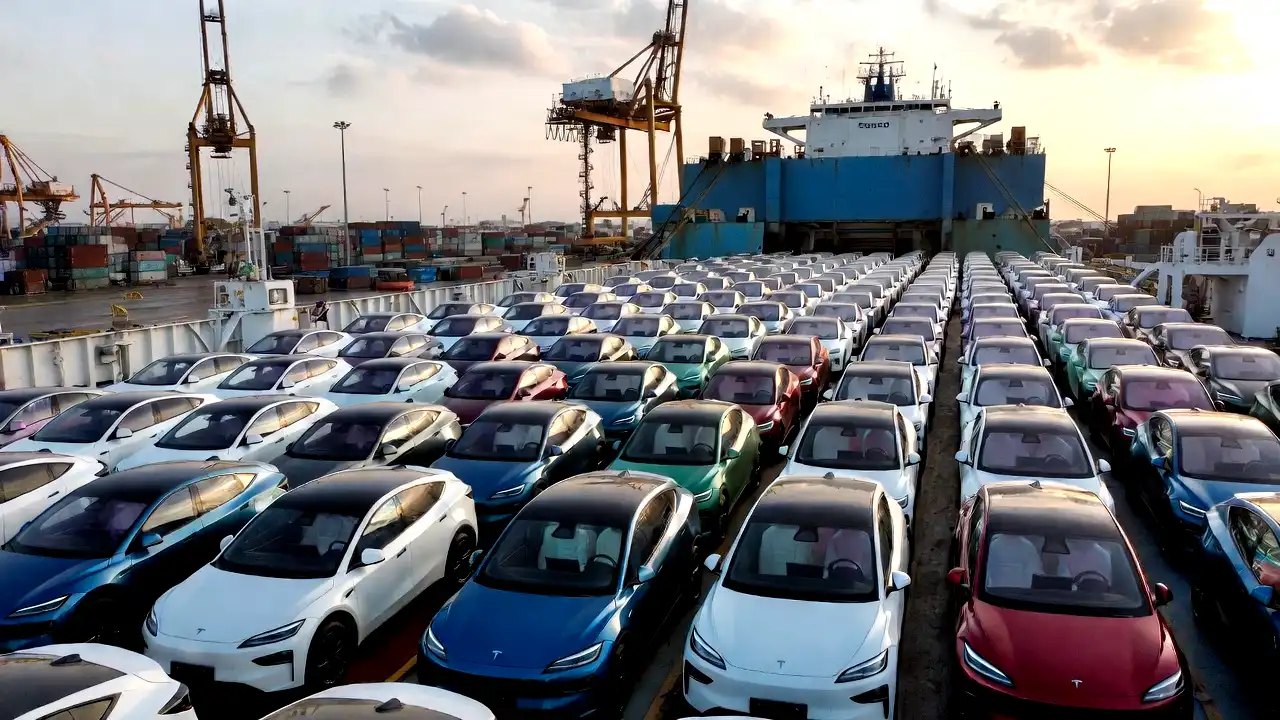
Automakers are also asking Congress to close trade loopholes that allow Chinese manufacturers to circumvent existing import duties. While the United States enforces a 100% tariff on electric vehicles manufactured directly in China, Chinese automotive brands are establishing large-scale assembly hubs and supply networks in Mexico. By manufacturing vehicles inside North America under regional trade agreements, Chinese firms aim to export low-cost electric and hybrid cars into the United States duty-free, threatening domestic factory investments.
Passing statutory legislation would provide long-term regulatory certainty for global automakers restructuring their multi-billion-dollar supply chains. Automotive engineering lifecycles typically span three to five years, requiring manufacturers to finalize component sourcing agreements years before commercial vehicle production begins. Clear, permanent federal statutes allow companies like General Motors, Ford, Toyota, and Stellantis to reconfigure electronic component procurement without fearing sudden shifts in trade policy.
The transition away from Chinese automotive electronics will require substantial capital investments to build alternative Western supply chains. Chinese suppliers currently dominate global manufacturing for automotive printed circuit boards, lidar sensors, and micro-inverter assemblies. Replacing these components with certified hardware manufactured in North America, Europe, Japan, and South Korea will increase near-term component costs by 5% to 15%, prompting automakers to seek federal grant incentives to accelerate domestic electronics production.
Bipartisan support for the automotive restrictions is gaining momentum on Capitol Hill. Lawmakers on both the House Energy and Commerce Committee and the Senate Commerce Committee have drafted legislative frameworks that would establish a permanent licensing regime for automotive communication hardware. The proposed bills would mandate thorough supply chain provenance audits, requiring automakers to certify that critical vehicle software contains no malicious code or foreign backdoors before vehicles enter American showrooms.
China’s Ministry of Commerce criticized the proposed restrictions, characterizing the regulatory push as discriminatory protectionism designed to suppress Chinese clean energy innovation. Chinese officials argue that modern automotive supply chains are deeply interconnected and that blanket bans will slow down the global adoption of smart driving technologies while increasing vehicle prices for American consumers. However, American policymakers maintain that national security considerations must take precedence over international trade efficiency.
As congressional leaders prepare to negotiate final legislative text ahead of upcoming legislative deadlines, the automotive industry’s call to action marks a decisive break from decades of global supply chain integration. By urging Congress to enact binding prohibitions on Chinese automotive technology, automakers and federal lawmakers are working to establish a secure, Western-aligned industrial framework that ensures the next generation of intelligent vehicles remains safe, sovereign, and technologically independent.