Key Points:
- A Chinese bipedal robot set a sprint record of 9.57 seconds for 100 meters, surpassing Usain Bolt’s human world record.
- Maker Mirror Me is transitioning the humanoid from athletic demonstrations into automotive factories and logistics warehouses.
- The company aims to lower mass production costs below 150,000 yuan ($20,000) by 2027 by leveraging local supply chains.
- The robot utilizes multimodal embodied AI models to navigate factory floors, lift 25-kilogram payloads, and inspect equipment.
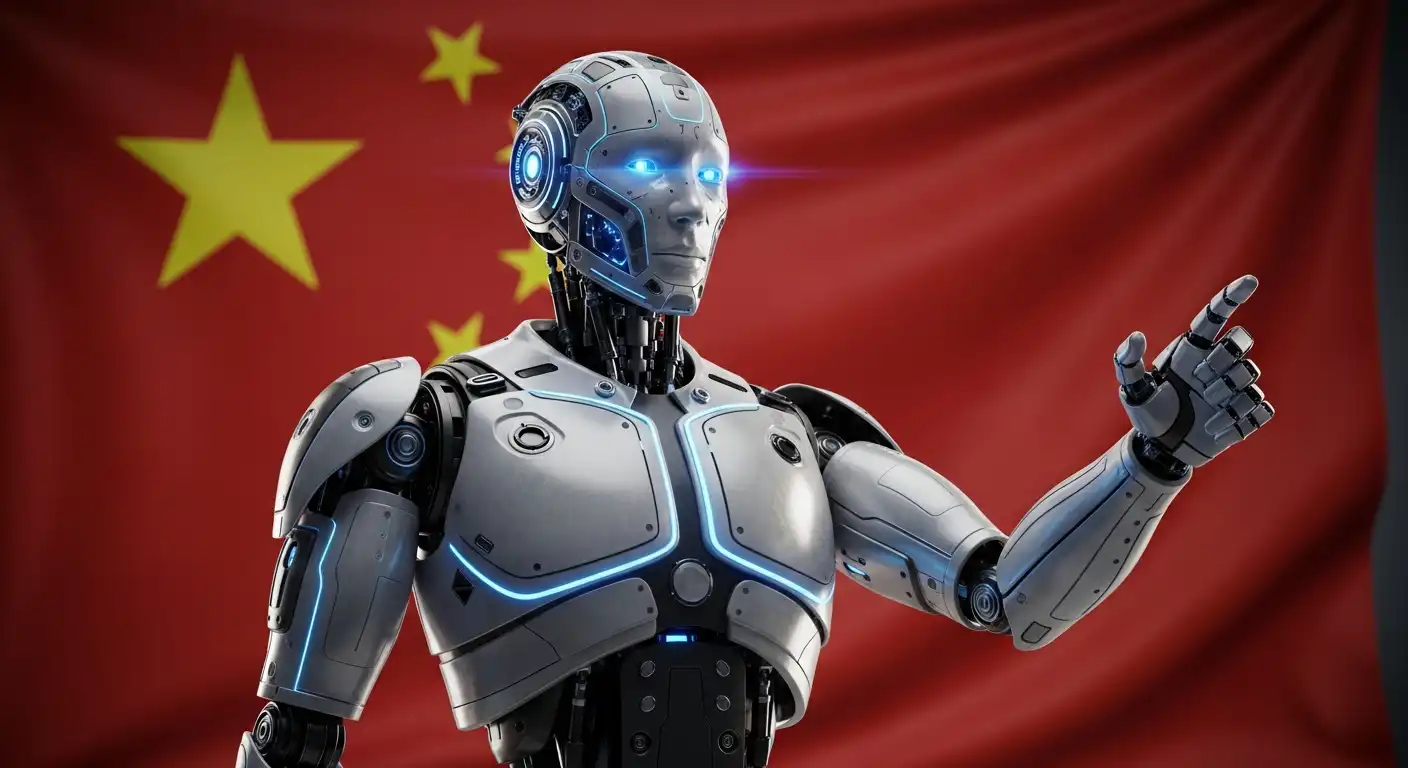
After shocking the global robotics industry by sprinting 100 meters in 9.57 seconds to outrun Usain Bolt’s human world record of 9.58 seconds, China’s flagship bipedal humanoid robot is pivoting from athletic demonstration tracks to real-world industrial workplaces. Chinese robotics startup Mirror Me is transitioning its high-speed humanoid platform into commercial pilot programs across automotive assembly plants, automated logistics hubs, and industrial maintenance facilities. The deployment marks an important shift for China’s humanoid robotics sector as developers move beyond viral demonstration videos to solve pressing labor shortages across global manufacturing lines.
Engineering teams achieved the record-breaking sprint speed by pairing high-torque electric joint actuators with end-to-end reinforcement learning software. The bipedal robot reached top running speeds of 37.8 kilometers per hour during testing on synthetic running tracks in Beijing, dynamically adjusting foot placement, ankle torque, and torso balance hundreds of times per second. However, corporate leadership emphasized that extreme athletic agility serves as a foundational proving ground for balance control, stability algorithms, and actuator durability rather than the ultimate commercial goal.
Mirror Me is now repurposing this advanced locomotion architecture to tackle demanding physical labor in industrial factories. The company has deployed early production units into commercial pilot programs across domestic automotive manufacturing lines, where the robots work alongside human technicians to lift heavy battery modules, inspect vehicle door gaps, and transport component trays weighing up to 25 kilograms. Unlike traditional fixed industrial robotic arms that operate inside safety cages, the bipedal humanoids navigate narrow factory aisles, climb industrial staircases, and step over floor obstacles with ease.
Logistics sorting and hazardous inspection environments represent immediate commercial opportunities for the humanoid platform. Equipped with high-definition optical cameras, 360-degree lidar sensors, and dexterous tactile gripper hands, the robots can identify package barcodes, sort parcels on conveyor belts, and handle delicate electronic parts without dropping them. In outdoor utility facilities, the machines conduct autonomous safety sweeps across high-voltage electrical substations and chemical processing plants, inspecting hot pipes and electrical transformers in conditions too dangerous for human workers.
To ensure rapid commercial adoption, Chinese robotics manufacturers are targeting aggressive hardware pricing. Mirror Me aims to lower the unit manufacturing cost of its commercial humanoid robot below 150,000 yuan (roughly $20,000) by 2027 through mass production. This pricing strategy undercuts projected price tags for Western competitors like Tesla’s Optimus and Boston Dynamics’ Atlas, which industry analysts expect to retail between $30,000 and $50,000 during their initial commercial rollout phases.
China’s deeply integrated domestic supply chain provides a decisive cost advantage for humanoid developers. Domestic component suppliers manufacture high-precision harmonic reducers, planetary gearboxes, brushless electric motors, and six-axis force sensors at costs 40% to 50% below international market rates. By sourcing mechanical components, structural carbon fiber, and lithium-ion battery packs directly from local industrial parks in Shenzhen, Suzhou, and Ningbo, Chinese robotics startups can scale factory production lines rapidly without facing cross-border supply chain delays.
Advanced embodied artificial intelligence models serve as the cognitive brain powering the robot’s physical actions. The system utilizes multimodal foundation models trained on millions of hours of synthetic physics simulations and human demonstration videos. These vision-language-action models allow the humanoid to understand natural spoken commands, translate visual camera feeds into spatial coordination plans, and manipulate unfamiliar tools without requiring programmers to write rigid, line-by-line robotic movement code for every individual task.
The push toward commercial humanoid deployment aligns directly with national industrial priorities. China’s Ministry of Industry and Information Technology established ambitious strategic goals to mass-produce humanoid robots by 2027 and integrate them deeply into key manufacturing sectors, including automotive assembly, consumer electronics, and heavy machinery. Government subsidies, provincial testing zones, and university research grants are accelerating real-world trials to offset a shrinking domestic manufacturing workforce caused by rapid demographic aging.
International competition in the humanoid robotics sector is intensifying across North America, Europe, and East Asia. American robotics startups Figure AI and Agility Robotics are conducting active warehouse pilots with major retail and logistics corporations, while Tesla continues testing hundreds of Optimus robots inside its electric vehicle factories. However, Chinese manufacturers are banking on faster development cycles, lower bill-of-materials costs, and massive domestic factory deployments to capture early market leadership in industrial robotics.
As Mirror Me ramps up commercial production and expands industrial pilot programs, the transition from record-breaking sprinter to factory floor worker demonstrates the rapid maturation of humanoid robotics. By combining athletic balance, embodied artificial intelligence, and low-cost mass manufacturing, China’s robotics champions are proving that bipedal machines are ready to step out of research laboratories and take on meaningful, productive labor in the global economy.