Key Points:
- Apple launched the iPhone Ultra, its first foldable smartphone, starting at $2,199 for the 256GB model.
- The device features a 5.5-inch cover screen that opens into a 7.8-inch crease-free OLED display powered by a 2nm A20 Pro chip.
- Apple CEO John Ternus led his first major hardware keynote, also introducing the iPhone 18 series, Apple Watch Series 12, and AirPods Pro 3.
- The foldable features a liquid-metal titanium hinge, a 4.5mm unfolded profile, Touch ID power button, and dual 48MP cameras.
Apple officially revealed its first foldable smartphone, the iPhone Ultra, taking the wraps off a $2,199 luxury device that represents a decade of industrial design and display engineering. The historic announcement took center stage at the Steve Jobs Theater in Cupertino, California, during the first major product keynote hosted by incoming Chief Executive Officer John Ternus following Tim Cook’s transition to Executive Chairman. Alongside the flagship foldable, Apple refreshed its entire consumer hardware ecosystem, unveiling the iPhone 18 lineup, Apple Watch Series 12, Apple Watch Ultra 4, and next-generation AirPods Pro 3.
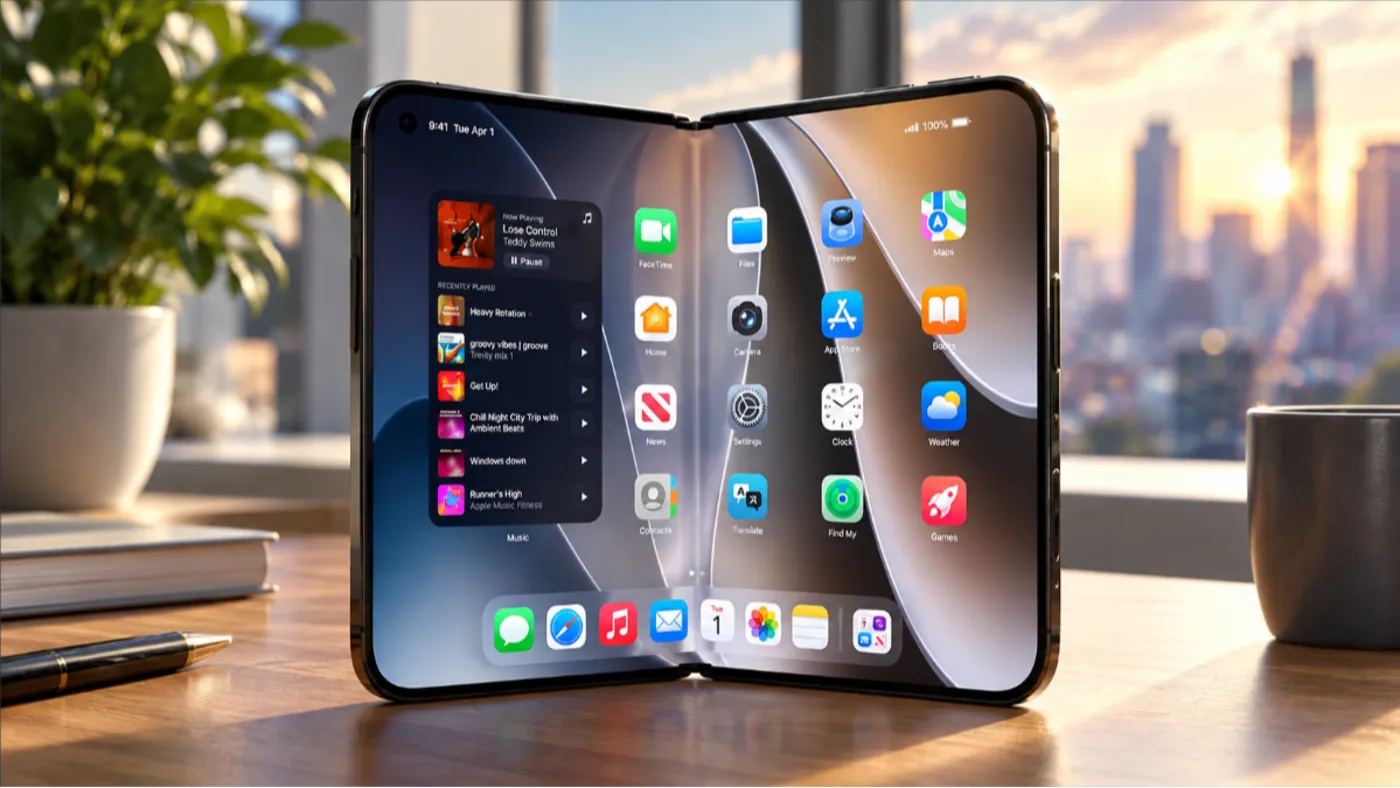
The iPhone Ultra introduces a passport-sized book-style form factor that transforms a standard pocket smartphone into an expansive tablet. The exterior features a 5.5-inch OLED cover display with an adaptive 120Hz ProMotion refresh rate for swift, one-handed notifications and messaging. Unfolding the device reveals a seamless 7.8-inch flexible OLED internal display with a 4:3 aspect ratio, providing mobile professionals with an iPad-sized workspace optimized for split-screen multitasking, document annotation, and multimedia playback.
To eliminate the visible display crease that has affected competing folding devices, Apple engineered a custom multi-gear hinge crafted from liquid-cast titanium and amorphous alloy metals. The mechanism folds the inner glass in a gentle teardrop shape within the chassis, creating a flat, virtually crease-free viewing surface while keeping the device remarkably thin at just 4.5 millimeters when open. The structural frame incorporates reinforced ceramic glass and delivers an official IP68 rating for water and dust resistance.
Under the hood, the iPhone Ultra runs on Apple’s custom A20 Pro processor, fabricated on Taiwan Semiconductor Manufacturing Company’s cutting-edge 2-nanometer manufacturing node. The silicon architecture combines high-performance CPU cores with a next-generation neural engine and 12 gigabytes of high-bandwidth unified RAM. To manage thermal performance during intense computing sessions, Apple integrated an edge-to-edge vapor chamber cooling plate directly behind the battery cells, ensuring sustained peak performance for on-device Apple Intelligence tasks.
The camera system combines high-resolution mobile imaging with hardware-level optimization for the folding chassis. The rear camera housing packs a 48-megapixel primary wide sensor with second-generation sensor-shift optical stabilization, accompanied by a 48-megapixel ultra-wide camera with macro photography capabilities. To maintain the device’s slim profile, Apple replaced the front Face ID sensor array with a high-speed capacitive Touch ID sensor embedded directly into the side power button, paired with a split dual-cell battery offering 4,883mAh of total capacity.
Pricing for the iPhone Ultra reflects its position as an ultra-premium luxury device. The base configuration with 256 gigabytes of onboard storage starts at $2,199, with 512-gigabyte and 1-terabyte models commanding higher price tiers. A top-tier collector’s edition offering 2 terabytes of storage and a custom titanium stylus pen reaches $2,899. Apple confirmed that customer pre-orders will open this Friday, with official retail deliveries and in-store availability beginning next week across major international markets.
Alongside the folding flagship, Apple unveiled its standard iPhone 18 and iPhone 18 Pro family, updating the world’s most popular smartphone line with faster processors, refined titanium enclosures, and upgraded optical zoom cameras. The Pro models feature a dedicated 48-megapixel periscope telephoto lens with 6x optical zoom and enhanced Camera Control buttons, while entry-level iPhone 18 models adopt the A20 Bionic processor and improved battery chemistry to deliver up to 30 hours of video playback.
Wearable technology received significant health tracking and sensor upgrades across the Apple Watch lineup. The Apple Watch Series 12 and rugged Apple Watch Ultra 4 introduce non-invasive blood pressure trend monitoring and advanced sleep apnea detection algorithms. Both smartwatches incorporate microLED display technology that boosts outdoor peak brightness to 3,500 nits, while expanding direct-to-satellite messaging capabilities for emergency off-grid communication.
Audio hardware advanced with the launch of AirPods Pro 3, which incorporate in-ear biometric sensors for real-time heart rate and body temperature tracking during fitness workouts. The wireless earbuds feature an upgraded H3 audio processor that delivers lossless wireless audio transmission and automated live speech translation powered by on-device Apple Intelligence models, allowing users to hold natural bilingual conversations in real time.
The launch event marks a successful public debut for John Ternus as he steps into the chief executive role to lead Apple’s next decade of hardware innovation. By delivering a crease-free foldable iPhone backed by custom 2-nanometer silicon, refreshed smartwatches, and intelligent audio wearables, Apple is establishing an ambitious product benchmark that reasserts its leadership across the global consumer technology landscape.