Key Points:
- Baidu formally applied to convert its Hong Kong secondary listing into a dual-primary listing, with completion expected within the year.
- The listing upgrade removes the restrictive “S” suffix, qualifying Baidu’s shares for the lucrative Stock Connect program.
- The structural transition will grant mainland Chinese investors direct access to buy Baidu shares through southbound funds.
- The capital restructuring aims to unlock a revaluation of Baidu’s full-stack AI portfolio, including its Kunlunxin chip unit.
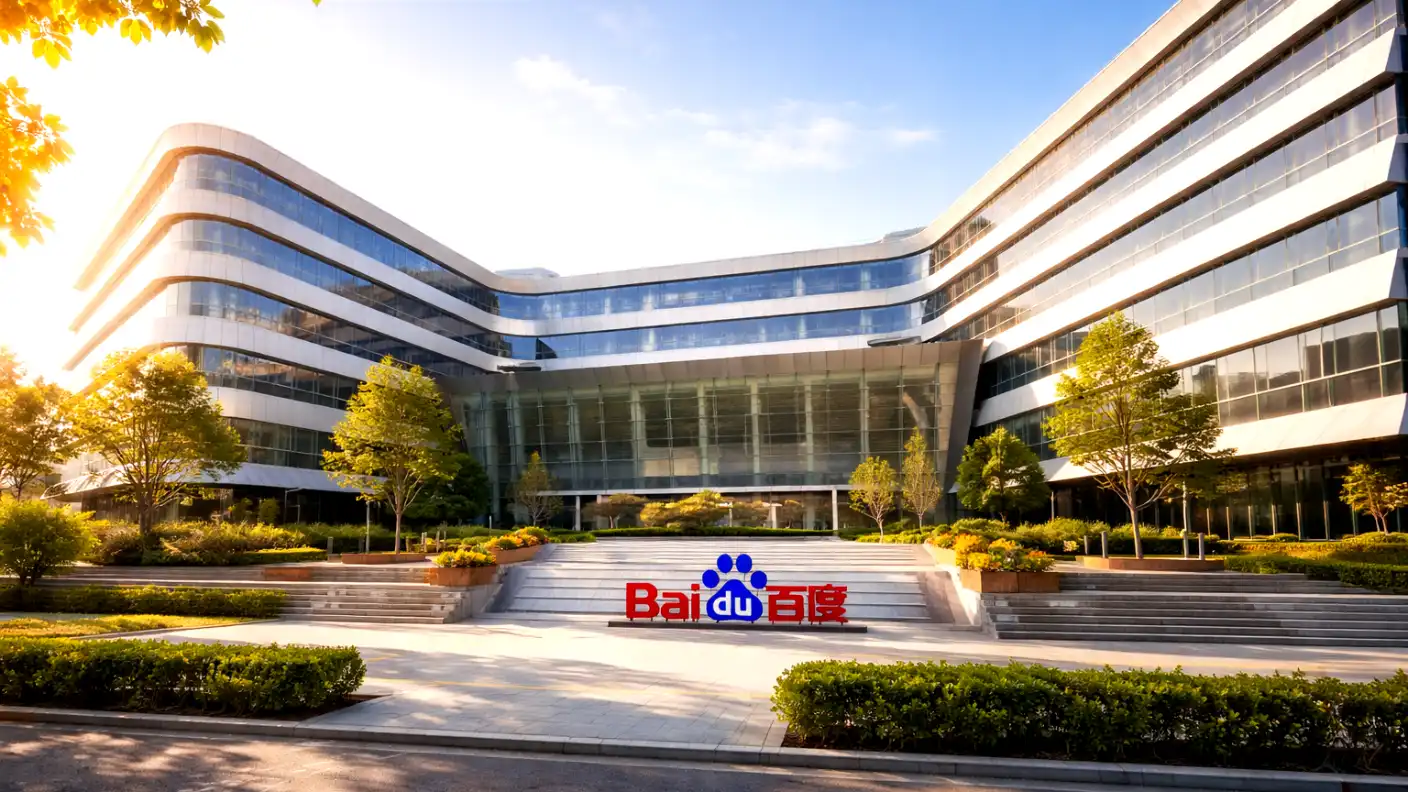
A major capital restructuring is taking shape at the pinnacle of China’s search and artificial intelligence sector, preparing the ground for an unprecedented influx of regional investment. Baidu has formally submitted its application to convert its secondary listing status on the Main Board of the Hong Kong Stock Exchange into a highly independent dual-primary listing. This strategic Baidu Dual Primary Listing initiative, which the exchange has already officially acknowledged, will position the technology giant to tap directly into massive, mainland Chinese capital flows, fundamentally reshaping its investor base and capital security.
The core regulatory benefit of this listing upgrade centers on the removal of a persistent, multi-year barrier to mainland Chinese capital. Under the current secondary listing framework, Baidu’s Hong Kong-traded shares carry a restrictive “S” suffix in their stock codes. This designation legally bars the company’s stock from participating in the Stock Connect program, the lucrative cross-border trading channel that links the Hong Kong Stock Exchange with major exchanges in Shanghai and Shenzhen. Upgrading to a dual-primary listing removes this restrictive suffix, opening the door for massive southbound capital to flow directly into the company’s shares.
A primary operational objective of this capital rebalancing is to trigger a major revaluation of the company’s highly advanced, full-stack artificial intelligence portfolio. The company has spent the past several years constructing a comprehensive “chip-cloud-model-agent” vertical ecosystem. This integrated value chain spans its proprietary Kunlunxin AI processors, its rapidly expanding AI Cloud infrastructure, its flagship ERNIE Bot foundation models, and its Apollo Go autonomous driving and robotaxi business. Tapping into mainland China’s deep pool of domestic retail and institutional investors will shine a bright spotlight on these high-margin software and hardware assets.
Stellar financial metrics back this massive technological value inside the company’s portfolio. In recent quarterly financial disclosures, AI-related businesses accounted for more than half (52%) of the company’s core revenues for the first time in history. The company’s intelligent cloud infrastructure business generated a massive 8.8 billion yuan, representing a spectacular 79% year-on-year surge, while revenues from its self-developed GPU cloud skyrocketed by 184% over the same period. These blooming figures prove that the firm’s transition from a legacy search engine to an advanced AI powerhouse has entered a highly profitable phase.
The capital restructuring in Hong Kong also coincides with major financial maneuvers inside its key hardware subsidiaries. During the first half of the year, the company’s specialized AI chip subsidiary, Kunlunxin, officially initiated its own dual-track “A+H” initial public offering path to list simultaneously on Shanghai’s STAR Market and the Hong Kong Stock Exchange. The chipmaker is aiming to raise $2 billion in fresh capital to fund the design and production of its next-generation processors, proving that the parent company’s broader dual-primary listing is part of a coordinated, group-wide capital-market offensive.
To facilitate the final transition and secure maximum operational flexibility, the company’s board has scheduled an extraordinary general meeting to seek critical shareholder approvals. Directors are proposing ordinary resolutions to grant the board an issuance mandate to allot and deal with additional Class A ordinary shares up to 20% of the total issued capital. Simultaneously, the board is seeking a share repurchase mandate to buy back up to 10% of outstanding shares. The company will also adopt its newly designed 2026 Share Incentive Plan to ensure full compliance with the Hong Kong Stock Exchange’s strict Chapter 17 rules regarding share-based compensation.
Beyond securing more liquidity, the dual-primary listing serves as an essential regulatory hedge against worsening geopolitical tensions between Washington and Beijing. For several years, U.S. lawmakers have tightened financial audit requirements and threatened to delist Chinese companies from U.S. exchanges under the Holding Foreign Companies Accountable Act. By establishing Hong Kong as an equal, independent primary listing venue alongside its Nasdaq Global Select Market listing, the technology giant successfully inoculates its capital structure against potential U.S. delisting threats, ensuring its shares remain fully interchangeable across both exchanges.
This strategic listing upgrade is part of a broader, highly successful trend of major Chinese technology giants returning to domestic and regional capital hubs. E-commerce leader Alibaba completed a similar dual-primary conversion, which immediately cleared the path for its inclusion in the Stock Connect program and triggered a massive wave of southbound buying. Gaming pioneer NetEase also executed a similar primary transition, after which its shares experienced a rapid 15% price recovery. By following this proven, multi-billion-dollar regulatory roadmap, the search giant is choosing a highly reliable path to stabilize its stock.
This major financial update has already delivered a timely, positive catalyst to the company’s shares on public exchanges. U.S.-listed depositary receipts of the tech giant rose as much as 3.2% in pre-market trading, leading a broader recovery across the Chinese technology sector after several weeks of stagnant trading volumes. While the stock has faced near-term pressure from macroeconomic headwinds and local advertising softness, the prospect of entering the Stock Connect program during the upcoming semi-annual adjustment window has successfully re-energized investor demand.
Ultimately, the formal submission of the dual-primary listing application marks a critical and highly strategic milestone for the future of the Chinese AI champion. By moving past its legacy secondary status to establish Hong Kong as an equal primary trading venue, the company has secured a powerful, long-term pipeline to tap into mainland China’s massive capital reserves. As the regulatory reviews proceed toward a scheduled completion before the end of the year, the successful integration of its shares into the Stock Connect program will determine whether the company can successfully unlock a multi-billion-dollar revaluation of its full-stack AI value chain.