

Key Points:
- Bain Capital fully exited its equity position in Japanese chipmaker Kioxia, realizing a record $17 billion profit.
- The private equity firm generated roughly 20 times its initial capital from its 2018 leveraged buyout of Toshiba Memory.
- Kioxia’s stock surged over 4,800% post-IPO, briefly surpassing Toyota as Japan’s most valuable public company.
- Kioxia shares jumped 11% following Bain’s exit, as investors welcomed the removal of a major stock supply overhang.
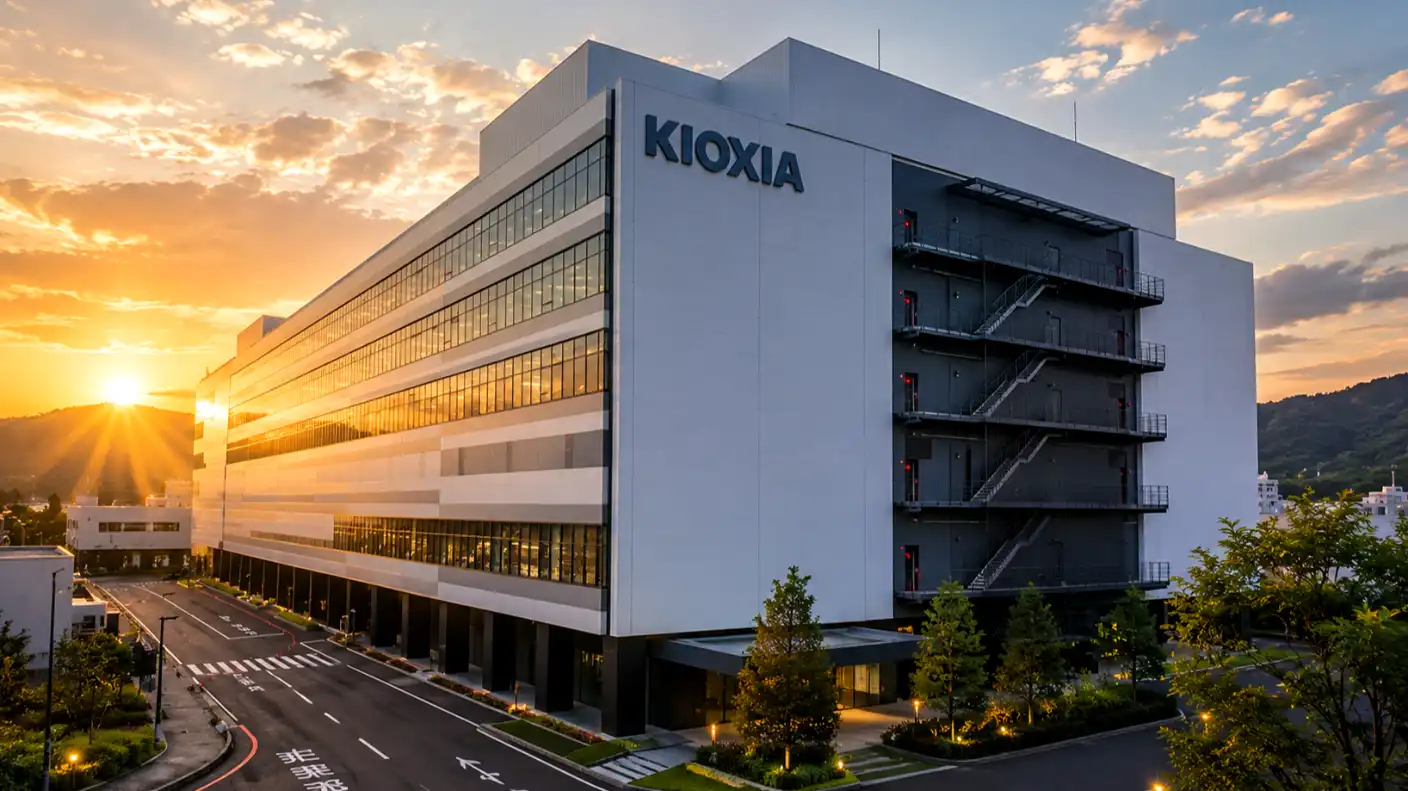
Private equity giant Bain Capital completed the full sale of its equity stake in Japanese memory chipmaker Kioxia Holdings Corp., generating a record-breaking $17 billion (2.6 trillion yen) in total profit. The monumental trade represents one of the most profitable technology buyouts in private equity history, delivering roughly 20 times Bain’s initial invested capital. Confirmed by Bain Managing Partner David Gross, the complete exit closes an eight-year investment chapter that transformed a distressed Toshiba memory unit into a $345 billion semiconductor powerhouse.
Bain Capital’s historic windfall originates from a high-stakes rescue deal executed in 2018. Following a massive accounting scandal and multi-billion-dollar losses in its nuclear power division, Japanese conglomerate Toshiba Corporation put its prized flash memory unit up for auction. Bain led an international consortium—which included South Korean chipmaker SK Hynix, Apple, and Dell—to acquire Toshiba Memory for $18 billion. The acquisition marked Asia’s largest leveraged buyout at the time, with Bain taking a controlling 51.3% equity stake in the restructured business, later renamed Kioxia Holdings.
The path to profitability proved far from smooth for Bain and Kioxia leadership. For several years following the 2018 buyout, Kioxia struggled against a severe cyclical downturn in global NAND flash memory pricing. A proposed multi-billion-dollar merger with American storage provider Western Digital collapsed amid regulatory opposition and friction between consortium partners. Despite persistent market skepticism and delayed public listing plans, Bain maintained its capital commitment, keeping Kioxia’s core research operations and manufacturing plants in Japan fully operational.
The arrival of the global artificial intelligence boom completely rewrote Kioxia’s financial outlook. Training and running multi-trillion-parameter AI models requires massive, ultra-fast solid-state storage arrays alongside high-bandwidth memory. As cloud hyperscalers built out high-density AI data centers, global demand for Kioxia’s enterprise NAND flash memory skyrocketed. Japan’s premier memory producer suddenly found itself operating at the center of an unprecedented hardware spending cycle, turning high-capacity enterprise solid-state drives into a major profit engine.
Following its operational turnaround, Kioxia completed a successful initial public offering on the Tokyo Stock Exchange in late 2024. Driven by insatiable AI storage demand, Kioxia’s stock price surged over 4,800% from its debut price. By mid-2026, Kioxia’s market capitalization reached an extraordinary peak of 56 trillion yen ($345 billion). The astronomical stock rally briefly elevated Kioxia past automotive giant Toyota Motor to become the most valuable publicly traded corporation in Japan, creating an ideal market environment for Bain’s exit.
Bain Capital executed a disciplined, multi-stage exit strategy to monetize its holding without triggering market panic. After holding 51.3% of Kioxia at listing, Bain initiated a series of secondary share offerings and international block trades. The private equity firm sold over $2 billion in shares in late 2025, followed by another $3.5 billion sale in early 2026. By mid-2026, Bain reduced its position to 14% before offloading its final remaining shares to overseas institutional buyers in a series of oversubscribed block trades.
Financial markets reacted with immediate optimism to Bain’s full divestment announcement. Shares of Kioxia Holdings jumped nearly 11% on the Tokyo Stock Exchange as investors celebrated the elimination of a massive structural overhang. For months, retail and institutional traders hesitated to buy Kioxia shares out of fear that Bain’s ongoing block sales would cap stock price gains. With Bain completely cashed out, market participants shifted focus back to Kioxia’s strong operational fundamentals and record quarterly NAND shipments.
While Bain Capital fully exited its direct equity holding, key consortium members maintain strategic ties with the Japanese chipmaker. A specialized investment vehicle established by Bain during the 2018 buyout continues to hold a 14% indirect stake in Kioxia on behalf of SK Hynix. As a dominant global producer of High Bandwidth Memory, SK Hynix maintains its strategic holding to foster joint technology collaboration and secure stable NAND flash supply streams for hybrid AI memory architectures.
Bain Capital’s $17 billion profit from Kioxia establishes a landmark benchmark for global private equity firms investing in complex technology carve-outs. By taking control of a troubled industrial asset, funding long-term technical innovation through deep market cycles, and capitalizing on the artificial intelligence boom, Bain achieved one of the greatest venture returns in corporate history. The successful trade proves that long-term patient capital in core semiconductor manufacturing can yield unprecedented financial rewards when aligned with global technology shifts.






