Key Points:
- Bank of America is discussing adding collateral and raising yields to 11% to refinance $750 million in Cogent debt.
- The internet provider’s 7% unsecured notes mature in June 2027 and become current liabilities in the second quarter.
- S&P Global Ratings downgraded Cogent to ‘B-‘ from ‘B’, citing elevated financial leverage of 7.7 times earnings.
- Cogent raised $225 million in cash by selling 10 data centers to I Squared Capital to improve liquidity.
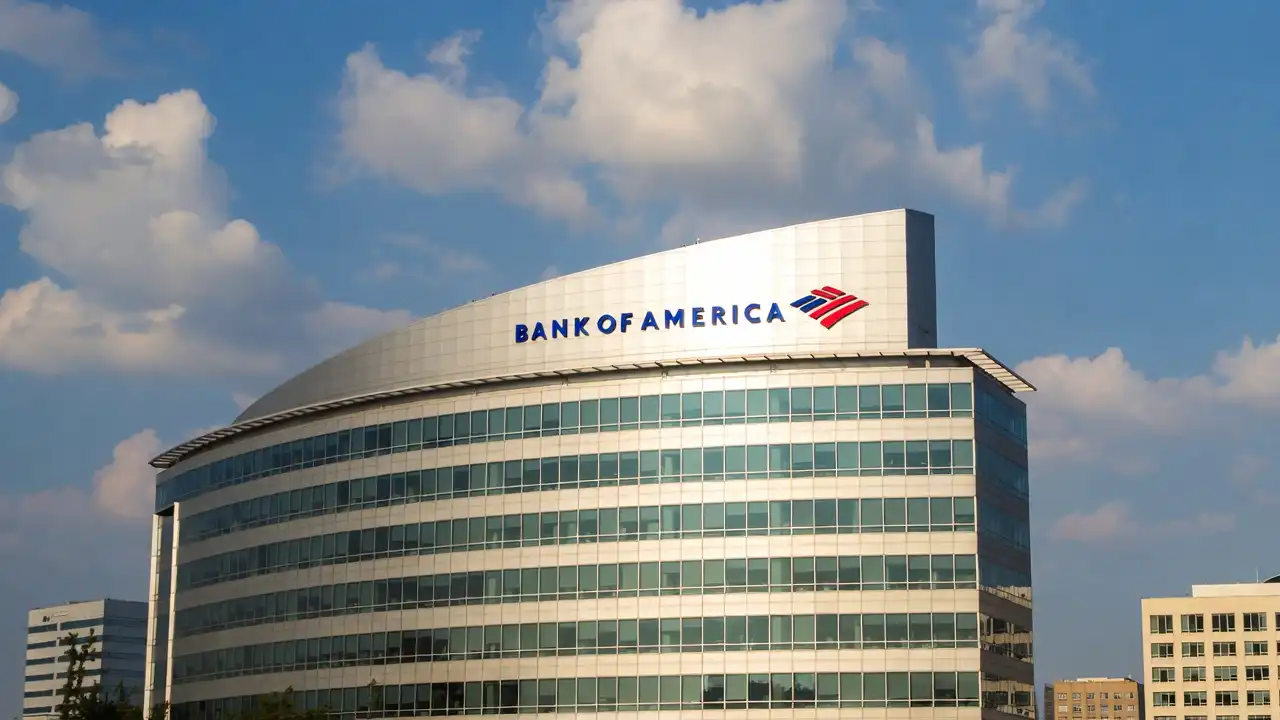
Bank of America is restructuring a debt refinancing package for internet service provider Cogent Communications Holdings, offering investors extra collateral as borrowing costs climb higher. The investment bank is working to refinance $750 million in senior unsecured notes that mature in June 2027. Negotiations with institutional credit investors have grown challenging, prompting underwriters to consider enhanced collateral pledges and higher coupon rates to secure sufficient buyer demand.
Initial marketing discussions for the new debt offering targeted a yield of roughly 9.5% for a proposed $750 million first-lien bond issue. However, persistent market hesitation and investor demands for stronger downside protection pushed prospective interest rate yields upward to approximately 11%. To reassure skeptical bondholders, Bank of America is exploring a specialized structure that pledges additional corporate assets as collateral to back the new credit facility.
The refinancing push arrives at a sensitive operational juncture for the Washington, D.C.-based internet backbone provider. The $750 million in 7% unsecured notes became current liabilities on Cogent’s balance sheet during the second quarter, triggering heightened credit scrutiny across Wall Street debt markets. Credit rating agency S&P Global Ratings downgraded Cogent’s corporate issuer rating from ‘B’ to ‘B-‘, citing adjusted financial leverage of 7.7 times earnings for the twelve months ending in June.
Credit rating analysts warned that failing to finalize the debt refinancing in the near term could substantially increase refinancing risks for the telecommunications firm. Cogent carries approximately $3.1 billion in total corporate liabilities, with gross debt totaling $2.3 billion and net debt standing at $1.8 billion. While the company holds $151.5 million in receivables due from T-Mobile, credit investors want clear evidence that the internet provider can generate sustainable free operating cash flow before buying long-term paper.
Cogent has navigated prolonged revenue headwinds following its acquisition of Sprint’s legacy wireline telecommunications business. The acquired assets dragged on reported corporate top-line growth for 12 consecutive quarters, as legacy corporate contracts rolled off faster than new services could replace them. However, company executives emphasized that the revenue drag is finally stabilizing, with legacy Sprint contracts now accounting for only 15% of combined company turnover after realizing $240 million in annualized cost savings.
To raise immediate cash and reduce borrowing pressure, Cogent closed a major infrastructure transaction earlier this summer. The company sold 10 commercial data center facilities across major metropolitan hubs—including Atlanta, Chicago, Houston, and Phoenix—to private equity sponsor I Squared Capital for $225 million in cash. The asset sale provided liquid reserves that gave management breathing room while working through complex capital market negotiations.
The company is attempting to pivot its commercial growth strategy toward high-capacity optical wavelength connectivity services. Cogent generated $14.8 million in quarterly wavelength revenue during the second quarter, representing a 68% year-on-year increase. The company has expanded wavelength availability across 608 of its 1,137 wave-enabled data center locations, serving 548 unique enterprise clients who require dedicated fiber links to connect regional data centers and corporate office campuses.
However, industry-wide hardware supply bottlenecks have slowed the installation pace for high-speed optical connections. Equipment manufacturers, including Cisco Systems, Ciena, and Arista Networks, have raised equipment prices multiple times over the past year, while hardware delivery lead times for specialized optical transceivers have stretched from a standard 90 days to between 18 and 24 months. These hardware delays have slowed Cogent’s ability to convert its growing customer backlog into recognized billing revenue.
Rising interest rates across broader debt capital markets have complicated refinancing efforts for lower-rated corporate borrowers. With the United States Federal Reserve maintaining restrictive monetary policy and sovereign Treasury yields hovering near multi-decade highs, high-yield bond investors are demanding strict protective covenants and double-digit coupon yields on leveraged debt issuances. Underwriters must continually adjust deal structures to match shifting credit market risk appetites.
As Bank of America continues private discussions with institutional credit managers, the resolution of Cogent’s $750 million bond offering will set a critical benchmark for the telecommunications sector. If underwriters successfully place the restructured secured facility, Cogent will eliminate its most pressing near-term debt maturity and secure the balance-sheet runway needed to expand its optical fiber network. Navigating these credit negotiations will determine whether the internet carrier can transition from debt restructuring toward sustained long-term profitability.