Key Points:
- Three Chinese ministries issued a 20-article directive ordering domestic automakers to stop aggressive price wars in export markets.
- Automakers must base export pricing on real production costs and local market conditions rather than predatory discounting.
- Chinese passenger vehicle exports jumped 72.5% to 5.3 million units in seven months as brands offloaded domestic surplus inventory.
- New rules require carmakers to build local spare-parts warehouses, improve repair services, and comply with overseas data laws.
Chinese regulatory authorities issued strict new guidelines warning domestic automakers against exporting destructive price wars and misleading advertising into international markets. Three powerful government bodies—the Ministry of Commerce, the Ministry of Industry and Information Technology, and the State Administration for Market Regulation—jointly published a 20-article compliance directive to rein in aggressive overseas discounting. The regulatory intervention signals that Beijing will no longer tolerate automakers using predatory price-cutting to conquer export markets like Australia, Europe, Southeast Asia, and Latin America.
Under the newly enforced code of conduct, Chinese automakers must establish export pricing strategies based on actual production costs and local market conditions rather than relying on state-subsidized price slashes. The directive explicitly prohibits manufacturers from disrupting local sales channels, engaging in erratic price changes, or dumping vehicles that do not match the climate and infrastructure of destination countries. Regulators also ordered brands to stop deceptive promotional campaigns that exaggerate vehicle performance, battery driving ranges, or autonomous capabilities.
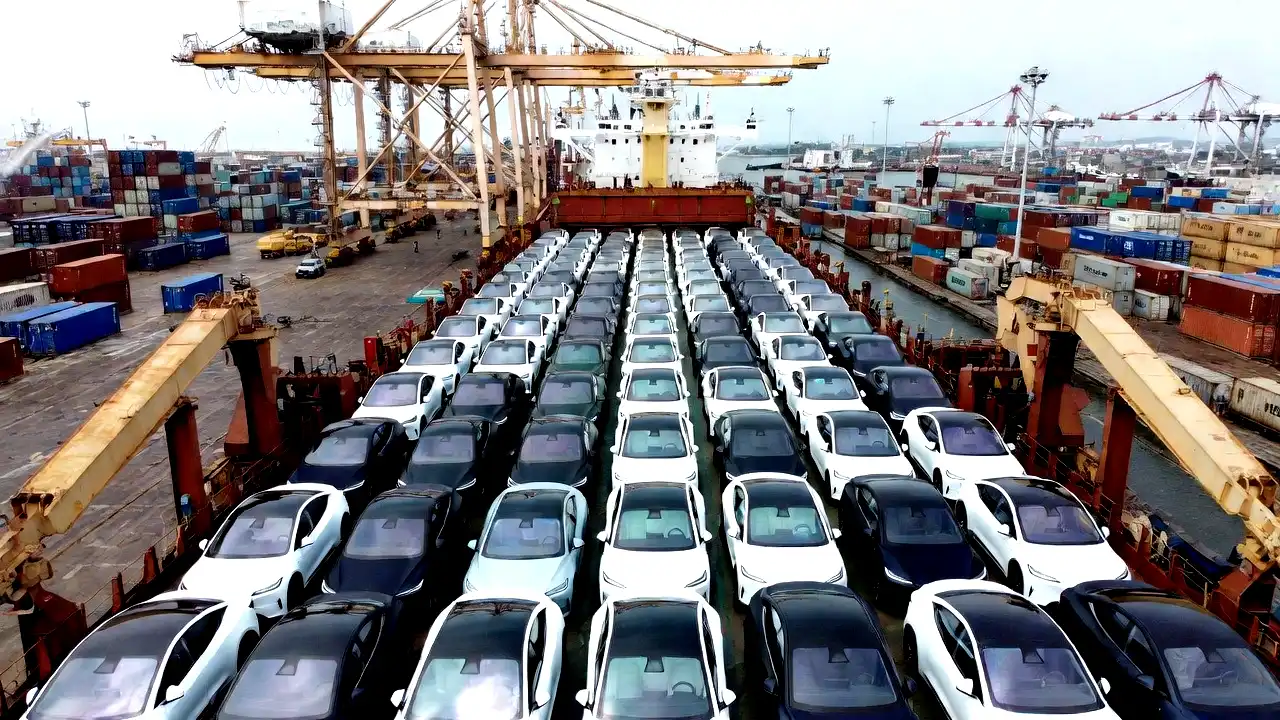
The regulatory clampdown arrives as Chinese automakers flood global markets to offload massive factory inventory that they cannot sell at home. Intense price wars inside China have eroded corporate profit margins, leaving only a small handful of the country’s 100-plus automotive brands operating with net profits. To offset domestic losses, automakers launched massive export campaigns, shipping roughly 5.3 million passenger vehicles overseas in the first seven months of the year—a staggering 72.5% increase compared to the same period in the prior year.
However, the rapid influx of heavily discounted Chinese electric and hybrid cars has sparked intense economic and political friction with foreign governments. Regulators in Beijing fear that unchecked price undercutting will trigger sweeping anti-dumping investigations, punitive import tariffs, and retaliatory trade barriers across major Western and allied markets. By ordering domestic brands to price vehicles fairly and follow local consumer protection laws, Chinese authorities aim to prevent further geopolitical trade clashes.
In addition to pricing controls, the government guidelines mandate that automakers build comprehensive after-sales support networks in overseas territories. Foreign buyers and automotive consumer advocacy groups have voiced growing frustration over lengthy delays in sourcing replacement spare parts, limited authorized repair shops, and poor warranty service for imported Chinese models. The new rules require carmakers to establish dedicated regional parts warehouses, train certified service technicians, and guarantee minimum warranty standards before entering foreign markets.
The directive also addresses mounting international concerns surrounding connected vehicle cybersecurity and user privacy. Modern smart electric vehicles feature dozens of high-definition cameras, ultrasonic radars, microphones, and cellular tracking modules that gather gigabytes of real-time data. The regulatory notice directs Chinese automakers to ensure that all customer telemetry, biometric data, and geolocation mapping comply strictly with the local data protection laws of host countries, addressing national security anxieties that recently prompted legislative bans in North America.
The overseas export push reflects chronic overcapacity across China’s domestic manufacturing base. Industry research data shows that China’s total automotive production capacity exceeds 55 million vehicles annually, but factory capacity utilization fell to just 49.5% over the past year. With more than half of domestic assembly lines sitting idle and domestic sales growth cooling following the phaseout of government consumer subsidies, automakers have relied on foreign exports as an emergency relief valve to keep factory workers employed.
The relentless price war has also destabilized domestic automotive component supply chains. To fund deep retail discounts, major automakers delayed payments to small and medium-sized parts suppliers, stretching payment cycles beyond several months. In response, Chinese regulators launched a parallel enforcement action capping automaker payment terms to parts suppliers at 60 days. The rule bans carmakers from forcing suppliers to accept commercial paper drafts, ensuring that component fabricators receive timely cash payments to maintain factory operations.
Major Chinese automotive exporters, including BYD, Chery, Geely, Great Wall Motor, and SAIC’s MG brand, have set ambitious combined targets to sell over 7 million vehicles overseas this year. Corporate executives are beginning to realize that establishing durable international brands requires investing in localized vehicle engineering, safety certifications, and customer trust rather than competing purely on rock-bottom sticker prices. Manufacturers are now designing specialized right-hand-drive vehicles for Australia and robust suspension packages for Latin American roads.
As global governments increase trade scrutiny on clean energy technology, Beijing’s intervention marks a decisive shift in its automotive industrial policy. Transitioning from rapid volume dumping to disciplined, high-quality global expansion will test whether Chinese automakers can build sustainable international brands. By enforcing cost-based pricing, reliable warranty support, and strict data compliance, China is pushing its automotive champions to compete on genuine engineering quality rather than destructive price wars.