Key Points:
- Boeing reaffirmed that the next-generation Air Force One program remains on track for delivery in 2028.
- Reaching the target will require the aerospace giant to absorb additional cost overruns, pushing total program costs over $5 billion.
- Under the fixed-price contract signed in 2018, Boeing has already recorded $2.8 billion in cumulative pre-tax charges.
- Flight testing for the first modified VC-25B aircraft is expected to begin next year, following years of wiring and structural delays.
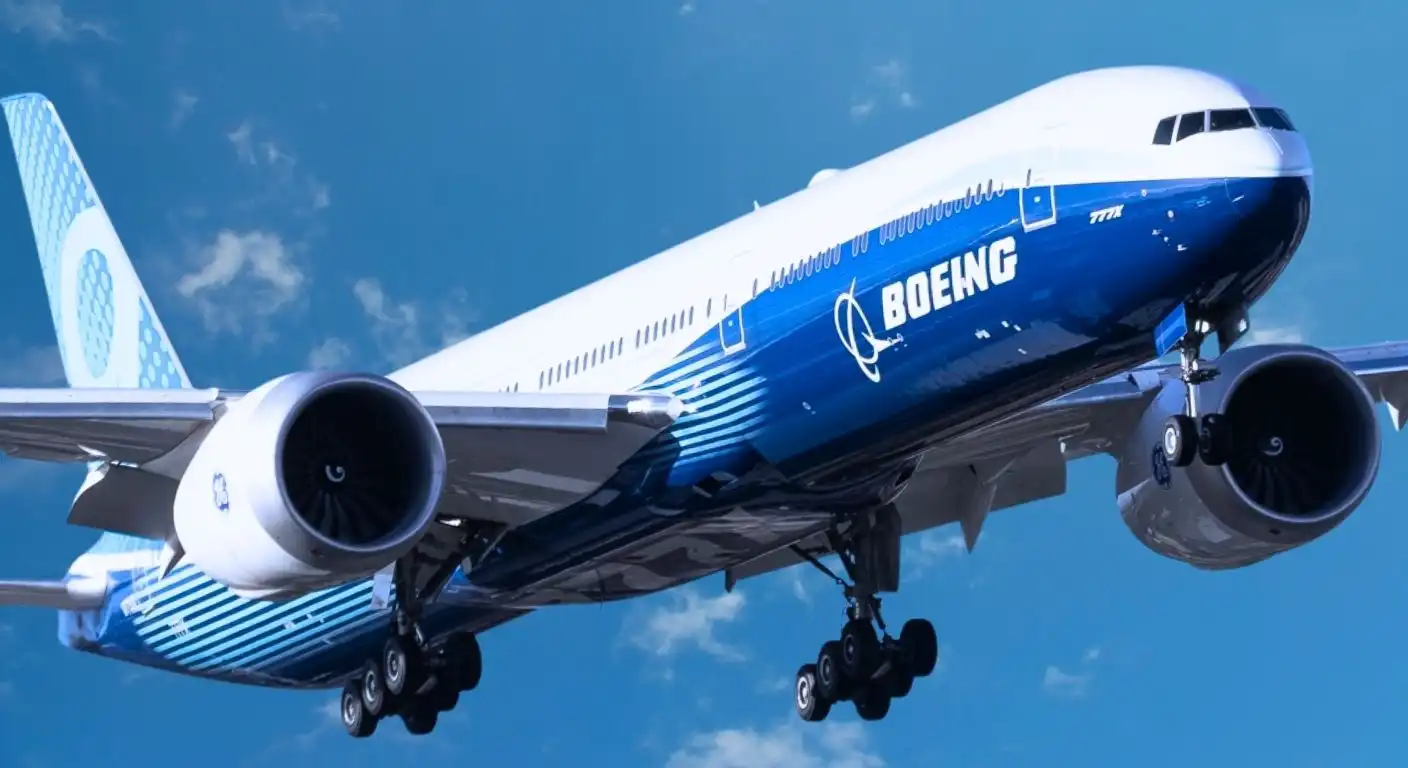
The next-generation presidential aircraft program remains a highly scrutinized and financially painful endeavor as the primary contractor races to meet its revised delivery schedule. Boeing has reaffirmed its Boeing Air Force One 2028 Target to deliver two newly modified jumbo jets to the United States government. However, meeting this timeline will require the aerospace giant to absorb even greater cost overruns on a project that is already running four years behind its original schedule and billions of dollars over its initial budget.
The severe financial strain stems directly from the structural terms of the development contract. Under a fixed-price agreement negotiated in 2018, the manufacturer accepted a rigid $3.9 billion ceiling for the entire replacement effort, committing to cover any future cost overruns with its own internal capital. Because of this high-stakes arrangement, the company has already recorded approximately $2.8 billion in cumulative pre-tax charges on its own balance sheet. With final assembly and certification phases introducing new technical complexities, the defense division expects to book more write-downs in its upcoming second-quarter financial report.
The massive cost overruns are a direct result of the extreme technical complexity involved in the project, known formally as the VC-25B program. The mission requires engineers to strip down two commercial Boeing 747-8 airframes and completely rebuild them into flying military command posts. To protect the president and top national security staff during a crisis, these aircraft must withstand electromagnetic pulses from nuclear explosions, incorporate advanced defensive avionics to evade surface-to-air missiles, and provide uninterrupted, highly secure global communications.
The U.S. government originally pitched the decision to utilize pre-built commercial airframes rather than ordering custom-designed aircraft from scratch as a clever, cost-saving shortcut for the American taxpayer. The two jumbo jets selected for the conversion rolled out of the company’s factory in Everett, Washington, configured as standard passenger airliners for Transaero, a major Russian carrier. However, before Transaero could take delivery, the airline filed for bankruptcy in 2015. The manufacturer spent two years storing the pristine, unused aircraft in the Mojave Desert before the U.S. government purchased them at a steep discount, only to discover that modifying existing commercial structures is far more complex than building them anew.
Among the specific technical challenges that have delayed the program, the aircraft’s intricate wiring network stands out as the most consequential bottleneck. The VC-25B requires more than 200 miles (320 km) of custom-designed, military-grade wiring routed throughout its massive airframe. Every single wire must meet strict regulatory and defense standards to ensure complete redundancy and prevent interference between sensitive communications and defense avionics. The complex installation process, combined with severe post-pandemic labor shortages at key suppliers, has slowed the final assembly line to a crawl.
Despite these persistent setbacks, the defense division has maintained that the program has entered its final, critical execution phase. Steve Parker, Chief Executive Officer of Boeing Defense, Space & Security, confirmed that the company is marshalling its engineering resources and technical expertise to complete the final structural, wiring, and software integrations. The first modified aircraft is expected to begin active flight testing next year, marking a massive milestone for the program as it transitions from the manufacturing hangar to the skies.
While the contractor must absorb the vast majority of the overruns under the fixed-price cap, the U.S. government’s total expenditure on the program has also crept upward. Following several necessary modification agreements, total Air Force spending on the project has risen to approximately $4.3 billion. The most recent adjustment included a $15.5 million contract modification awarded to the company to integrate advanced, highly classified communications equipment onto the planes, proving that even a rigid, fixed-price contract must adapt to evolving national security requirements.
Because the 2028 delivery date represents a four-year delay from the original 2024 target, the government had to secure an interim solution to maintain presidential flight capacity. In May 2025, the United States accepted a luxury Boeing 747-8 from Qatar for use as a temporary presidential transport. Refurbished by defense contractor L3Harris, this “bridge” aircraft features a bold red, white, dark blue, and gold livery selected by President Donald Trump. While this interim jet is currently in active service, the original presidential fleet—which first entered service in 1990—must continue to fly for another two years.
A series of security alarms during an international diplomatic trip recently highlighted the reliance on these interim and aging aircraft. While traveling home from a summit in Turkey, security and communication concerns prompted the president to forgo flying on the newly acquired Qatari bridge jet, opting instead to return to Washington aboard one of the older, 30-year-old Air Force One planes. This incident underscored the urgent necessity of completing the permanent VC-25B replacements, as the legacy fleet’s aging analog systems become increasingly difficult and expensive to maintain.
Ultimately, the company’s commitment to the 2028 delivery target highlights the high stakes of global defense contracting in the modern era. By absorbing billions of dollars in losses under a rigid, fixed-price agreement to secure the delivery of the world’s most recognizable aircraft, the aerospace giant is prioritizing national security and political alignment over short-term profitability. As the company prepares to publish its second-quarter financial results and begins active flight testing next year, the successful completion of these flying command centers will determine whether the company can rebuild its reputation as a reliable partner for the nation’s defense establishment.