Key Points:
- Chinese neurotechnology unicorn BrainCo raised 2 billion yuan ($280 million) in a funding round co-led by IDG Capital and Walden International.
- The capital injection brings BrainCo’s total funding to $500 million, matching Elon Musk’s Neuralink as the world’s most heavily funded BCI companies.
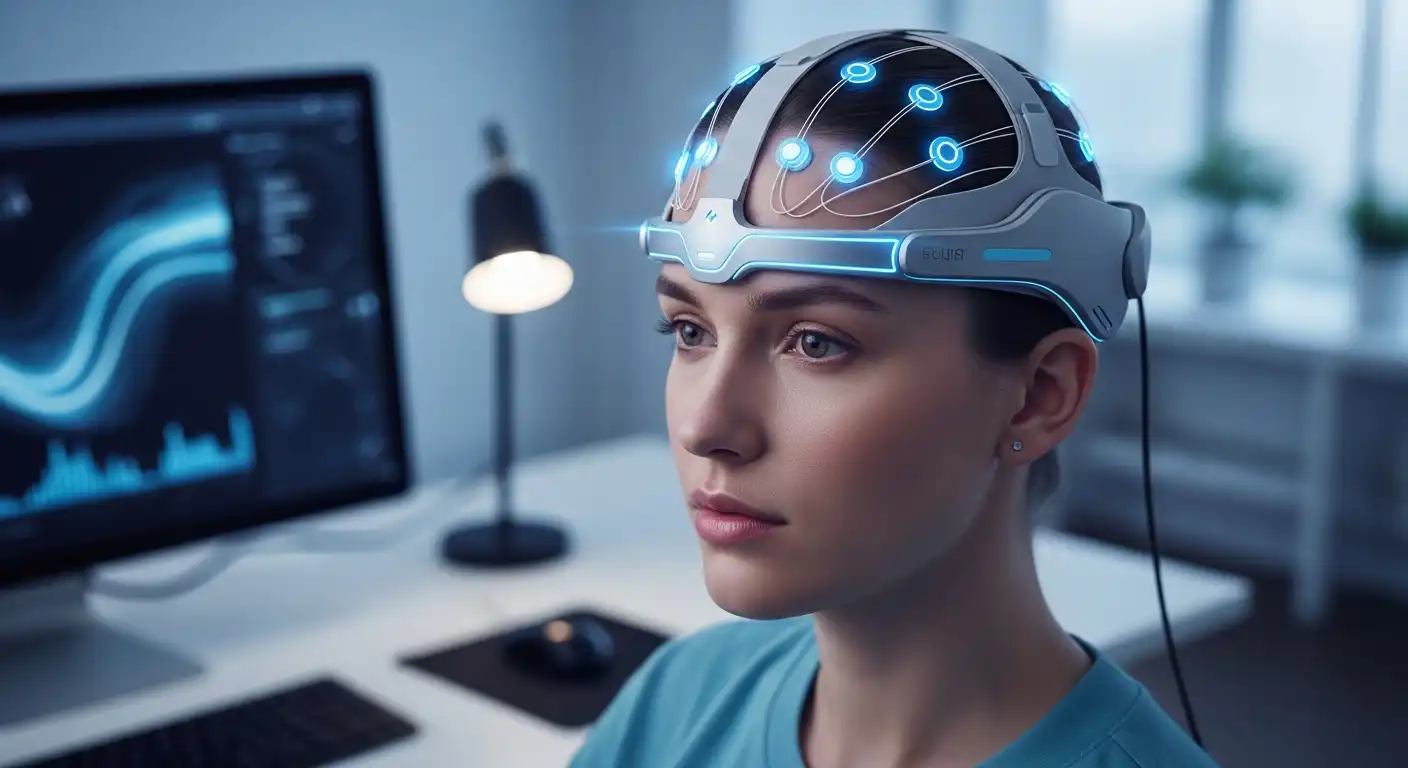
- Unlike Neuralink’s invasive implants, BrainCo specializes in non-invasive, surgery-free wearables like bionic limbs and consumer sleep aids.
- The expansion occurs as China officially prioritizes brain-computer interfaces as a key economic growth engine in its 15th Five-Year Plan.
The global race to commercialize mind-controlled machinery has entered a massive new chapter, as the primary non-invasive challenger to Elon Musk’s Neuralink secured a significant capital injection. Chinese neurotechnology pioneer BrainCo recently raised 2 billion yuan (approximately $280 million) in a late-stage venture capital funding round. Co-led by prominent global technology backers IDG Capital and Walden International, the massive funding round officially establishes the company’s valuation at approximately 10 billion yuan ($1.3 billion), securing its place as the first home-grown brain-computer interface unicorn. The capital boost arrives as the firm prepares to transition to public equity markets, having recently filed for an initial public offering on the Hong Kong Stock Exchange.
The newly secured funding brings the startup’s total research and development capital to approximately $500 million, positioning it alongside Neuralink as the two most heavily funded brain-computer interface enterprises in the world. However, while both firms share the long-term vision of bridging the gap between human biology and digital systems, they are pursuing opposite technological pathways. While Neuralink focuses on invasive surgical implants that require drilling holes into the patient’s skull to insert high-density electrode threads, the Chinese firm is betting entirely on non-invasive, external wearables. By eliminating the need for complex, high-risk brain surgery, the startup can scale its products to the mass market much faster.
The company’s most celebrated technological breakthrough is an intelligent bionic hand designed to restore mobility to amputees. Unlike high-end Western prosthetics that are surgically anchored to nerve endings, this smart prosthetic requires no surgery whatsoever. Users simply slip on the lightweight sleeve, which utilizes advanced sensors to read microscopic electrical signals passing through the residual limb’s muscles and nerves in real time. Advanced machine learning algorithms then translate these intended physical impulses into natural, independent finger movements with high dexterity. Crucially, the company manufactures these bionic hands at a fraction of the cost of foreign competitors, pricing them at one-fifth to one-seventh of comparable Western models to make them highly accessible to lower-income families.
While medical-grade rehabilitation remains the company’s immediate focus, its long-term commercial goals extend deep into the global consumer electronics market. The firm is leveraging its ultra-sensitive neural signal decoding technology to develop a wide range of consumer wellness and cognitive training products. Key consumer releases include the FocusCalm headband, which utilizes real-time neurofeedback to help stressed office workers and professional athletes manage anxiety, and the Easleep headwear system. This consumer sleep aid delivers low-intensity, targeted electrical pulses to help users fall asleep faster and achieve deeper, more restorative rest cycles.
The startup’s advanced muscle electrical mapping technology is also attracting significant attention from the rapidly growing humanoid robotics sector. As international hardware manufacturers race to build bipedal robots that can navigate physical factories and homes safely, engineering teams are struggling to build robotic hands that match human dexterity. Recognizing that the startup’s bionic hands have already perfected this human-like movement, several leading humanoid robot developers have recently adopted the firm’s dexterous hands as a core component of their embodied artificial intelligence platforms. This industrial pivot expands the startup’s addressable market far beyond medical prosthetics, turning it into a vital supplier for the advanced robotics supply chain.
The company’s rapid rise to global prominence represents a highly successful bridge between Western academic research and Eastern manufacturing power. Founded in 2015 by Bicheng Han while pursuing his doctorate at the Center for Brain Science at Harvard University, the startup began its journey inside the prestigious Harvard Innovation Labs. Armed with early seed funding, Han subsequently moved the company’s primary corporate headquarters to Hangzhou, China, to access the region’s unmatched high-tech electronics supply chain. This strategic geographic relocation allowed the firm to transition rapidly from low-volume academic prototyping to mass-manufacturing, successfully scaling production past 100,000 high-precision devices in recent years.
The company’s aggressive expansion occurs against a highly supportive national policy environment designed to establish global leadership in future technologies. The government has officially placed brain-computer interfaces on its national strategic agenda, explicitly listing the technology as one of six key industries of the future in its newly formulated 15th Five-Year Plan spanning 2026 through 2030. This high-level policy backing provides the sector with significant state resources, including subsidized research grants, specialized clinical testing fast-tracks at major public hospitals, and the construction of regional clinical application centers.
At the regional level, the company is recognized as one of Hangzhou’s “Six Little Dragons,” a prestigious group of fast-rising, high-growth technology enterprises driving the industrial transformation of Zhejiang province. Local government authorities are actively supporting the development of a regional artificial intelligence and neurotechnology hub, investing heavily in state-of-the-art research centers and computing infrastructure. This regional backing ensures that the company can easily recruit top-tier software engineers and materials scientists from nearby elite universities, including Tsinghua and Fudan, to maintain its technical lead.
Ultimately, the successful raising of $280 million and the upcoming Hong Kong initial public offering cement the company’s position as a permanent, sovereign pillar of the global neurotechnology industry. By proving that non-invasive, wearable brain interfaces can deliver real-world clinical and consumer utility without the risks of invasive surgery, the firm has established a highly practical and scalable business model. As the physical limits of traditional computer interfaces continue to level off, the companies that can build direct, seamless connections between the human brain and the digital world will shape the future of technology. The coming years will show how successfully the firm can scale its consumer sleep and focus products, but the foundations for the biological computing era are now fully funded.